How to Prevent Mold and Mildew on Outdoor Surfaces
Reduce avoidable moisture and debris around outdoor surfaces, then select care by material rather than treating every mark the same way.
Look for recurring moisture before buying a cleaner
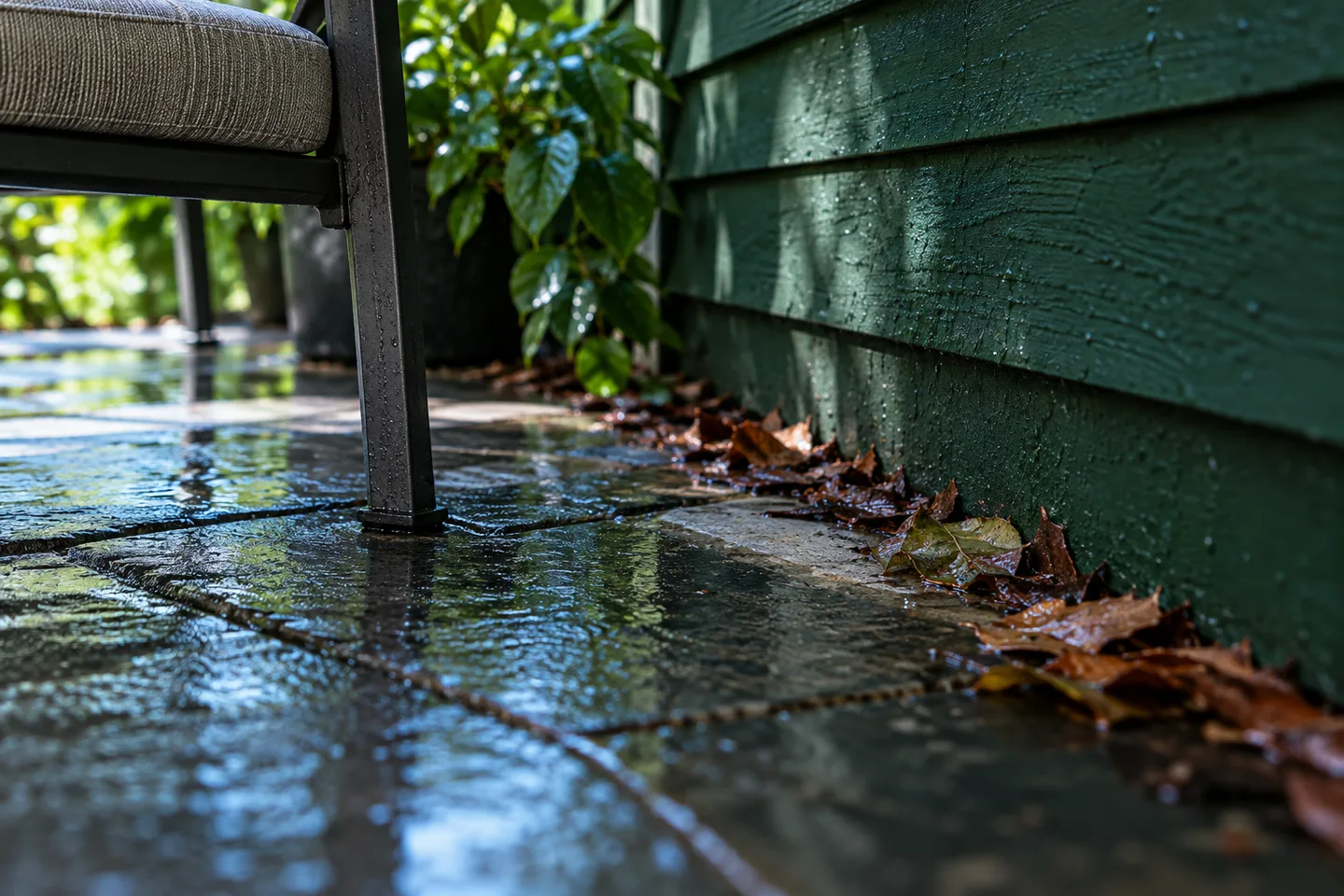
Preventing mold and mildew on outdoor surfaces begins with understanding why a particular area stays damp or becomes dirty repeatedly. A stronger cleaner may change the appearance temporarily without changing the conditions. Start by observing water, debris, airflow, and the way furniture or containers sit against the surface. The most useful first action may be a placement adjustment or professional attention to drainage.
Not every dark or green outdoor mark is the same substance. Algae, dirt, staining, coating changes, and biological growth can resemble one another. Do not identify a condition confidently from color alone. If the cause is unclear, or the issue involves significant deterioration, health concerns, or building moisture, seek qualified advice rather than treating the entire problem as ordinary patio cleaning.
This guide focuses on preventive housekeeping and planning. It is not a remediation procedure for extensive contamination, flood damage, or indoor mold. Outdoor materials and product systems vary, so any cleaning method must be appropriate for the actual surface and the identified condition. Avoid applying an indoor cleanup recipe indiscriminately to wood, concrete, fabrics, or coated furniture.
Find the places that remain wet
Walk the area after rain when it is safe to do so. Note pooling, splash patterns, roof runoff, and surfaces that dry more slowly than their surroundings. Look behind furniture and around pots without moving heavy items unsafely. A simple record of recurring wet areas can make a later contractor conversation much more useful.
Distinguish a temporary wet surface from a persistent source. A chair may be damp after rain as expected, while a particular corner remains wet because water repeatedly reaches it. Do not assume that more sun alone will fix the cause. Building details, drainage, irrigation, and material condition may need appropriate assessment.
Check changes in the arrangement. A new planter, outdoor rug, storage box, or cover can alter drying and inspection access. If the problem appeared after that addition, examine the relationship. The object may be holding moisture, blocking airflow, or making routine cleaning inconvenient. Correcting placement can be more sustainable than repeatedly treating the mark it helps create.
Keep loose debris from becoming a persistent layer
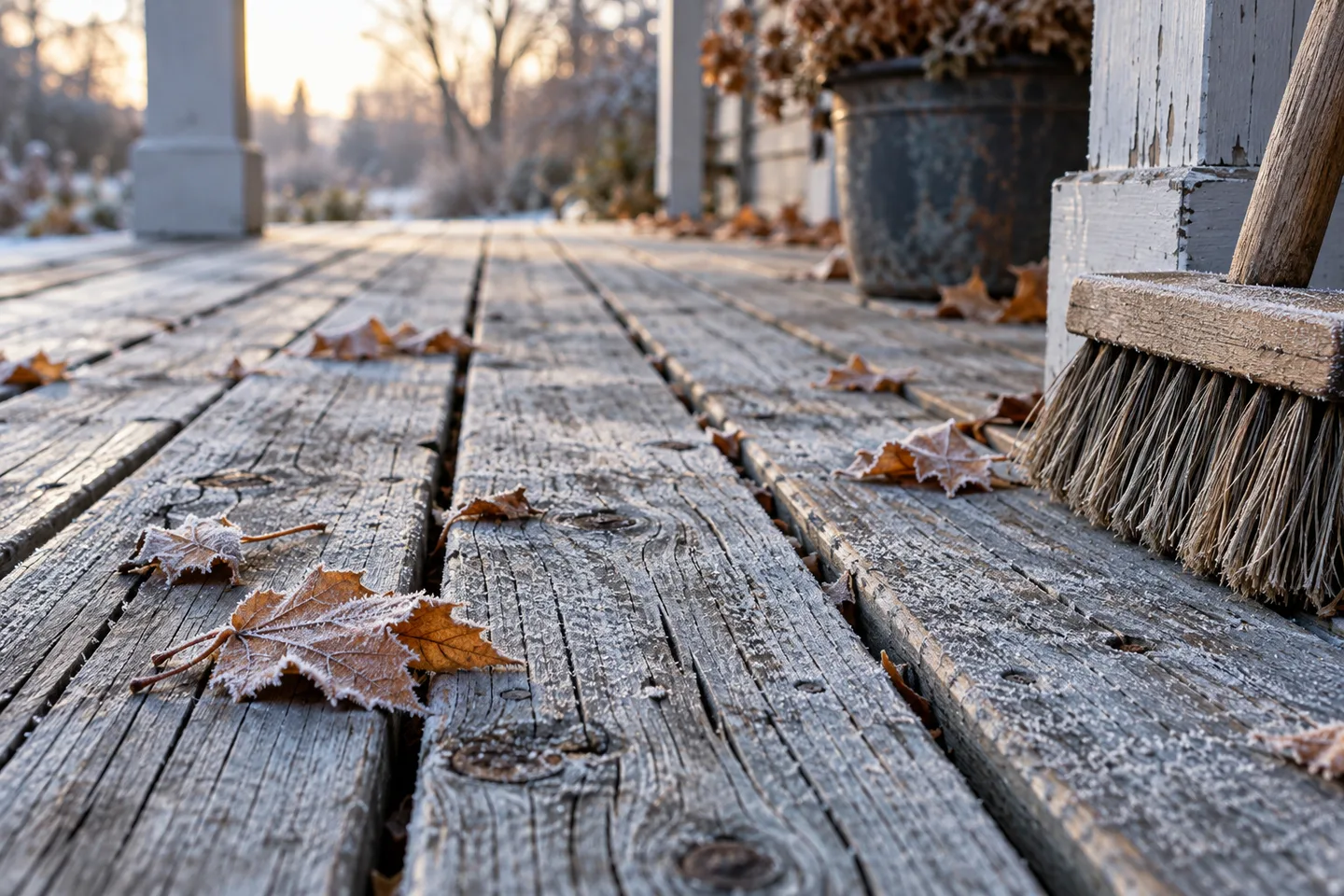
Leaves, soil, and other organic debris can collect in sheltered corners. Remove them using a method suitable for the surface. Pay attention to areas beneath furniture and around containers rather than cleaning only the open center of the patio. Keep access practical so this remains a manageable task rather than an occasional complete rearrangement.
Do not scrape or abrade an uncertain finish to make a corner match the surrounding area. Follow material-specific guidance and identify persistent marks separately. Coatings and decorative treatments can be affected by inappropriate tools. A preventive routine should preserve the surface while reducing avoidable buildup, not gradually wear it away.
Consider the source of repeated debris. A pot spilling medium, a plant dropping material into a hidden corner, or runoff carrying soil onto the patio may call for a layout change. Do not remove healthy planting unnecessarily, but do make the maintenance relationship understandable. The arrangement should allow both the plants and the surface to be cared for appropriately.
Give furniture and textiles room to dry
Follow the furniture and fabric instructions for drying, covers, and storage. Avoid closing damp cushions inside a box or covering wet furniture in a way the maker does not recommend. Outdoor-rated materials are not all intended to remain enclosed while damp. A cover is part of a care system, not a substitute for understanding that system.
Position furniture so accessible surfaces can be inspected and cleaned. Do not pack every chair tightly against siding simply to open the center of the patio. The useful spacing depends on the pieces and site, but the principle is practical: you should be able to notice and address a damp or dirty area without dismantling the entire outdoor room.
Check mats and rugs as well. Their backing and drying behavior need to suit the underlying surface. Follow both sets of guidance, and do not use a rug to hide persistent wetness or deterioration. If the material beneath remains damp repeatedly, investigate the cause rather than adding another layer.
Manage containers as part of the surface plan
Pots need appropriate drainage, and that drainage needs somewhere suitable to go. Observe runoff during watering and after rain. Avoid sending it across the entry route or into a corner that stays wet. A container that functions well horticulturally can still be poorly positioned for the porch surface beneath it.
Inspect decorative outer pots and saucers as part of the plant routine. Follow the needs of the actual plant and avoid indefinite accumulation of water where it is inappropriate. Move heavy pots only with a suitable method, and check structural loads before adding substantial containers to raised decks or balconies.
A simple grouping often improves access. Keep enough room to observe the medium, water accurately, and check the surface around the pot. If foliage and furniture hide the container completely, maintenance becomes harder. See the porch plant arrangement guide for balancing a planted effect with an entrance that remains manageable.
Choose cleaning methods by material and diagnosis
The EPA's guidance on bleach and mold does not recommend routine biocide use as a universal answer and warns against incompatible mixtures. That source concerns mold cleanup; it is not a product specification for every outdoor surface. Use it to understand the need for care, then follow the actual surface and cleaner instructions.
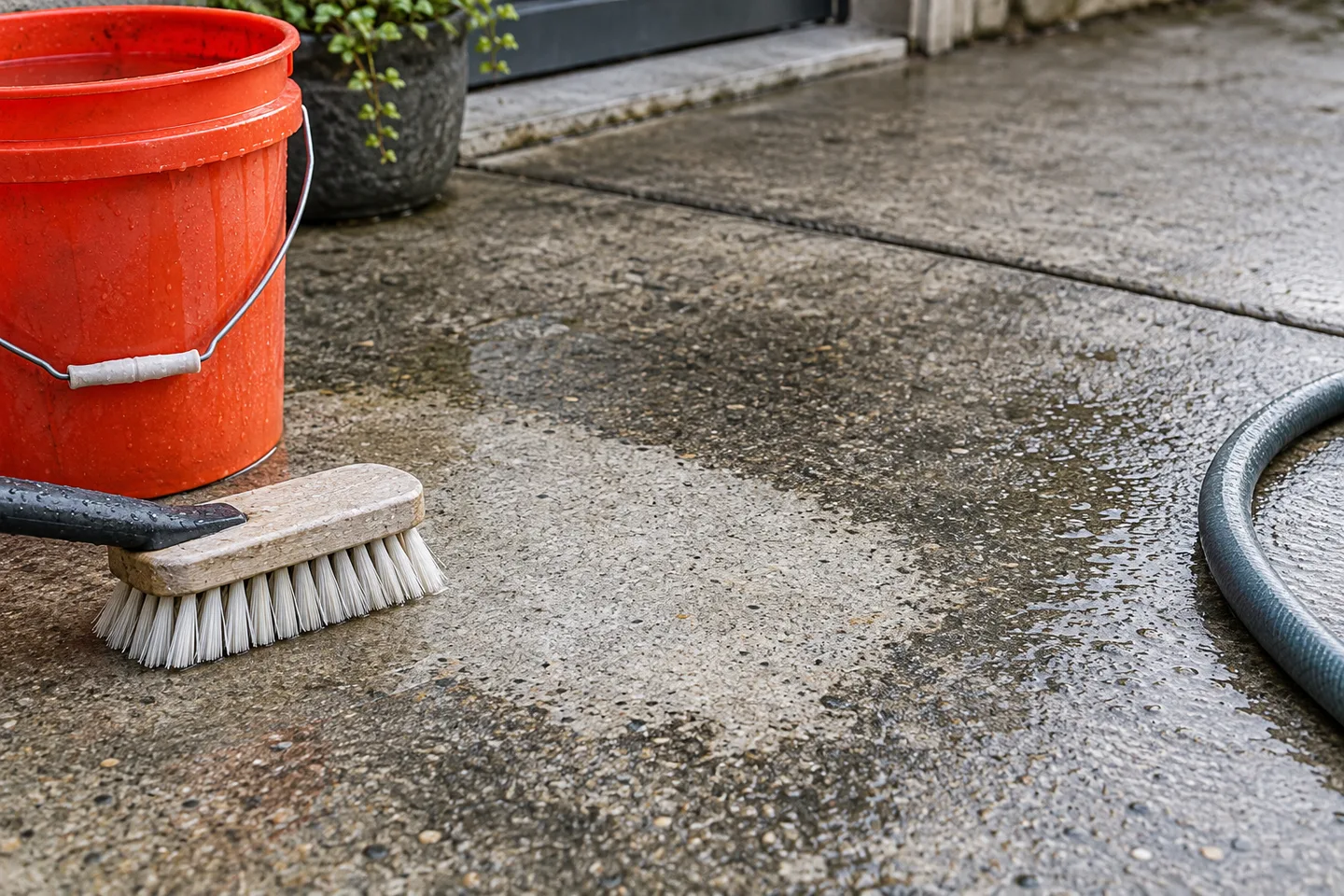
Never mix cleaning products. Do not assume a stronger concentration or an additional ingredient makes a method better. Read labels, use the specified protective equipment, and manage runoff appropriately. Product compatibility matters for nearby plants, finishes, metals, and other materials as well as the area being cleaned.
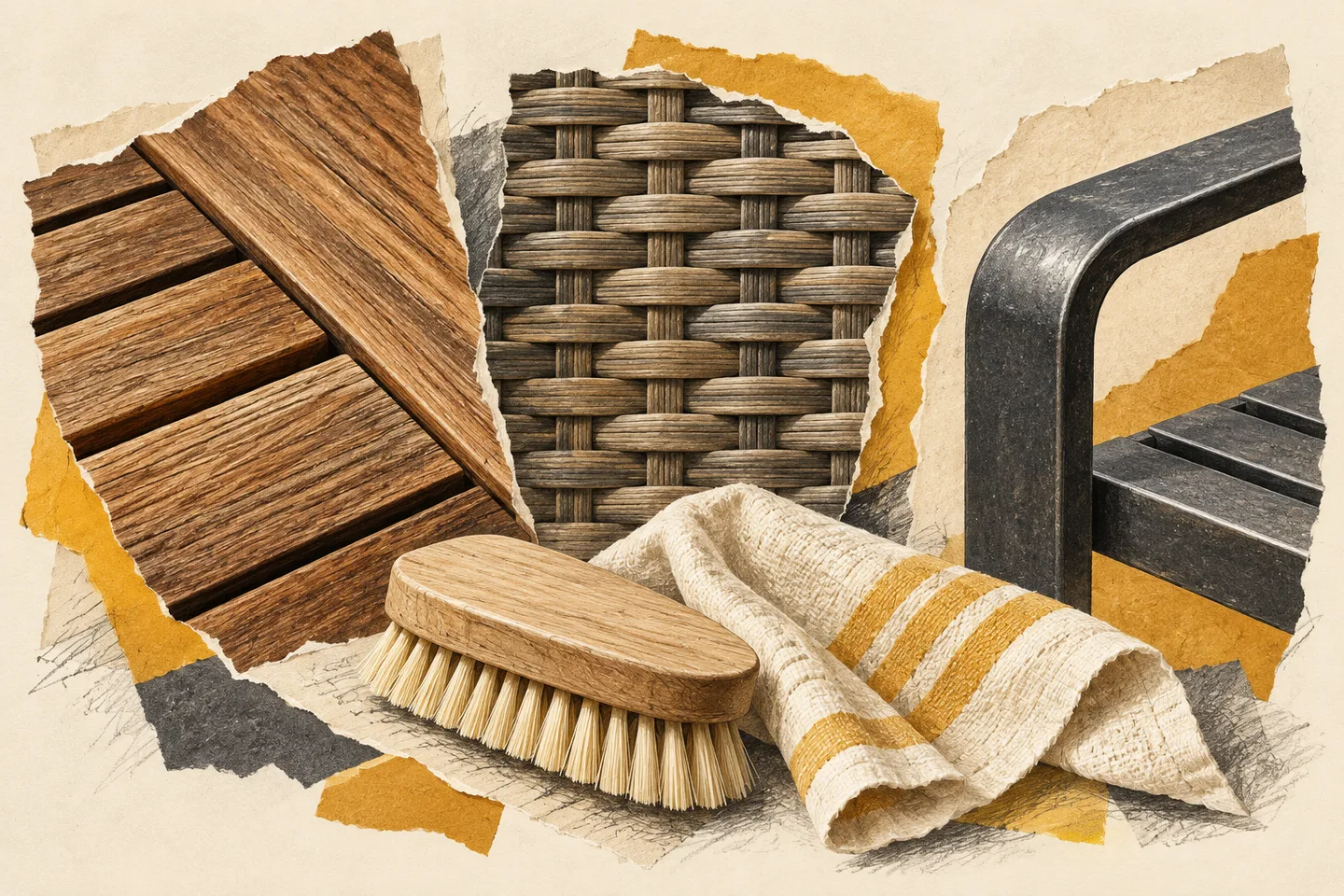
For a wooden porch, establish the existing finish and care system before treatment. For concrete, identify whether it is plain, decorative, or coated. For furniture and textiles, follow component-specific instructions. A single general recipe cannot account for those differences, and repeating an unsuitable method can cause damage while leaving the moisture source unresolved.
Separate ordinary care from problems needing help
| Situation | Useful first action | Reason to escalate |
|---|---|---|
| Leaves collect behind a chair | Improve access and remove debris appropriately | The area remains persistently wet afterward |
| A pot sends water across the porch | Review position and drainage | Surface damage or building-water concerns appear |
| Cushions remain damp in storage | Revisit drying and the storage routine | Persistent odor, deterioration or uncertain contamination |
| A coating changes or peels | Identify the product and existing condition | Cleaning no longer addresses the underlying issue |
| Moisture reaches the building | Document the observation safely | Building, drainage or hidden-damage assessment is needed |
Do not let a housekeeping checklist become a claim that a building is sound. Persistent moisture at walls, posts, thresholds, or structural components can require professional assessment. Likewise, personal health concerns should be directed to an appropriate professional rather than resolved through a general outdoor-care article.
Build a manageable prevention routine
Choose moments that fit how the space is used: a brief debris check after leaf fall, a look around containers after watering, and attention to drying before furniture is covered. The schedule should respond to conditions rather than a universal interval. Keep the arrangement simple enough that inspection is realistic.
Record recurring locations and changes you make. If moving a container or adjusting storage does not resolve the problem, the record helps identify what remains uncertain. Make one justified change at a time where possible. This prevents repeated cosmetic treatment from obscuring the pattern that would help someone assess the cause.
Share the prevention routine clearly
When several people use the outdoor space, explain the small actions that protect the arrangement: letting cushions dry before storage, keeping a particular drain accessible, or noticing water beneath a planter. A routine is easier to maintain when the reason is understood. Avoid leaving a complicated list of products that encourages someone else to repeat treatment without assessing the actual condition.
Keep material-specific instructions in one place and label any stored products in their original containers. Note which surfaces require different care. If professional work changes a coating, drainage detail, or storage system, update the household information. Prevention depends partly on keeping the practical plan current, so the next cleaning session does not accidentally recreate the conditions you were trying to correct.
Questions about outdoor mold prevention
Will cleaning once prevent the mark from returning?
Not necessarily. If moisture, debris, or another underlying condition persists, surface cleaning may not provide a lasting result. Identify the cause and use a method appropriate for the actual material. Do not promise permanent prevention from one treatment.
Should I use bleach on every outdoor surface?
No. Material compatibility, the identified problem, product instructions, and safety all matter. Never mix cleaners. Obtain suitable guidance rather than treating bleach or any other substance as a universal outdoor maintenance solution.
Where should I start if several surfaces are affected?
Map the recurring moisture and identify each material before choosing products. Review concrete patio cleaning, wooden porch maintenance, and furniture care by material. Seek qualified help for persistent building moisture, significant damage, or uncertain conditions beyond ordinary routine care.