How to Arrange Potted Plants on a Front Porch
Arrange porch containers around a clear entrance, compatible plants, useful scale, and a realistic plan for watering and growth.
Arrange the entrance before arranging the plants
A good front porch plant arrangement gives containers a clear relationship to the door, furniture, and walking route. It does not need to fill every corner. Begin by deciding where a pot can stand without interfering with arrival, drainage, or daily care. Then choose plants suited to the light in those positions.
Look at the porch from the sidewalk and from inside the house. Those views can suggest different priorities. A container that frames the door attractively from the street may obstruct the view or movement when approached from indoors. Test the arrangement with the door open, a chair occupied, and a person carrying a bag through the entrance.
Keep the plant's mature outline in mind. A pot is only the base of the arrangement; foliage can extend well beyond it. Plan enough room for growth and for access when watering or checking the plant. The most successful grouping looks intentional while remaining easy to live with, rather than requiring constant trimming or repositioning to keep the doorway clear.
Read the porch as a set of useful zones
The entrance zone includes the door swing, lock, mat, and waiting space. Protect it first. Avoid placing a tall plant where visitors must brush past foliage or where water regularly lands on the walking surface. Keep house numbers, doorbells, lights, and relevant equipment visible and accessible.
The seating zone can support a container nearby when it does not take over legroom or the route around the chair. Consider whether the plant will be seen mainly from the seat or the street. A lower, broader planting might work beside a chair, while a taller outline could suit a separate corner if light and stability allow.
The background zone may be a wall, column, or open railing. Use it to give the planting context rather than attaching something to every surface. Hanging or mounted containers require suitable supports and permission where applicable. Their weight when watered and their exposure to wind matter as much as their appearance.
Composition one: a focused group on one side
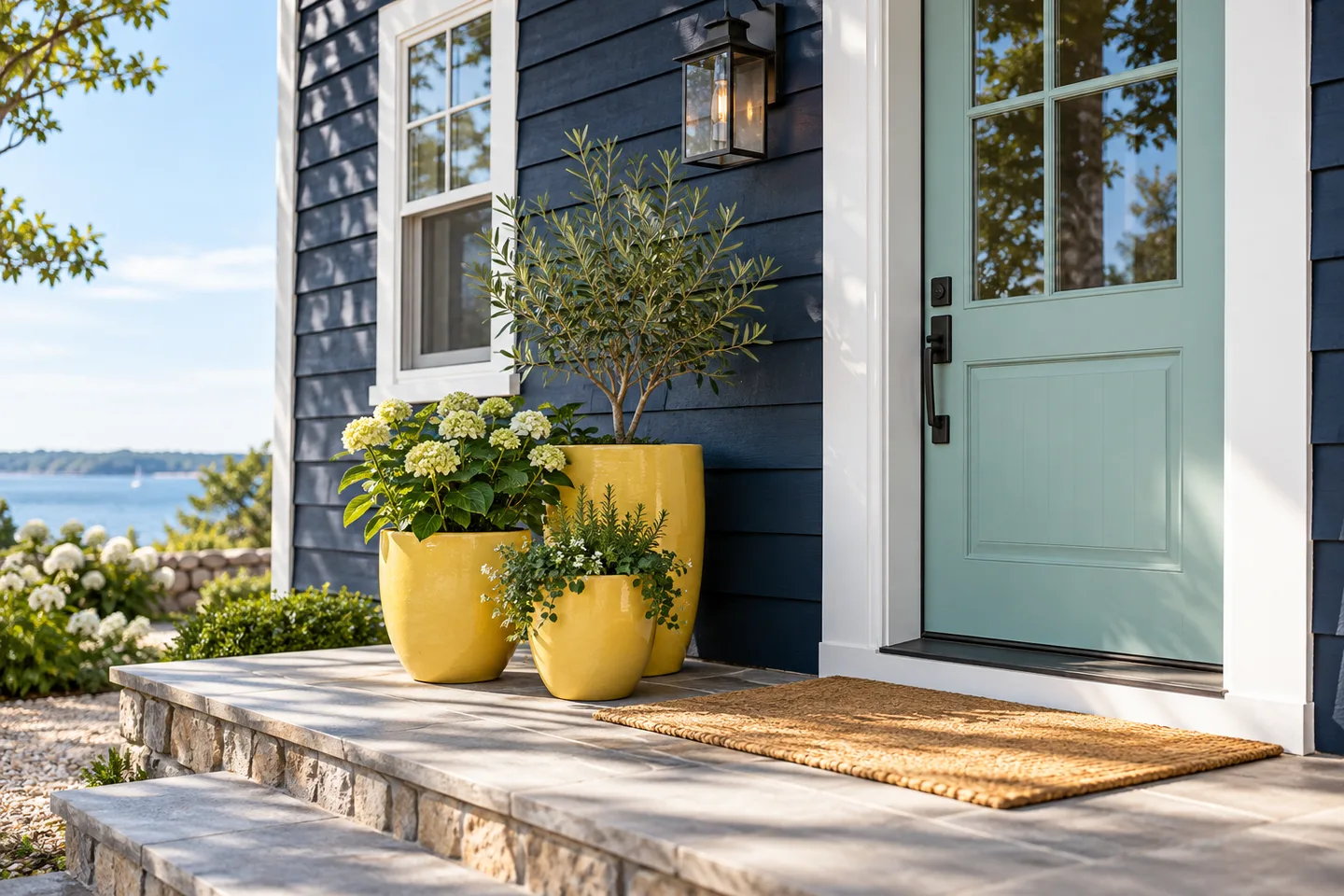
A small cluster beside the entrance can frame the door while leaving the opposite side open. Start with the largest suitable container, then add one or two companions only if they contribute a distinct height or shape. The group should read as one planted feature, not several separate obstacles around the floor.
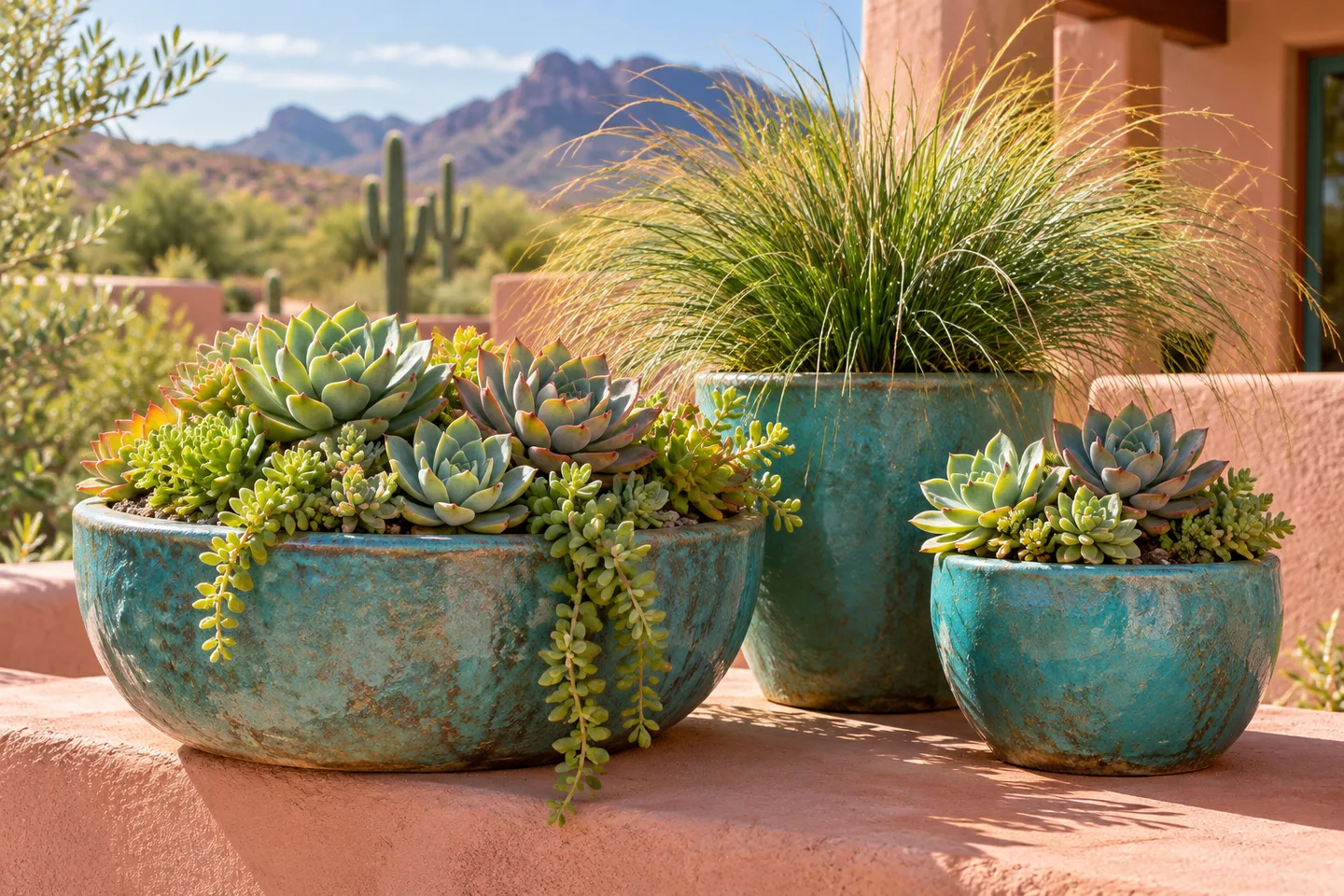
Use repetition to connect the pots. Shared terracotta, a related color, or a simple recurring shape can make different sizes feel coherent. Identical containers are optional. A little variation can look natural when there is an understandable relationship between the pieces and enough open space around them.
Test the group at mature plant size as far as practical. Imagine foliage beyond the rim and ask whether it will brush the door or narrow the path. If the arrangement only works with plants kept artificially small, choose a more appropriate selection. Good composition should work with growth rather than depend on preventing it indefinitely.
Composition two: a balanced pair
Two containers can create a clear entrance when the architecture and available space support the pairing. They need not be identical in every detail, but the relationship should be deliberate. Check whether both sides receive similar light. A visually symmetrical porch can still have different growing conditions on either side of the door.
Do not force matching plants into mismatched conditions simply to preserve symmetry. You can repeat container shape or color while using locally suitable plantings. Ask a reliable nursery for selections with a comparable visual role and compatible scale. The health of the plants will contribute more to the entrance than strict sameness.
If a pair crowds the route, return to a one-sided group. Symmetry is a composition option rather than a requirement for a welcoming door. A smaller porch may feel more generous when one side remains deliberately open for arrival, deliveries, or movement around a chair.
Composition three: one confident container
A single well-chosen container can be enough. Use it where its shape is visible and its plant has the right conditions. This approach works particularly well when the door, siding, or furniture already provides strong visual structure. More pots are not necessary simply because the entrance has several empty corners.
Choose scale in relation to the surrounding architecture, but also consider weight, root needs, and stability. A very large planter can become difficult to move and may be inappropriate on a structure without load assessment. A tiny pot can disappear visually and create a demanding care routine. The useful size connects the plant, the place, and the work of maintaining it.
Use plant shapes with restraint
Tall, upright growth, rounded foliage, and trailing stems create different outlines. A combination can be effective when the plants share suitable growing requirements. Do not select a mixed planting solely to fill a formula. Light, moisture, temperature, and eventual size must work together in the actual pot.
For a first arrangement, vary the container heights or use a single plant type in related pots. This can produce rhythm without a complicated mix. Leave enough room between shapes for the foliage to be appreciated. A dense mass may be attractive in a garden bed but can feel crowded beside a narrow doorway.
Choose color as part of the house rather than a separate decorative project. A leaf tone can relate to the door or complement the brick without exactly matching either. If flowers provide a seasonal accent, keep the rest of the arrangement calm enough that the color reads clearly. The porch should still make sense when the flowering period changes.
Make watering and drainage part of placement
Every container needs practical access. If a pot sits behind a bench where you cannot inspect the medium, its placement is incomplete. Leave room to water without leaning awkwardly across furniture. Consider how a full watering can is carried through the entrance and where it can be set down securely.
Check where excess water goes. A suitable pot and drainage arrangement should not leave the walking route slippery or hold moisture against an unsuitable surface. Follow container, plant, and flooring guidance. A decorative outer pot needs attention to any water collected around the draining inner container.
The Royal Horticultural Society's container-growing guide is a useful reference for treating the pot as a growing environment rather than a decorative shell. Keep the plant's needs ahead of a preferred arrangement. Moving a container a short distance to better conditions can be more sensible than repeatedly replacing the plant.
Review the arrangement as the season changes
Take a brief look at the porch after the plants have grown for a while. Check whether leaves intrude into the route, a container has become difficult to reach, or the balance has shifted. Reposition suitable pots before the conflict becomes a daily inconvenience. The arrangement is allowed to evolve with growth.
Plan what happens when a seasonal plant finishes or a perennial becomes dormant. The pot's form and position can maintain structure, but an empty container may not belong in the same place indefinitely. Keep the entrance tidy and choose seasonal changes deliberately rather than leaving a failing plant to hold the spot in a composition.
If you expect to move heavy containers, arrange an appropriate method rather than dragging them across the porch or attempting an unsafe lift. The planted weight can be much greater than the empty pot suggests. On raised structures, check load suitability before adding substantial plantings. Design convenience should not depend on a task that is difficult or unsafe to perform.
Make a simple scale trial
Before planting a heavy container, place the empty pot in its proposed position and use a safe temporary outline to represent the expected foliage spread. Open the door and walk through with a bag. View the outline from the main chair and from indoors. This trial separates the visual role of the arrangement from the practical space its mature plants will occupy.
If the grouping feels crowded, change the number or position of the pots before buying smaller versions of everything. Several undersized containers can create a scattered effect and a more demanding watering routine. A single appropriately chosen pot may provide a stronger planted feature while leaving the entrance easier to use. Let the test guide the composition instead of using a formula to justify an awkward fit.
Questions about grouping porch plants
Do containers need to be arranged in odd numbers?
No. Odd-numbered groups are one visual tool, not a requirement. A pair can frame a door, and one container can be enough. Choose the number that fits the entrance and the care routine, then make the relationship between the pieces clear.
Should every planter match?
Matching can be useful, but a repeated material or related color may provide enough connection. Avoid collecting unrelated shapes simply to fill space. Look at the group as a whole and leave enough room around it for both the plants and the entrance to function.
How do I combine plants in one pot?
Start with compatible growing needs and suitable mature sizes. Then compare shape and color. For more detail, read container setup, shade-suited plants, and small porch layout ideas. A healthy, manageable planting is the foundation of the visual result.