How to Clean a Concrete Patio Without Damaging It
Clean a concrete patio with a material-aware process that begins with surface identification, an appropriate test, and controlled routine care.
Identify the surface before choosing the method
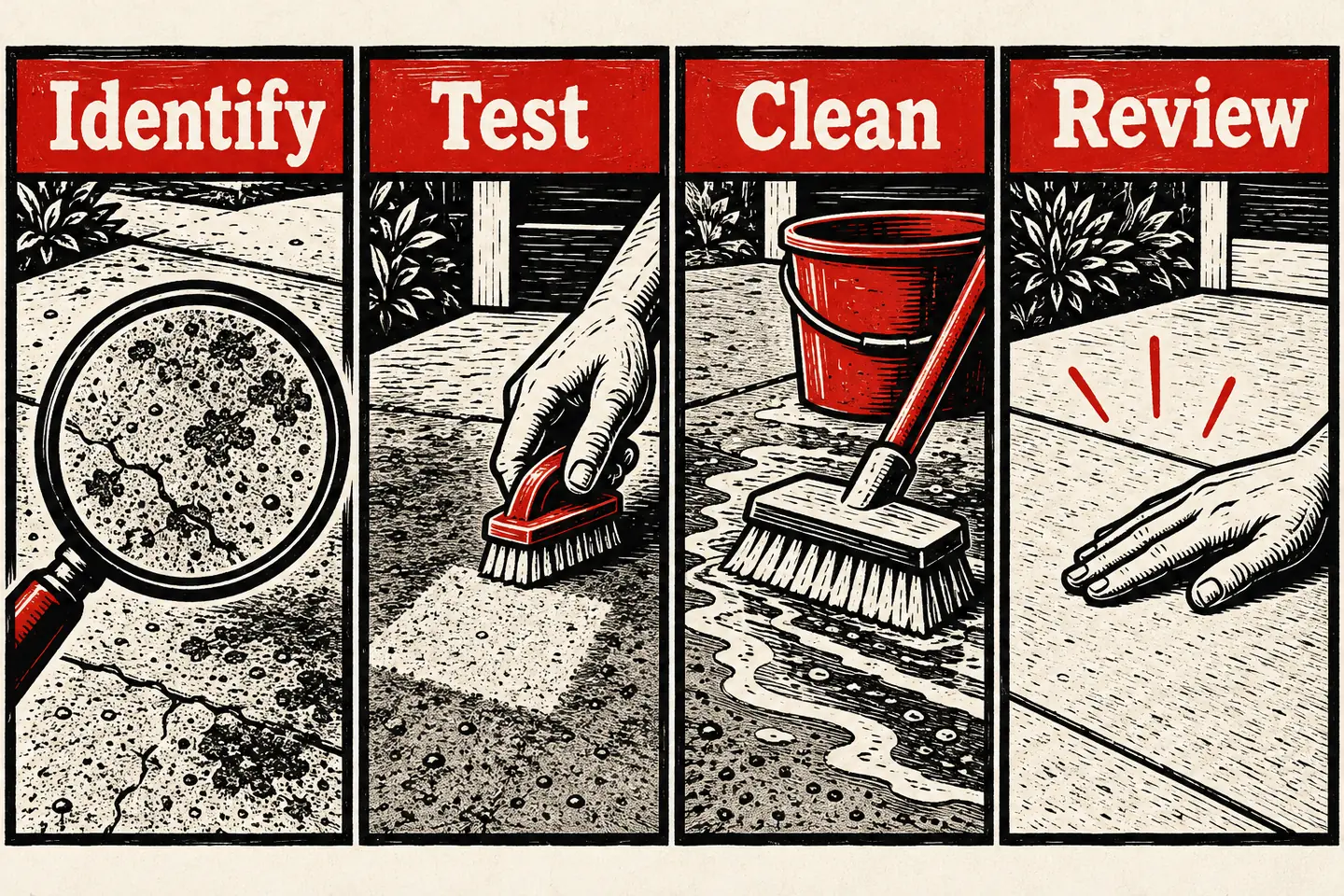
To clean a concrete patio without damaging it, start by identifying what is actually on the slab. Plain concrete, a decorative finish, a stain, and a surface coating can require different care. A method that seems to remove dirt may also alter a sealer or expose the texture beneath it. The aim is appropriate cleaning, not the most dramatic possible change in color.
Look for product or installation records and note any existing cracks, flaking, unevenness, or peeling treatment. If the surface is deteriorating or the finish is unknown, seek advice before aggressive cleaning. Cleaning is not a repair for a failed coating or a drainage problem, and it should not become an improvised attempt to strip the patio.
This guide covers a cautious routine for ordinary surface dirt. Oil, rust, paint, biological growth, and other stains may need different diagnosis and product guidance. Do not assume a single homemade mixture is suitable for every mark. Read the label of any cleaner and the instructions for the concrete treatment before beginning.
Prepare the patio and the surrounding area
Move furniture, rugs, and containers only when you can handle their weight safely. Photograph existing marks for your own reference so you can distinguish them from changes during cleaning. Sweep loose debris using a method appropriate for the surface. Check drains and the direction water will travel, without dismantling equipment or creating an uncontrolled runoff path.
Protect nearby items as the cleaner's instructions require. Consider plants, painted surfaces, metal, pets, and the route back into the house. A patio can become slippery while wet. Keep people away from the work area and preserve a safe alternative route where possible. Do not leave a hose across a frequently used doorway without managing that obstruction.
Choose conditions that match the product instructions. A surface becoming very hot or drying rapidly can complicate the process, while rain may interfere with it. Have the required water, tools, and protective equipment ready before applying a cleaner. Planning the sequence reduces the temptation to improvise once a product is already on the patio.
A modest routine-cleaning kit
- A suitable broom for loose debris.
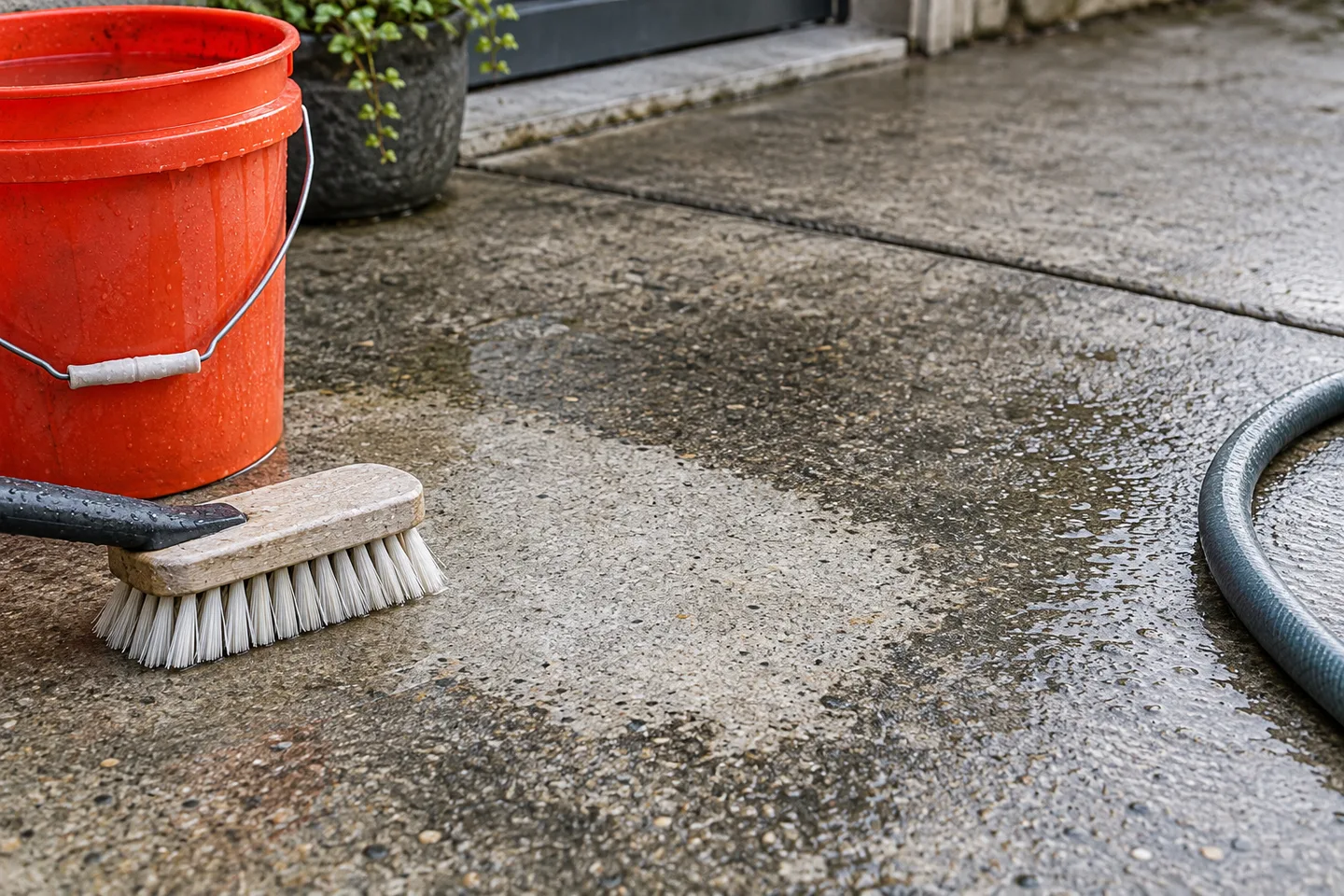
- A soft or manufacturer-approved brush.
- Water and a cleaner specifically appropriate for the surface, if needed.
- A means of applying and removing water as directed.
- Product-specified protective equipment and a clear work boundary.
The brush and cleaner should be selected together with the finish. Do not assume a stiff wire brush is appropriate simply because concrete feels hard. Decorative and coated surfaces deserve particular care. When in doubt, ask the installer or product manufacturer which tools are permitted before treating a visible area.
Test a small, inconspicuous area
Follow the cleaner and surface instructions for a test area. Use the actual dilution, contact time, tool, and removal method you intend to use on the patio. Do not judge only while the surface is wet. Allow the test to dry as appropriate and compare texture, color, and the appearance of any coating with the adjacent area.
If the result changes the finish unexpectedly, stop. A stronger application is not a solution to an unsuitable method. Contact the product manufacturer or an appropriate professional with the relevant details. Keep the container and instructions available so the substance and application can be identified accurately.
A successful test is still not permission to ignore variations across the slab. Areas with different exposure, old treatments, or existing wear may behave differently. Work observantly and pause if the surface response changes. The routine should remain controlled rather than becoming a race to finish before noticing what is happening.
Clean in manageable sections
1. Remove loose material
Sweep or otherwise remove debris before introducing water. Leaves and grit can complicate cleaning and move into joints or drains. Pay attention to corners behind containers, but do not scrape or abrade an uncertain coating to make it look like the open area. Identify persistent marks before treating them as ordinary dirt.
2. Apply the approved method
Use water and any permitted cleaner according to the actual instructions. Keep the method gentle enough for the identified surface. Work in an area small enough to control contact time and removal. Do not increase concentration or mix products because a stain is slow to respond; that changes the procedure and can introduce risk.
3. Agitate only as appropriate
Use the permitted brush and pressure. Concentrated abrasion in one spot can leave a different texture even when the mark becomes lighter. Treat the stain and the surface as separate considerations: removing a mark is not a successful outcome if the surrounding finish is damaged in the process.
4. Remove residue and manage water
Rinse or remove the product as its directions specify, while following local runoff requirements. Keep wash water from flowing into places where it should not go. Do not treat a storm drain as a convenient disposal point. If the proposed method cannot be performed with appropriate water management, seek another suitable approach or professional help.
5. Let the patio dry and inspect it
Judge the result after appropriate drying rather than chasing the appearance of a wet surface. Look for remaining dirt, changed texture, and any signs of coating failure. Replace furniture and rugs only when the surface and their care guidance allow it. Keep the record of the method for the next cleaning session.
Treat pressure washing as a separate decision
A pressure washer is not the default first step for every patio. Suitability depends on the concrete, its condition, any treatment, the equipment, and the operating method. A universal pressure figure cannot account for all those factors. Obtain instructions for the actual surface and equipment, and use a qualified professional when suitability or technique is uncertain.
Avoid focusing a concentrated spray on a mark until it disappears. That approach can change the finish around the stain. Nearby joints, edges, and adjacent materials also matter. The Belgard hardscape maintenance guide illustrates the importance of product-specific caution with power washing; its instructions should not be generalized to every concrete installation.
If the surface is stamped, colored, coated, newly installed, or already deteriorating, be especially careful about assumptions. Check the actual manufacturer's or installer's advice. Do not convert a routine-cleaning job into stripping, resurfacing, or chemical treatment without understanding the new scope and its requirements.
Diagnose stains rather than escalating blindly
| What you see | First question | Better next step |
|---|---|---|
| Dark organic-looking area | Is moisture repeatedly accumulating here? | Identify the cause and surface before treatment |
| Oily mark | What substance was spilled and when? | Seek a compatible stain-specific method |
| Rust-colored mark | Is a metal object the continuing source? | Remove the cause and confirm an approved treatment |
| Peeling or patchy sheen | Is a coating failing? | Ask the installer or treatment manufacturer |
| White deposit | What material and conditions are involved? | Identify it before using an acidic product |
The table is a starting point for questions, not a diagnosis. Similar-looking marks can have different causes. Acidic products, solvents, and strong cleaners should not be selected from appearance alone. Never mix cleaning products, and do not assume that a substance described as natural is automatically safe for the patio or its surroundings.
Leave yourself a useful cleaning record
After the patio has dried, note the identified surface, the product used, the application method, and any areas that responded differently. Keep a photograph from the same viewpoint as the original. This is not a performance test or a promise of future results; it is a household record that helps prevent the next session from beginning with guesswork.
If a particular stain remains, record its location and likely source before trying another product. A mark beneath a metal item, a container, or a regularly used cooking area deserves a more specific question than how to make the patio white again. Contact the relevant surface or treatment manufacturer with the information available.
Review the arrangement when furniture goes back. Protect access to the drains and avoid replacing pots in positions that caused repeated wetness or spills. Appropriate cleaning is more useful when the setup also becomes easier to maintain. The finishing step is a practical patio, not merely a newly washed surface.
Questions about concrete patio cleaning
Can I use the same cleaner as on my indoor floor?
Only if the product and the patio finish both permit that use. Indoor suitability does not establish compatibility with a coated or decorative outdoor slab. Check the label and surface instructions, then test as directed before applying it broadly.
Should the patio look completely uniform afterward?
Not necessarily. Existing weathering, repairs, finish variation, and stains can remain visible. Do not keep escalating the method to force a uniform appearance without identifying what you are changing. A professional assessment may be more appropriate than further cleaning.
How often should I clean it?
Use its condition, exposure, and product guidance rather than a universal calendar. Remove loose debris regularly and address causes of repeated soiling. Continue with flooring selection, moisture prevention, and outdoor furniture cleaning to coordinate care across the patio.