How to Clean Outdoor Furniture Based on Its Material
Match routine cleaning to wood, coated metal, woven materials, synthetic lumber, and fabrics without relying on one universal recipe.
Identify every material in the piece
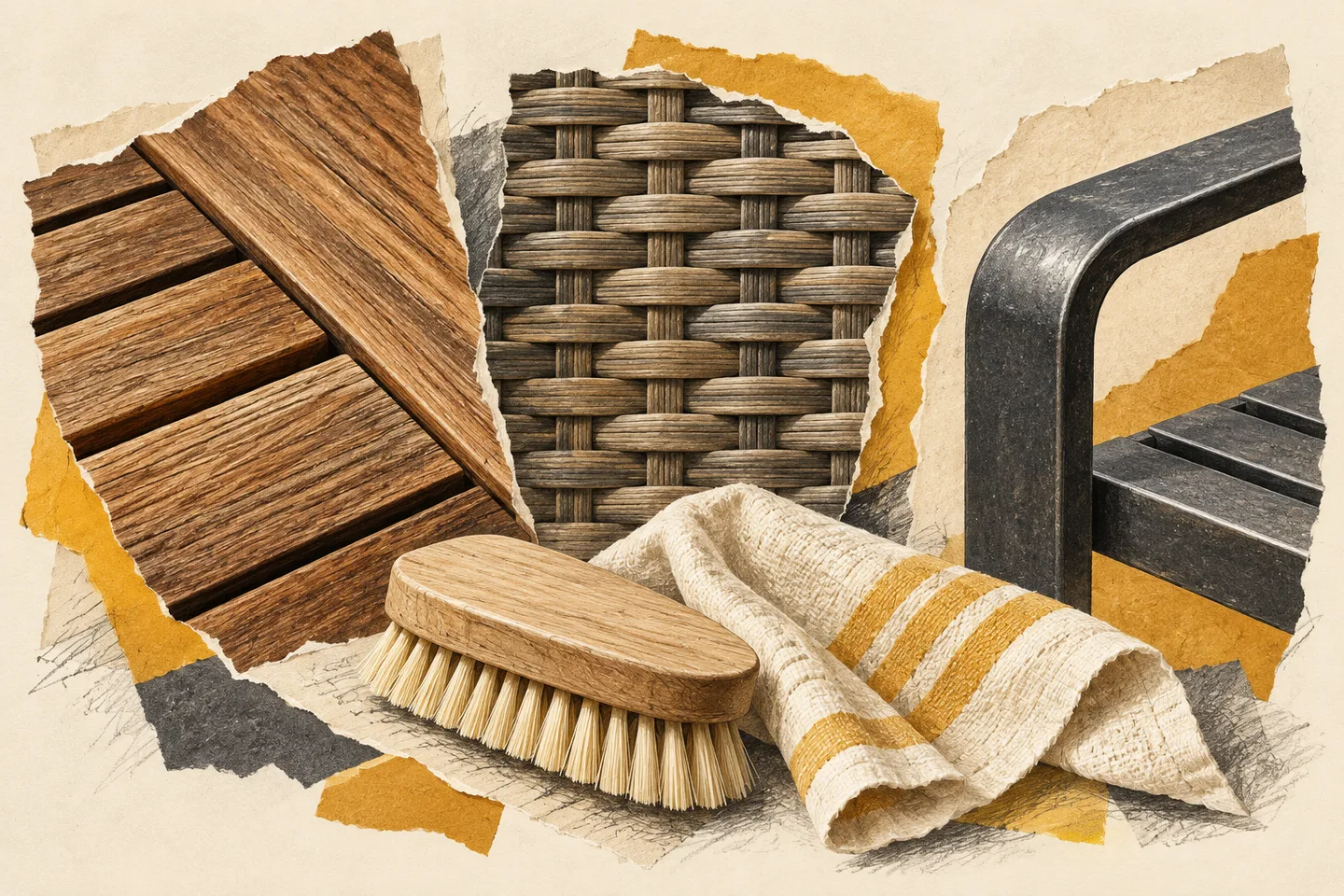
To clean outdoor furniture well, start with the material and finish rather than a universal bottle of cleaner. A single chair can combine a coated metal frame, woven resin, wooden arms, fabric covers, and cushion inserts. Those components may need different care. The word outdoor describes intended use, not one cleaning method that applies to everything left outside.
Find the manufacturer, product name, and care instructions if possible. Look for labels on cushions and records for the frame. Note existing damage before cleaning so you do not confuse an old mark with a new change. If the piece is unstable, cracked, or otherwise unsafe, stop using it as appropriate and address that condition separately from surface dirt.
This guide helps organize routine care and the questions to ask. Specific product instructions take priority over general material categories. Avoid mixing cleaners, guessing at stronger dilutions, or transferring a method from one piece to another because they look similar. The successful result is clean, usable furniture with its finish intact, not the most dramatic possible before-and-after photograph.
Set up a controlled cleaning area
Choose a place where the furniture can be reached comfortably and water can be managed appropriately. Follow product guidance about exposure and drying conditions. Keep the walking route clear and protect nearby materials as instructed. Do not move heavy furniture alone or lift a piece by a component that was not designed as a carrying point.
Remove loose cushions and accessories so their care can be considered separately. Brush away loose debris with a suitable soft tool before introducing cleaner. Inspect joints, crevices, and feet without dismantling the piece unless the maker permits it. A soft brush, clean cloth, water, and the correct approved cleaner may be enough for routine work, but the material decides.
Test unfamiliar products in an inconspicuous area as directed. Use the intended concentration, tool, contact time, and removal method. Check the result after appropriate drying. A wet surface can hide a changed finish, so do not treat immediate appearance as the only test. Stop if color, texture, or coating behavior changes unexpectedly.
Wood: protect the identified finish
Wooden furniture may be unfinished, oiled, painted, stained, or coated in another way. Identify that condition before cleaning. The wood species and the maker's instructions matter, too. Do not assume every wooden chair should be sanded, oiled, or treated with the same product after washing.
Use the permitted cleaning method and avoid unnecessary abrasion. Pay attention to joints and places where water can remain. Let the piece dry as instructed before applying any approved treatment or returning cushions. If the surface is peeling or the coating history is unknown, obtain appropriate advice before turning a cleaning session into refinishing.
Natural weathering is not automatically dirt. A change in color may be part of the material's outdoor behavior, while a particular stain or deterioration may need separate assessment. Decide what outcome is realistic for the actual piece. Repeatedly escalating cleaning to chase the appearance of new furniture can alter the surface you intended to preserve.
Coated metal: clean without attacking the protection
Painted or powder-coated metal should be cared for as a coated system, not merely as a hard object. Choose products and tools permitted by the manufacturer. Avoid abrasive pads or strong cleaners on the assumption that metal cannot be harmed. The finish may be the component most affected by an unsuitable method.
Inspect for chips, corrosion, loose components, and damaged feet. Cleaning does not restore a failed protective coating or repair a weak joint. Ask the maker about appropriate touch-up or repair procedures rather than applying an unrelated product because its color looks close. Keep any repair decision separate from ordinary washing.
Dry and reassemble only as directed. Check whether cushions, woven sections, or hardware have different requirements from the frame. A chair with several materials should be cleaned in a sequence that respects each one. Do not immerse or flood components that the product instructions say should only be wiped.
Woven furniture: distinguish natural fibers from resin
Wicker describes a way of weaving, not one material. Natural plant fibers and synthetic resin strands can have different exposure and cleaning requirements. Identify what you own before applying a method found for another woven chair. Similar appearance in a photograph does not establish similar care.
Use a soft tool to remove loose debris from the weave where appropriate, taking care not to snag or distort it. Follow the product guidance for moisture and cleaners. Avoid pulling strands apart to reach dirt or directing an aggressive spray into uncertain joints. A damaged weave may need repair rather than more energetic cleaning.
Check the frame beneath the woven surface as well. Metal, timber, and other supports introduce additional care considerations. Let the whole piece dry appropriately before covering or storing. A cover placed over damp furniture can complicate the drying routine instead of protecting it in the way you intended.
Synthetic lumber and molded materials: use the actual guidance
Synthetic furniture includes different products and formulations. Do not assume every plastic-looking piece has the same resistance to cleaners, abrasion, or heat. Identify the brand and model where possible and follow its care instructions. A simple routine can be sufficient when it is the right routine for that product.
Trex Outdoor Furniture's care page, for example, describes care for its identified furniture materials. Use that as evidence about those products, not permission to transfer the same treatment to an unrelated molded chair or coated surface. Manufacturer-specific instructions help avoid the false confidence created by broad material labels.
Inspect textured surfaces and joints gently, and remove residue as directed. If a mark persists, ask about an approved stain-specific approach before experimenting. Heat, solvents, or abrasive methods should not be improvised to force a cosmetic result. Keep the piece's actual construction and finish in the decision.
Fabrics and cushions: separate the cover from the insert
Read the fabric label and the furniture instructions together. A removable cover is not automatically machine washable, and an outdoor fabric does not establish the care of the cushion filling. Zippers may provide manufacturing or replacement access rather than permission for a particular washing process. Check before removing or laundering components.
Treat spills according to the fabric's guidance rather than rubbing aggressively or applying an unrelated household cleaner. Sunbrella's upholstery care document is relevant to confirmed Sunbrella fabrics; other textiles may differ. Identify the actual material before using any stain-removal instructions.
Drying deserves as much attention as washing. Allow covers and inserts to dry appropriately before reassembly, covering, or storage. Do not close damp cushions into a box because the outside surface feels nearly dry. Build a realistic plan for the weather and available drying space before cleaning every cushion at once.
A material-by-material decision table
| Component | Establish first | Avoid as a default |
|---|---|---|
| Wood | Species, coating and maker's instructions | Automatic oiling, sanding or strong washing |
| Coated metal | Finish type and existing damage | Abrasive tools or guessed touch-up products |
| Woven surface | Natural fiber or synthetic material | Assuming all wicker has identical care |
| Synthetic lumber | Identified product and permitted methods | Transferring instructions from an unrelated plastic |
| Fabric and insert | Separate labels and construction | Assuming removable means machine washable |
Keep a brief record of the method that worked, including the cleaner and any useful care documents. This makes the next session easier and helps another household member avoid experimenting on the same piece. A small collection of product-specific instructions is more useful than a complicated universal cleaning kit.
Clean a mixed-material chair in a deliberate sequence
Imagine a chair with a coated frame, woven seat, and removable cushion. First identify the instructions for each component. Remove the cushion only as permitted and address its care separately. Clean the frame and weave using compatible methods, taking care that a product intended for one component does not remain on another. Allow the piece to dry appropriately before returning the textile.
This example is a planning sequence, not a universal washing recipe. The point is to avoid treating the assembled object as if every part were the same material. Keep the actual product instructions together, and ask the maker when the advice for adjacent components appears to conflict. A short clarification before cleaning can be more useful than trying to reverse an unexpected finish change afterward.
Questions about routine furniture cleaning
Can I pressure wash outdoor furniture?
Only when the specific manufacturer permits the equipment and method. Do not treat it as a universal shortcut. Frames, coatings, weaves, joints, and fabrics may be affected differently. If suitability is unclear, choose the approved gentler method or ask the maker before proceeding.
Is a homemade cleaner always safer?
No. Compatibility depends on the ingredients, concentration, material, and finish, not whether the mixture was made at home. Never mix cleaning products. Use a method permitted for the actual piece and test as directed before treating a visible area.
How do I keep furniture easier to clean?
Remove loose debris appropriately, manage spills promptly, and arrange the pieces so you can reach them. Follow guidance for covers and storage. The seating arrangement guide, wooden porch routine, and moisture prevention guide can help make care part of the outdoor plan.