How to Choose the Best Patio Flooring for Your Home
Compare patio flooring as a complete installation, including the site, base, drainage, finish, daily use, and ongoing care.
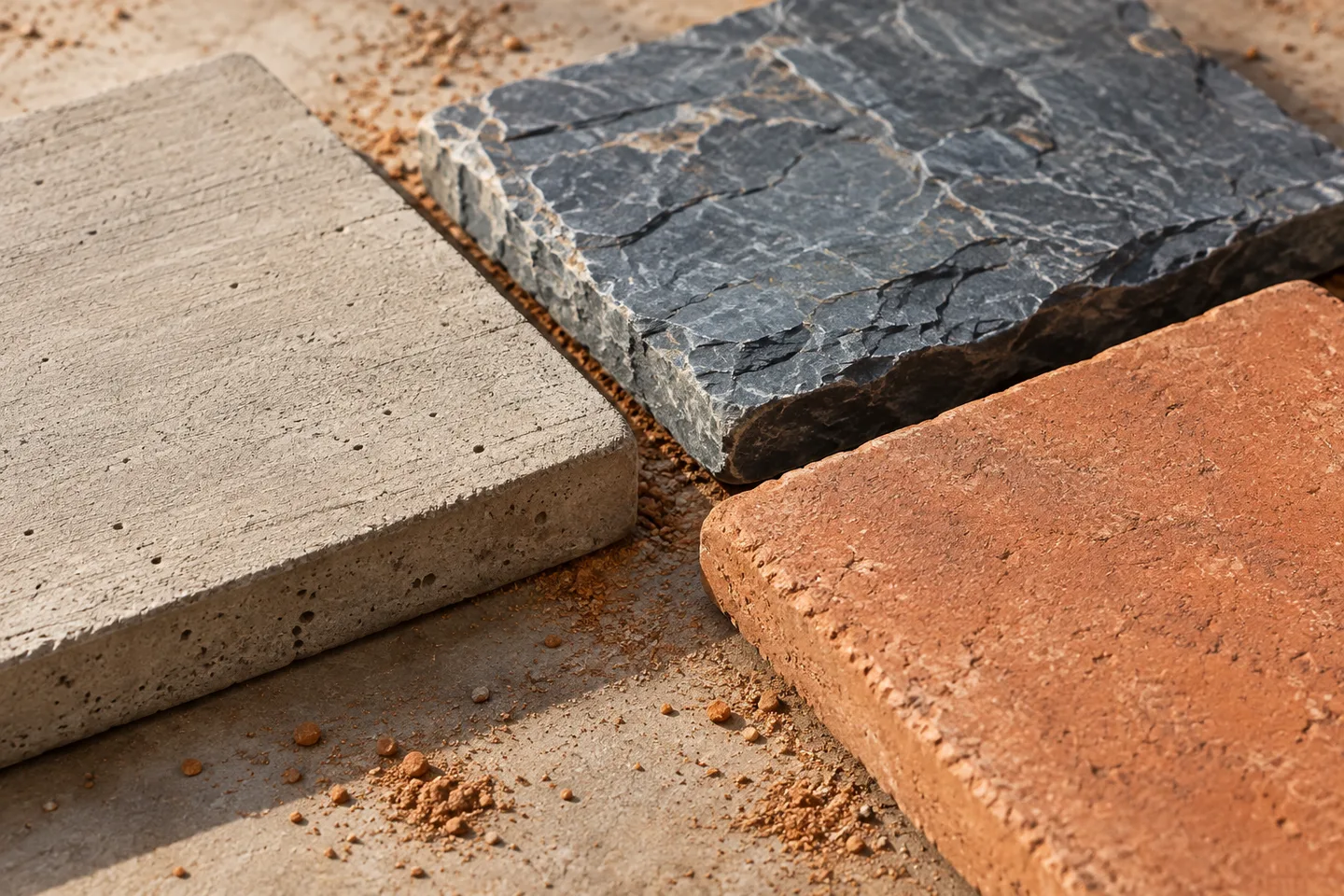
Compare the whole installation, not just the sample
The best patio flooring options for a particular home depend on the site, the way the space is used, and the work beneath the visible surface. A beautiful sample does not tell you whether a material will suit drainage, movement, climate, or the transition at the back door. Start with those conditions before comparing colors and patterns.
First decide whether you are replacing a failed surface, creating a new patio, or making a cosmetic change to sound paving. These are different projects. Cracks, settlement, poor drainage, and uncertain structural conditions need assessment before another material is laid over them. Covering a problem can make the finished patio look better briefly while leaving the cause unresolved.
Use this guide to prepare a useful shortlist and questions for a qualified installer. It is not a specification for foundations, slopes, waterproofing, or structural work. Requirements vary by property and location. The right choice is one whose complete installation and ongoing care fit the actual site, rather than one that merely wins a comparison of surface prices.
Write a short performance brief
List the activities the patio must support: dining, conversation, regular movement to the garden, or occasional use. Think about chair legs, wheeled items, and transitions between surfaces. A strongly textured material may look appealing but should still work comfortably for the people using the space. Evaluate the actual product rather than assuming every material in a category behaves identically.
Record exposure to rain, frost, direct sun, and nearby planting. Ask how the proposed surface performs when wet and how its finish should be maintained. Photographs cannot establish slip suitability. If accessibility or a particularly demanding route matters, make that part of the professional brief from the outset instead of trying to resolve it after installation.
Add the level of care you are willing to provide. Some finishes require specific cleaners or periodic treatment. Joints, edges, and nearby planting introduce their own maintenance. A low-looking purchase price is incomplete if the installation or care commitment is poorly matched to the household. Compare the finished system and its likely routine, not only a square-foot material figure.
Compare common materials in context
| Material family | Reasons to consider it | Questions before selection |
|---|---|---|
| Poured concrete | A continuous surface and varied finish choices | Base preparation, joints, texture, drainage and repair appearance |
| Concrete pavers | Modular units with many sizes and patterns | Base, joint system, edges, settlement and maintenance |
| Natural stone | Individual texture and material variation | Specific stone properties, thickness, finish and installation |
| Exterior porcelain or tile | Consistent manufactured appearance | Outdoor rating, slip suitability, substrate and setting system |
| Loose gravel | A different landscape character in suitable areas | Containment, movement, furniture stability and route suitability |
Poured concrete
Concrete can produce a simple, visually quiet patio that lets furniture and planting take the lead. The finish, joint layout, site preparation, and curing process require appropriate planning. Decorative treatments can change both appearance and care. Ask how expected movement is addressed and how a future repair might look against the original surface.
Do not assume that concrete is maintenance-free or that every coating suits every slab. Determine whether the intended look involves a sealer, stain, or other treatment and obtain its care instructions. If the existing slab has problems, ask whether they are cosmetic, material-related, or connected to the base and drainage before choosing an overlay.
Concrete pavers
Pavers offer a modular approach, but the units are only part of the installation. The base, edge restraint, jointing material, and drainage arrangement affect how the finished patio behaves. Ask what maintenance the selected joint system requires and how isolated settlement or a damaged unit would be handled.
Belgard's maintenance guidance illustrates why care instructions belong to the specific hardscape system. Avoid transferring cleaning recommendations to an unrelated product. A high-pressure method that appears convenient can affect a surface or its joints, so cleaning expectations should be discussed before the patio is installed.
Natural stone
Natural stone is a broad category rather than a single performance profile. Ask about the particular stone, finish, thickness, and intended outdoor use. Variation can be part of its appeal, but the sample should represent the range you are likely to receive. View several pieces if possible and discuss how the laying pattern will handle those differences.
Consider furniture stability and the intended walking route when evaluating texture. Ask how the material responds to the local climate, what cleaning products are permitted, and whether treatment is recommended for the chosen application. Do not assume that a product described as natural automatically needs less technical assessment than a manufactured alternative.
Exterior tile and porcelain
Confirm that the specific product and the complete installation system are suitable for the outdoor application. Indoor floor tile should not be moved outside on appearance alone. The substrate, adhesive or support arrangement, joints, edges, and water management need a compatible design. Ask the installer to explain the proposed system in understandable terms.
Large-format products can create a calm visual field, but the scale should work with the patio dimensions and cuts at the edges. Check how thresholds and changes of level will be finished. A minimal-looking installation still requires careful detailing; clean lines in a photograph do not mean the construction beneath them is simple.
Look at samples where the patio will be used
Place representative samples near the house and view them at different times of day. Compare them with the siding, brick, door, and existing landscape. Wet appearance may differ from dry appearance, but do not use an informal sample test as proof of safe slip performance. Obtain the relevant product information and professional assessment for that question.
Look at scale as well as color. Many small units can produce a busy pattern on a compact patio, while a larger module may reduce visual fragmentation. Neither choice is automatically better. Draw a few layouts to see where cuts and joints would land, and avoid choosing a pattern that creates awkward narrow pieces simply to imitate a reference image.
Think about furniture against the surface. Fine chair legs, wheeled equipment, and outdoor tables interact differently with joints and texture. If a particular piece is central to the plan, include it in the brief. The patio and the furniture should be considered together rather than chosen in separate conversations.
Ask for a complete installation comparison
Request proposals that explain preparation, drainage, thresholds, edges, disposal, access, and the finished material. This makes it easier to compare like with like. A lower figure may omit work that another installer has included. Ask what assumptions are being made about the existing ground or slab and how unexpected conditions will be addressed.
Discuss permissions, warranties, and responsibility for adjacent features. Find out what the household needs to do before work begins and when the surface can be used afterward. Product-specific timelines and weather requirements should come from the installer and manufacturer, not a generic article. Keep the relevant instructions with the project records.
Questions about patio flooring
Which patio surface is cheapest?
Compare the complete installed cost for your site. Material price alone excludes preparation, access, drainage, labor, disposal, and details at the edges. A product that is inexpensive to buy can require a more involved installation. Obtain local proposals with a comparable scope rather than relying on a universal price ranking.
Can I lay new flooring over the existing patio?
That depends on the condition and suitability of the existing construction and the proposed system. Drainage, levels, movement, and adhesion or support may all matter. Have the situation assessed before covering it. A cosmetic layer should not be used to disguise a failed or uncertain base.
Should the patio match the interior floor?
It can relate visually without being the same product. Outdoor exposure and installation requirements should lead the technical selection. Use color, scale, or tone to create a connection while choosing a surface genuinely suitable for the patio. A threshold detail deserves particular attention in that relationship.
Keep the practical sample questions together
Ask the supplier which exact product and finish the sample represents, whether the supplied batch will have a range of tones, and what documentation describes the intended outdoor application. Keep those details with the installer proposal. A name such as stone-look tile or concrete paver is too broad to serve as the full specification for the project.
Also ask what maintenance tools and products are excluded. If the household currently uses a particular cleaner or pressure washer, do not assume it will remain suitable after the new patio is installed. Planning the care routine now can prevent an accidental mismatch later. The material decision is stronger when appearance, installation, and ongoing use are understood together rather than handed between separate conversations.
Choose the surface after the use is clear
Review small patio layouts, seating comfort, and concrete cleaning alongside the flooring shortlist. The finished patio should support the activities you planned and have a care routine you understand before it is built.