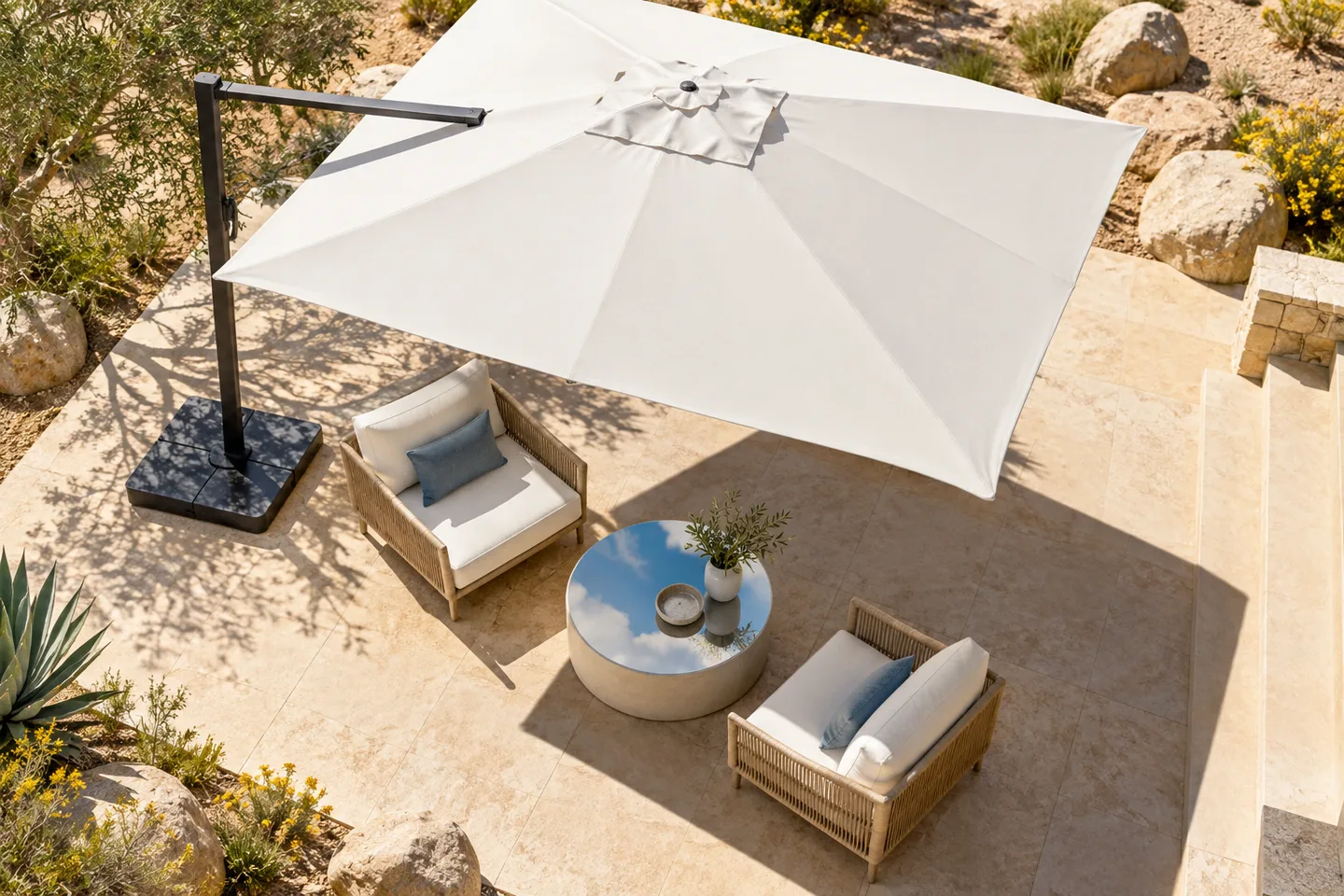
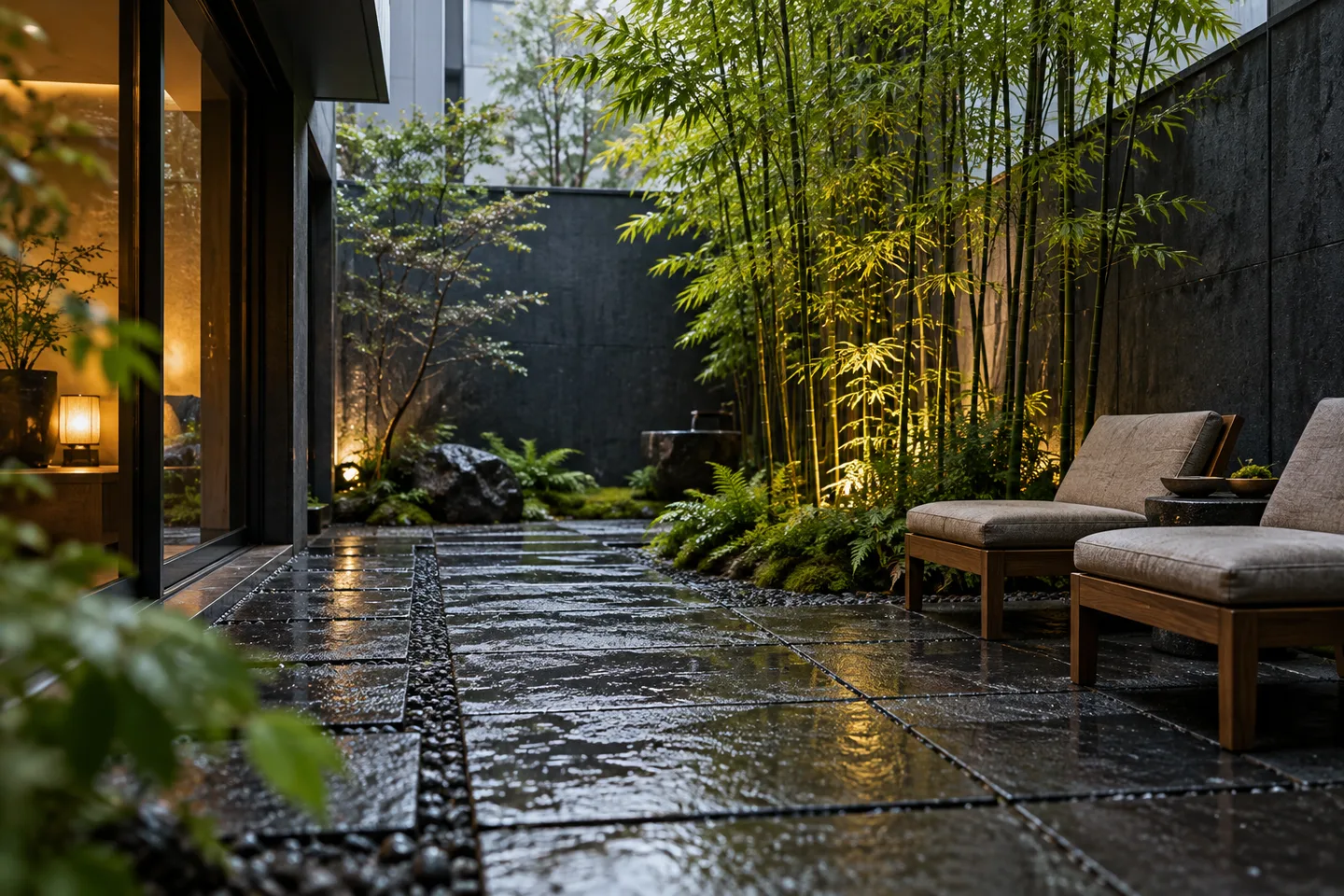
How to Create a Cozy Outdoor Seating Area
Create an outdoor conversation corner around comfortable seats, reachable surfaces, clear circulation, and accessories you can manage.

Begin with the conversation you want to have
An outdoor seating area feels cozy when people can settle comfortably and use the space without repeatedly adjusting it. Cushions and lanterns can contribute, but the arrangement matters first. Chairs need a comfortable relationship to one another, drinks need a reachable surface, and someone should be able to walk back to the house without asking everyone to move.
Start by picturing an ordinary use rather than a special occasion. Perhaps two people sit outside after dinner, or one person reads while someone gardens nearby. Let that scene determine how many seats are needed and where they should face. A compact area planned for its everyday occupants can feel more welcoming than a large set purchased for guests who rarely arrive.
Look at the setting before choosing accessories. Notice sun, breeze, nearby windows, and the routes through the yard. Listen for equipment or street noise. You cannot solve every site condition with furniture, but you can often choose a better seat position. Comfort is easier to create when the arrangement works with the place rather than pretending those conditions are absent.
Build the arrangement from the seat outward
Position the first chair
Choose the place where you would naturally want to pause. Try the chair facing more than one direction and sit for several minutes. Check whether the view is pleasant, the back feels exposed, or direct sun makes the position uncomfortable. Use these observations to select the orientation rather than lining the chair up automatically with the paving edge.
The first chair establishes the conversation zone. If you add a second seat, angle it so people can speak without twisting uncomfortably. A perfectly straight row may suit watching a view, while slightly turned chairs may serve conversation better. Neither arrangement is universally correct. The intended activity tells you what relationship between seats makes sense.
Add a surface within reach
A small table should be reachable from a relaxed seated position without forcing someone into the walking route. Test the reach with an empty cup before deciding the table position is finished. A stable, useful surface is more important than an elaborate centerpiece. If there is no good location for a table, revisit the chair spacing before adding another piece.
Protect the route around the group
Walk through the arrangement with people sitting in it. Include the path to the door, garden, storage, and any frequently used equipment. Chairs that must be moved for every trip make the area feel provisional. Keep the conversation group recognizable while leaving the circulation it needs; do not draw the furniture plan as if the surrounding yard were unused.
Choose comfort that suits real outdoor conditions
Seat height, depth, back angle, and arm position affect whether a chair is pleasant for the intended user. Compare measurements with familiar furniture and try the seat when possible. Deep lounge seating may suit long relaxation but can be awkward for someone who prefers an upright position or finds low seating difficult to rise from.
Think about how long a typical sitting period lasts. A chair used briefly for morning coffee has different priorities from a reading seat occupied for an hour. If several people use the space, a mix of supportive options can be more useful than identical pieces. A shared color or material can connect them visually without forcing everyone into the same posture.
Outdoor exposure also matters. Read the care instructions for frames, finishes, fabrics, and cushion inserts. Water-resistant does not mean every item can be ignored in prolonged rain. Select a combination you can realistically dry, cover, or store. A seating area becomes less inviting when using it requires rescuing a collection of damp accessories first.
Add softness with a clear purpose
Use a cushion to improve the seat or back support, not simply to fill every available corner. Check how it changes sitting depth and whether it stays securely in position. An attractive cushion that pushes someone too far forward is not improving comfort. Keep the arrangement comfortable when the cushions are actually being used, rather than arranged upright for a photograph.
For fabric care, consult the maker's instructions. Sunbrella's upholstery guidance, for example, applies to identified Sunbrella fabrics and should not be assumed suitable for every outdoor textile. Check the actual material and construction of your cushions, including removable covers and inserts, before choosing a cleaning method.
A throw can be pleasant during a cool evening when there is somewhere dry to keep it. Treat it as an accessory brought out for use rather than a permanent outdoor installation unless the product supports that treatment. The same logic applies to rugs: use one only when it suits the surface, drains appropriately, and does not create an edge that catches feet.
Create a sense of enclosure without closing the yard
A seat can feel more settled with a nearby wall, planting group, or suitable screen behind it. This gives the arrangement a defined edge. You do not necessarily need a tall barrier or a completely enclosed outdoor room. Begin with the specific view or exposure that makes the seat uncomfortable, then choose an appropriately limited response.
Containers can soften an edge, but choose plants for the light and leave enough room for mature foliage. Keep watering access practical. Do not wedge a heavy pot against furniture merely to create a lush photograph. A few well-positioned plants can contribute to the atmosphere while leaving room to move and clean.
For screens, shade structures, or attachments, check permission, installation requirements, and local restrictions before proceeding. Wind and structural conditions matter. A freestanding-looking product may still require a particular base or anchoring system. Do not convert a decorative fabric panel into an improvised structural shade solution.
Make evening use feel straightforward
Useful light helps people find the door and see the table without confronting glare. Use equipment suitable for the location and keep cords out of walking routes. Fixed wiring and uncertain electrical conditions need a qualified electrician. A small amount of appropriately directed light can support a relaxed atmosphere without illuminating every boundary of the yard.
Think about the transition indoors. Shoes, cups, and soft accessories need a simple route back to the house. A tray may help carry items when it has a stable place to land. Avoid leaving breakable or easily blown objects out as permanent decoration. The area should be easy to begin using and easy to put away.
Noise and privacy can be part of comfort, too. Test the seat at the hour it will be used rather than assuming the daytime atmosphere persists. If a particular sightline is distracting, move the chair before investing in screening. Furniture orientation is often the simplest adjustment available and can reveal whether a larger intervention is necessary.
Try a small gathering before adding seats
Invite the usual household users to sit in the arrangement with drinks or a book. Notice whether conversation feels natural, the table is useful, and people remain comfortable. Watch what happens when someone stands up. These observations give you a better shopping brief than adding chairs simply because a corner appears empty.
If occasional guests require extra seating, identify a suitable movable option and storage location. Do not make the everyday arrangement inconvenient for an infrequent event. A flexible plan might keep two comfortable seats in position and bring out additional chairs only when needed, provided the space and access support that temporary use safely.
Keep a small list of unresolved problems. Perhaps one seat needs a better back cushion, or the table is too far away. Solve those specific issues rather than restyling the whole area. Incremental changes are easier to assess and reduce the chance of introducing several new objects that repeat the original problem.
Questions about creating a comfortable corner
Do I need an outdoor sofa to make the area cozy?
No. Two comfortable chairs with a useful relationship to one another can create a convincing conversation area. A sofa makes sense when its dimensions, posture, maintenance, and everyday use suit the space. It should not be the starting assumption for every patio.
How many cushions should I use?
Use the number that improves the seats and fits the drying and storage routine. More cushions can reduce usable space or make preparation inconvenient. Start with what each seat needs for comfort and add decorative pieces only if they remain useful in daily use.
What if the patio is overlooked?
Identify the particular sightline from the seated position. A change of orientation or a focused screen may help without enclosing the whole area. Check installation and boundary requirements before building. The privacy guide offers a more detailed planning approach.
Notice which seat people choose
After a few ordinary uses, look at where people naturally sit and which chair stays empty. The difference may come from glare, a difficult reach to the table, or an awkward view rather than the cushion color. Use that evidence to refine one position. A comfortable arrangement develops through attention to those small behaviors, with fewer purchases and a clearer understanding of what makes the corner inviting.
Keep the arrangement easy to enjoy
Continue with small patio layouts, shade planning, and furniture care by material. The strongest arrangement is the one people choose to use regularly, with a routine that keeps it comfortable between visits.