Easy DIY Porch Upgrades You Can Complete in a Weekend
Choose a manageable weekend improvement with a clear scope, sensible work sequence, and a practical check that the upgrade actually helps.
Choose a project with a clear stopping point
The most manageable DIY porch upgrades improve one everyday function without expanding into an unplanned renovation. A weekend can be enough to reorganize the entrance, assemble a suitable freestanding item, or create a small planting arrangement. It is not a reason to rush work involving structural uncertainty, electrical changes, unsafe access, or an unknown old coating.
Start by identifying one frustration: no useful place to sit, an awkward mat, scattered containers, or a cluttered arrival route. Define what the finished result should do. A project such as making the chair usable without blocking the door has a clearer stopping point than making the whole porch look new. It also makes the budget and work sequence easier to control.
Check the condition of the porch before planning decoration. Damaged boards, unstable rails, questionable furniture, and electrical problems deserve appropriate attention first. Do not hide them with a new accessory. Choose tasks that match your skills, tools, permissions, and the actual weather and product requirements for the weekend available.
Project one: reset the entrance layout
This is often the most useful place to begin because it reveals whether another purchase is needed. Move loose objects temporarily without blocking required access. Clean the accessible surfaces according to their care guidance, then let them dry appropriately. Keep the doorway and the route to the steps visible throughout the work.
Draw the door swing and test one simple furniture arrangement. Use the main chair, a reachable table if needed, and no extra accessories at first. Sit, stand, open the door, and carry a bag through. Try a second version before choosing. A small change in orientation can make an existing piece more useful without altering the porch itself.
Return accessories selectively. Each should have a clear position and purpose. Photograph the result for your own reference, then use the porch for several days. The project is complete when the entrance works better in ordinary use, not when every empty corner has been filled again.
Before you begin
- Decide where moved items will go temporarily.
- Keep the normal entrance or an appropriate alternative route usable.
- Check cleaning instructions for the floor and furniture.
- Avoid lifting heavy pots or furniture beyond your ability.
- Set aside objects needing repair instead of putting them back unnoticed.
Project two: create one manageable planter group
Choose a position with suitable light and enough room for mature foliage. Start with a small number of containers you can inspect and water comfortably. Check drainage, weight, and the way water will leave the group. A porch arrangement should not send runoff across the threshold or hold moisture against an unsuitable surface.
Use plants with compatible needs and appropriate mature sizes. Ask a reliable local source about the exact selections. The Royal Horticultural Society's container guidance provides useful context, but the actual plant, climate, and container still determine care. Keep the plant labels and a simple note of the plan.
Arrange the largest suitable pot first, then add a companion only if it contributes a distinct role. Repeat a material or color rather than buying a large matching collection. View the group from inside and outside the door. If it crowds the route, reduce it instead of treating a tight fit as proof that the project is finished.
Project three: improve the mat and threshold routine
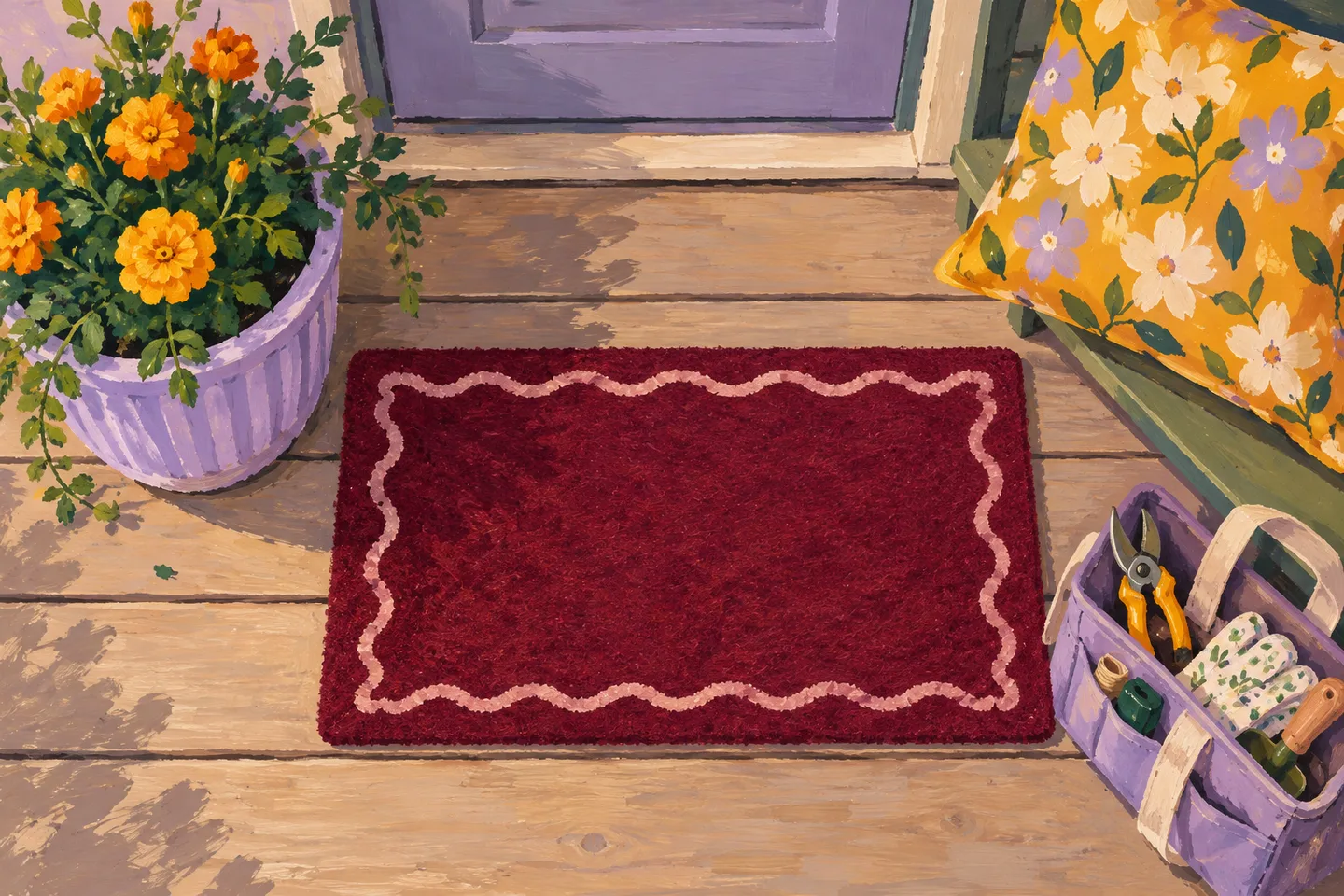
A useful mat is an everyday upgrade when the current one curls, slips, or catches the door. Measure the available area and check the door movement before shopping. Choose a product suitable for the floor and the exposure. A large decorative rug is not automatically a better entry mat simply because it fills the porch visually.
Test the mat with the door operating normally and check it after weather changes. Follow the care guidance for both the mat and the surface beneath it. Avoid layering products when the added thickness creates a trip edge or interferes with drying. The practical result should be easier arrival, not another object that needs constant adjustment.
If the threshold itself is damaged or there are building-related water concerns, separate those from the mat project. A new textile cannot repair the underlying condition. Arrange appropriate assessment rather than using a decorative upgrade to postpone attention to the entrance detail.
Project four: assemble a suitable freestanding piece
A compact outdoor side table or manufacturer-designed freestanding planter can be a manageable task when the instructions, tools, and skill level fit. Read the entire assembly sequence before beginning. Confirm that all components are present and that the finished product is intended for the actual exposure.
Assemble on an appropriate surface and follow the specified order and hardware. Do not substitute fasteners or omit parts to make the piece look finished before the weekend ends. Check stability as instructed and do not use the item if something is uncertain. A simple product should still be assembled as a complete system.
Position it only after testing the occupied furniture arrangement. A new table belongs where someone can reach it, not wherever there happens to be an empty gap. Keep the instructions and product information for future care or replacement parts. The project includes making the object usable and maintainable, not merely completing the assembly.
Project five: simplify soft accessories
Refresh a chair with a suitable cushion or clean an existing textile according to its own instructions. Check how the cushion affects seat depth, support, and stability. Choose a color or texture that connects with the door, furniture, or planters rather than introducing an entirely new decorative theme.
Plan drying and storage before adding several accessories. A porch roof does not guarantee dry conditions, and a cushion collection can make using the space more demanding. Start with the item that improves comfort most. A smaller, manageable selection can make the porch feel complete without requiring a daily setup routine.
Do not assume a removable cover can be washed in any machine or that every outdoor textile accepts the same cleaner. Identify the material and follow its care label. If the fabric or filling is deteriorated, determine whether an appropriate replacement is available instead of layering another cover over a problem.
Put the weekend in a sensible order
| Stage | Focus | Keep out of the rushed schedule |
|---|---|---|
| Beforehand | Measurements, instructions, permissions and materials | Unverified assumptions about surfaces or supports |
| First session | Clear, clean appropriately and test the plan | Coating work without suitable preparation and weather |
| Second session | Assemble or arrange the selected improvement | Fixed wiring or structural changes beyond your scope |
| Final review | Operate the door, sit, walk and inspect | Declaring success only from a photograph |
Allow drying and product-specific waiting periods to control the schedule. If a task cannot be completed appropriately within the available conditions, choose a different project or postpone the next stage. A weekend deadline should not override instructions for a finish, adhesive, cleaner, or assembled product.
Keep one small list of unfinished items rather than letting them disappear into the new arrangement. Missing hardware, uncertain stability, or a damaged surface is not a decorative detail. Finish or resolve the concern before normal use. The value of a modest project is that its scope remains clear enough to complete properly.
Give the project a clear acceptance check
Before starting, describe how you will know the upgrade is complete. For a layout reset, the door should operate normally and the chosen chair should remain usable while someone enters. For a planter group, the plants should suit the conditions, the containers should drain appropriately, and the route should remain clear. For an assembled item, the product should be complete and stable according to its instructions.
Use the same check at the end rather than judging only whether the porch looks different. If the original frustration remains, resist adding accessories to make the project feel finished. Revisit the part of the plan that was supposed to solve it.
Keep the next project separate. A successful weekend improvement can reveal another useful task without requiring you to begin it immediately. Record the idea, any measurements, and the conditions it would need. This protects the time and budget already spent and keeps a manageable upgrade from expanding into an unfinished series of changes.
Questions about quick porch projects
Is repainting a door always a weekend job?
Not automatically. Existing coatings, preparation, product compatibility, weather, and drying time can change the scope. Follow the actual product system and assess uncertain old finishes appropriately. If the conditions do not fit, choose a layout or accessory project instead of rushing a coating task.
What if I rent the property?
Check the tenancy conditions and obtain any necessary permission before attachments, finishes, or alterations. A freestanding arrangement may be more suitable, but it still needs to preserve access and suit the surface. Do not assume removable means unrestricted or harmless.
Which project should I start with?
Choose the frustration you notice most often and the task you can complete properly. The budget decorating guide, small porch plan, and plant arrangement guide can help define a specific first improvement.