Low-Maintenance Outdoor Potted Plants for Busy Homeowners
Choose outdoor container plants that match your conditions and available care, with practical ways to reduce unnecessary maintenance.
Choose a routine before choosing a plant
Low-maintenance outdoor potted plants are not plants that need no attention. They are plants whose requirements match your site and the care you can provide consistently. A drought-tolerant plant in an unsuitable wet corner can be more troublesome than a thirstier plant in the right setup. Begin with conditions and routine, then use those facts to build a shortlist.
Observe light, wind, reflected heat, and whether rain reaches the containers. Think about how often you are away and who can help during unusual weather. A plant may be easy for someone who checks pots daily but inconvenient for a household that leaves frequently. The useful question is not simply which plant is toughest, but which setup creates the least unnecessary work for your situation.
This guide offers plant directions to investigate with a reliable local source. Exact species, cultivars, climate, and container conditions matter. Check suitability around children and animals, and confirm regional restrictions or invasive concerns before buying. An attractive plant in another region is not automatically a responsible or successful choice for your porch or patio.
Reduce maintenance through the container itself
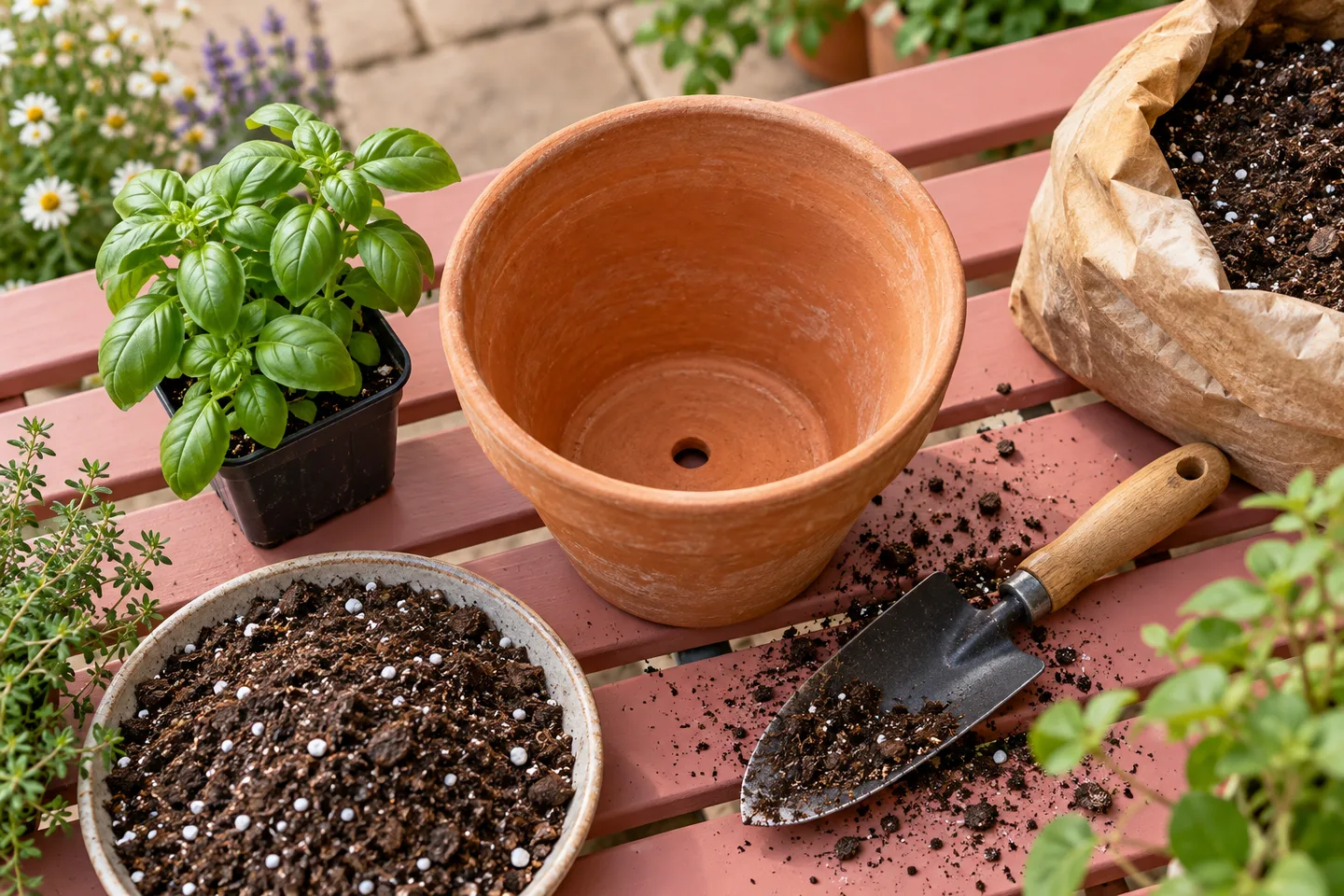
An appropriate pot can make care more manageable. Consider usable root space, drainage, stability, and the way the material affects handling. Very small pots may require closer attention than suitably larger containers. Oversized pots are not automatically better either; the plant and growing medium must work with the container rather than sitting in an arbitrary amount of wet material.
Keep the number of containers realistic. Three plants with compatible needs can be easier to manage than ten unrelated selections arranged across the yard. Position them where you will notice changes and can reach them comfortably. A pot tucked behind furniture may be forgotten until the problem is advanced.
The Illinois Extension watering resource describes how container materials and growing conditions affect water management. Use such guidance to plan observation rather than to impose one fixed schedule on every pot. A low-maintenance arrangement removes avoidable complications while keeping the plant's actual needs visible.
Plant direction one: suitable sedums and hardy succulents
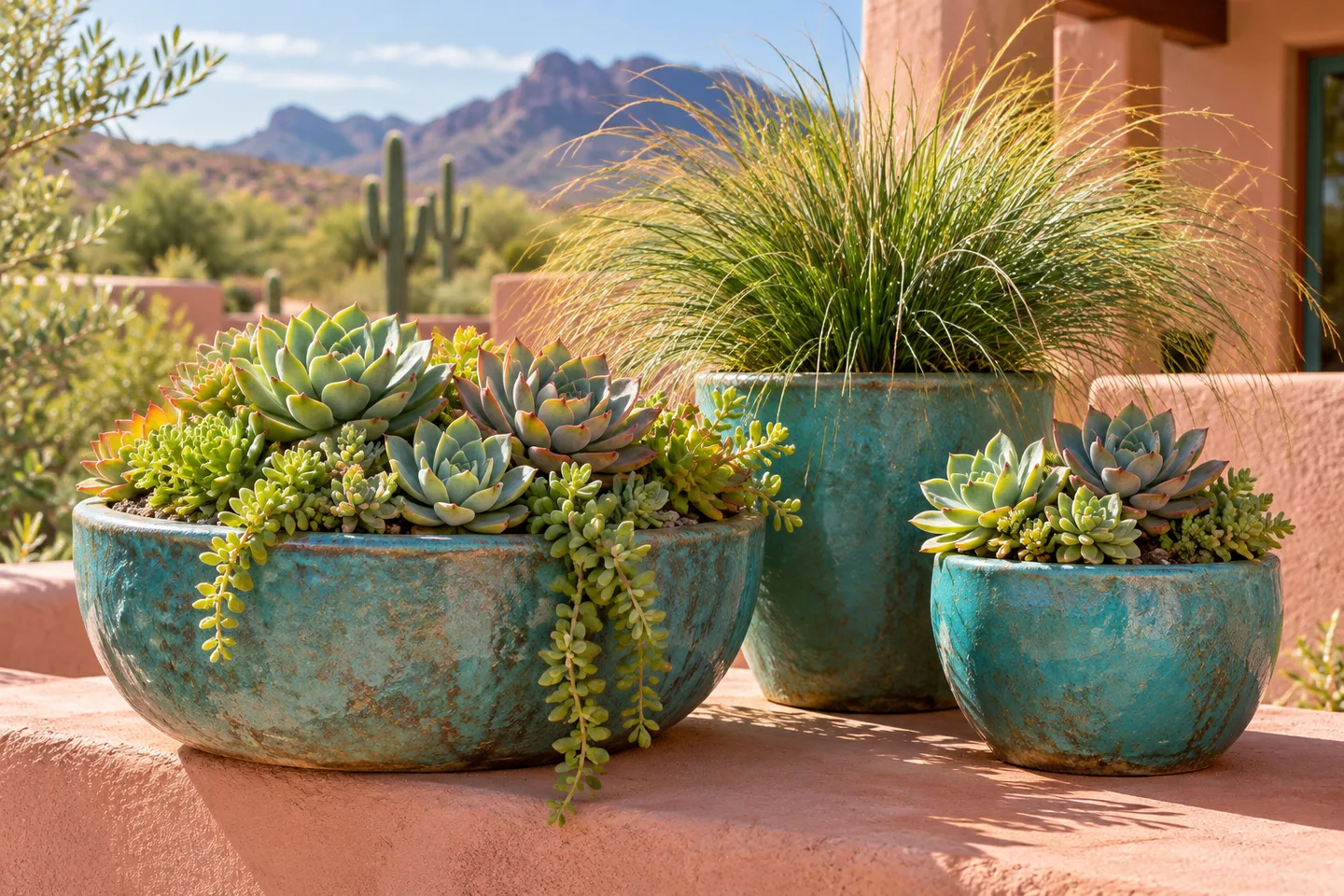
Some sedums and other appropriately selected hardy succulents can be useful for sunny, well-drained containers. The specific plant and local conditions matter; not every succulent sold for decoration is suitable outdoors year-round. Ask about light, winter wet, cold tolerance in containers, and the medium recommended for the actual selection.
Their appeal is often a compact habit and a clear leaf or rosette form. A small group can provide texture without requiring a large floral display. However, avoid treating drought tolerance as permission to ignore a pot indefinitely. Establishment, root volume, and unusual heat still affect care. Check the container rather than relying solely on the plant's reputation.
Place such plants where drainage is reliable and the selected species receives the exposure it needs. A deeply shaded, damp porch may be the wrong setting even if the plant is advertised as easy. Choosing a different plant for that corner is usually more practical than repeatedly trying to make an unsuitable favorite succeed.
Plant direction two: regionally suitable ornamental grasses
Selected ornamental grasses can provide movement and a strong outline in a container, but size and regional suitability need attention. Ask for a cultivar whose mature dimensions fit the pot and the patio. A vigorous landscape grass may become awkward in a small container or require more management than its simple appearance suggests.
Consider seasonal appearance. Some selections change color or become dormant rather than remaining identical year-round. Decide whether that effect suits the entrance and whether the container still looks intentional during quieter periods. A durable pot and a good position can provide structure even when the foliage is not at its fullest.
Confirm maintenance tasks such as division, trimming, and winter handling with a reliable local source. Avoid assuming all grasses need the same treatment at the same time. Check invasive concerns for the exact plant in your region. The right choice should be straightforward to manage without creating a problem beyond the container.
Plant direction three: foliage plants for suitable shade
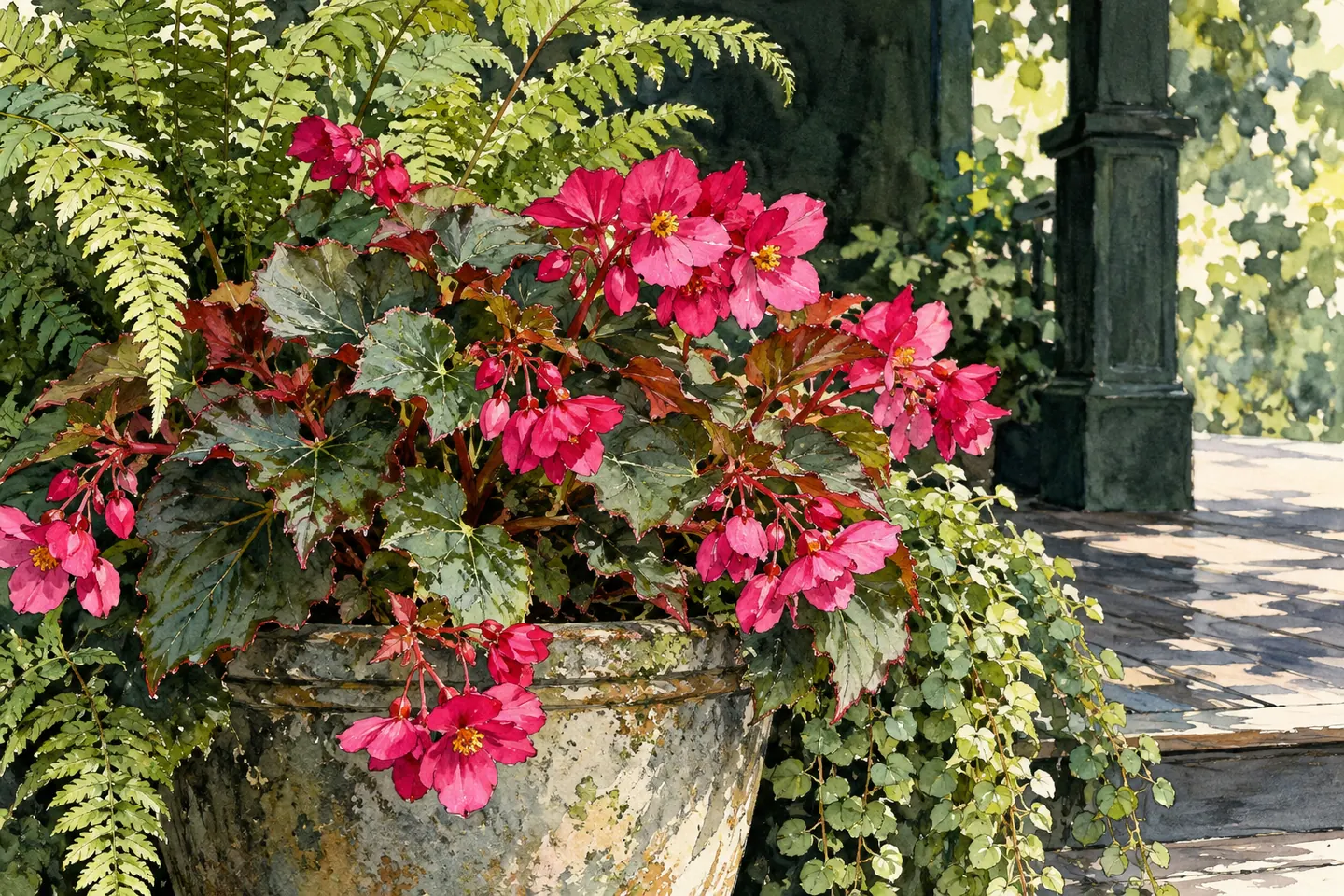
For a shaded porch, investigate foliage-led selections that suit the specific light and climate. Depending on the site, an appropriate heuchera, hosta, or identified fern may be worth discussing. Their needs differ, so do not group them as one interchangeable care category. Match the plant to the conditions you actually observed.
Foliage can reduce reliance on a constant sequence of flowers for visual interest. Choose the leaf shape and mature outline deliberately. A bold leaf beside simple siding may have enough presence without several competing companions. This can simplify the arrangement, although it does not remove the need for watering, drainage, and seasonal attention.
If the porch is deeply enclosed, be honest about light limitations. A plant described as shade tolerant still needs an appropriate amount of natural light. Ask for advice based on photographs and observations rather than buying repeatedly from the same generic shade display. Correct placement is one of the most useful maintenance-saving decisions available.
Plant direction four: selected woody plants in adequate containers
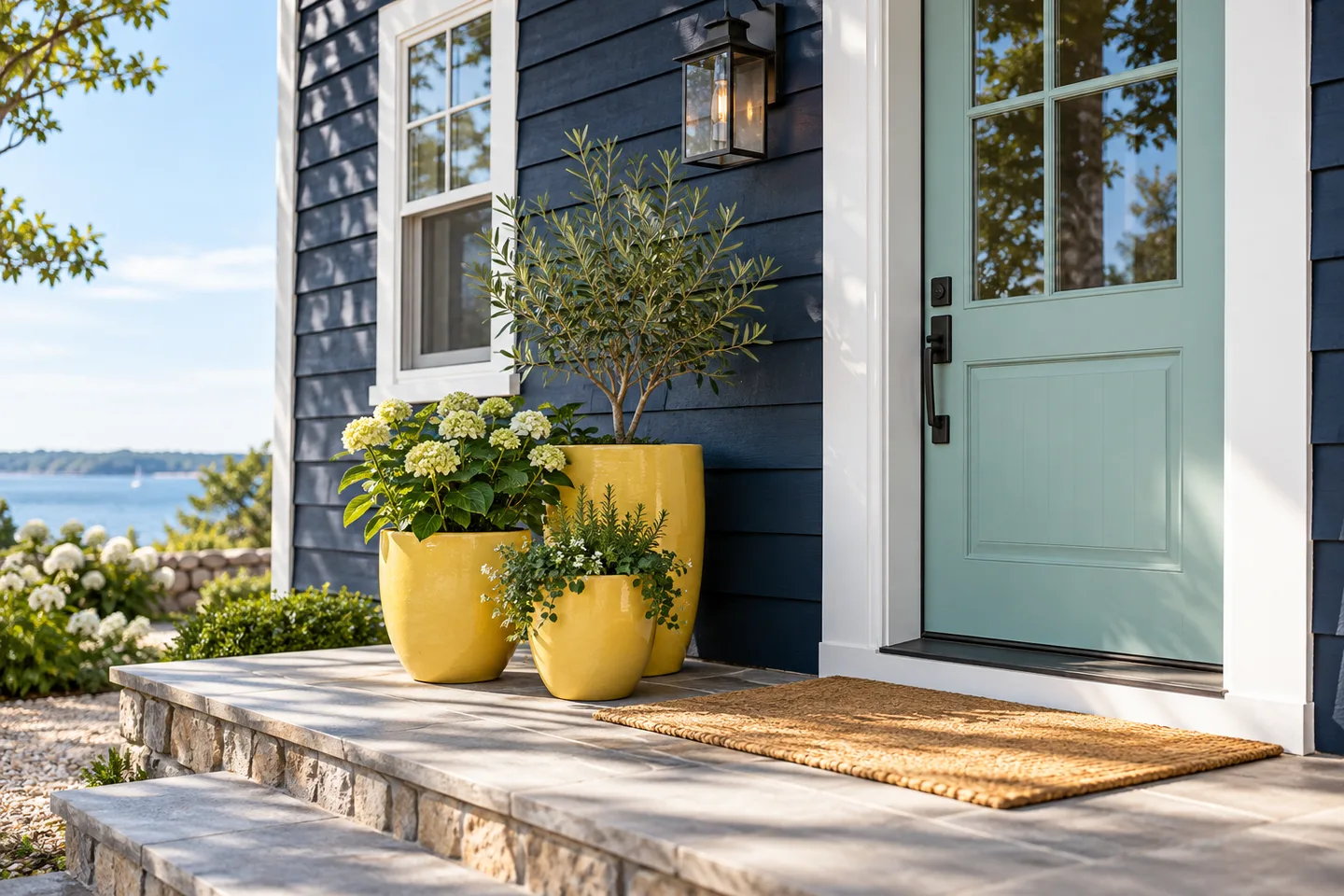
Some compact woody plants can provide longer-term structure, but they require a serious container plan. Root volume, weight, drainage, climate, and eventual repotting or replacement all matter. A shrub should not be chosen solely because it looks like a permanent decorative object in a doorway photograph.
Ask how the plant performs in a container locally and what happens as it matures. Check pruning expectations and whether the intended shape requires frequent work. A naturally suitable habit is usually easier to maintain than a plant that must be continually restrained to fit the allotted space.
For cold climates, discuss root protection and container suitability specifically. A plant's in-ground hardiness is not a complete plan for an exposed pot. Large containers also deserve attention to the surface beneath them and any structural loading concerns. Seek appropriate advice before positioning heavy plantings on raised decks or balconies.
Compare maintenance commitments honestly
| Plant direction | Potential advantage | Work that still remains |
|---|---|---|
| Suitable sedum or hardy succulent | Clear form and potentially modest water needs | Correct exposure, drainage and seasonal observation |
| Selected ornamental grass | Movement and a strong outline | Species-specific trimming, size management and winter planning |
| Shade-suited foliage plant | Texture without relying on flowers | Moisture checks, local suitability and seasonal care |
| Compact woody selection | Longer-term visual structure | Adequate root space, weight, pruning and eventual renewal |
The table is a way to compare responsibilities, not a ranking of universally easy plants. Take your observations to a local nursery or extension service and ask which direction best matches the site. A useful recommendation should include the exact plant name and a care routine you can realistically follow.
Create a short care system you will remember
Keep plant labels together and make a brief note of each pot's requirements. Group compatible needs where practical, while preserving the right light for each selection. Check moisture and visible condition before acting. This makes it easier to distinguish a plant needing attention from one that simply has a different normal appearance.
Before leaving for several days, arrange care with someone who understands the actual pots. Give clear instructions based on observation, not a blanket request to water everything heavily. An irrigation product may help in some setups, but it needs appropriate design, testing, and maintenance. Do not introduce an untested system immediately before travel.
Ask for the exact plant, not a general category
A nursery conversation becomes more useful when it moves from ornamental grass or succulent to an identified species and cultivar. Iowa State Extension's grass guide illustrates the range of mature sizes and site preferences within one broad group. Use that distinction to ask whether a compact selection is truly appropriate for the proposed container and local setting.
Take a photograph of the patio and a note of the observed light. Explain whether you want a seasonal display or a longer-term plant and how you will manage winter. Ask what care is necessary during establishment, not only once the plant is settled. The initial routine can be different from the eventual maintenance pattern.
Write the name down before purchase and keep the label. This allows later advice to address the actual plant rather than a vague description. A reliable identification also helps you avoid repeating a poor match simply because another pot on the sales bench has a similar-looking leaf.
Questions about low-maintenance containers
Are drought-tolerant plants the easiest choice everywhere?
No. Their needs still have to match light, drainage, climate, and the pot. A wet, shaded location can be unsuitable. Choose for the site first and use drought tolerance as one relevant characteristic rather than a universal promise of low effort.
Can I leave outdoor pots out all winter?
Only when the plants, containers, and placement are suitable for the local conditions. Confirm container overwintering guidance, not just the plant's general hardiness label. Some arrangements need protection, relocation, or seasonal replacement, and that work belongs in the maintenance decision.
How can I make an existing collection easier to manage?
Identify the plants, remove unsuitable combinations, and simplify access and watering. Use container setup, shade plant selection, and common container mistakes to find the avoidable work before replacing every plant.