How to Start a Container Garden on a Small Patio
Start a small patio container garden with suitable plants, appropriate pots and growing medium, and a watering routine based on observation.
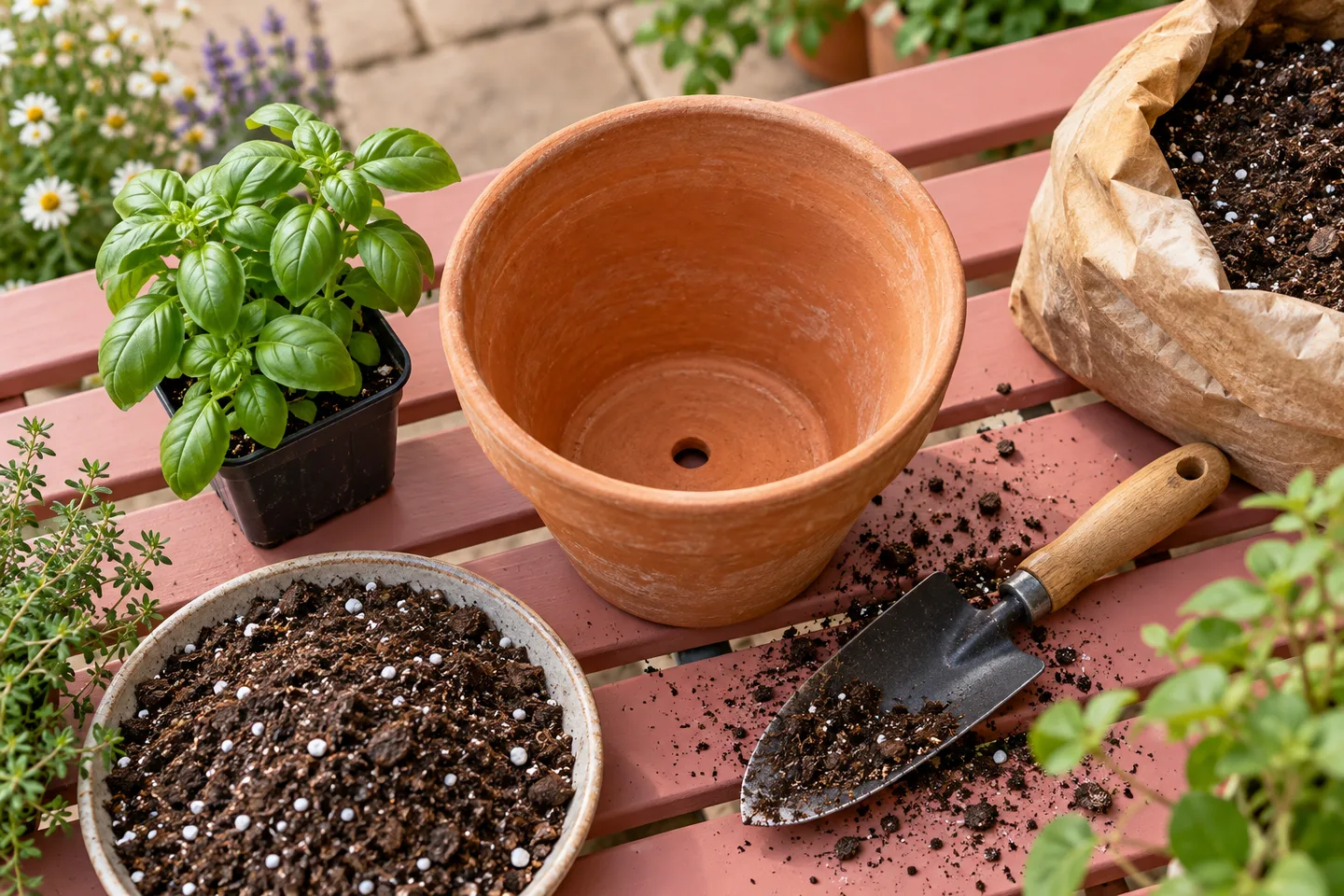
Begin with a few pots you can care for well
Container gardening for beginners is easier when the first project is small enough to observe closely. Two or three suitable pots can teach you more than a crowded patio full of unrelated plants. You will notice how quickly the growing medium dries, which part of the patio receives useful light, and whether the arrangement leaves enough room to sit and move comfortably.
Choose the growing location before buying plants. Watch it during the day and note direct sun, shade, wind, and access to water. A patio can contain several different conditions within a short distance. Plants beside a warm wall may experience a different setting from those under an overhang, even when both positions appear equally convenient in a furniture plan.
Decide whether the garden is decorative, edible, or a modest mixture. Give the first project one clear purpose. A few herbs near the kitchen or a foliage group beside a chair can be a complete beginning. Avoid buying a large collection because the patio looks empty; every plant adds a care responsibility as well as a visual effect.
Step one: match plants to the observed conditions
Describe the location accurately when asking for plants. Explain the hours of direct light, whether rain reaches the pots, and how much attention you can provide. Ask for the exact plant name, expected mature size, and a practical care description. A label reading easy care does not tell you whether the plant fits your specific corner.
For edible plants, confirm that the selection and any products used with it are appropriate for that purpose. Do not treat every ornamental container as a safe food-growing vessel. Use known, suitable containers and growing medium, and check local extension guidance for the crop you intend to grow. Begin with a manageable number rather than promising yourself a complete patio harvest immediately.
The University of Maryland's container-growing resource is a useful reference for crop-specific container planning. Use recommendations for the actual plant rather than assuming all vegetables or herbs need the same pot. Local growing conditions and the season still matter when applying general advice.
Step two: choose containers for roots and routine
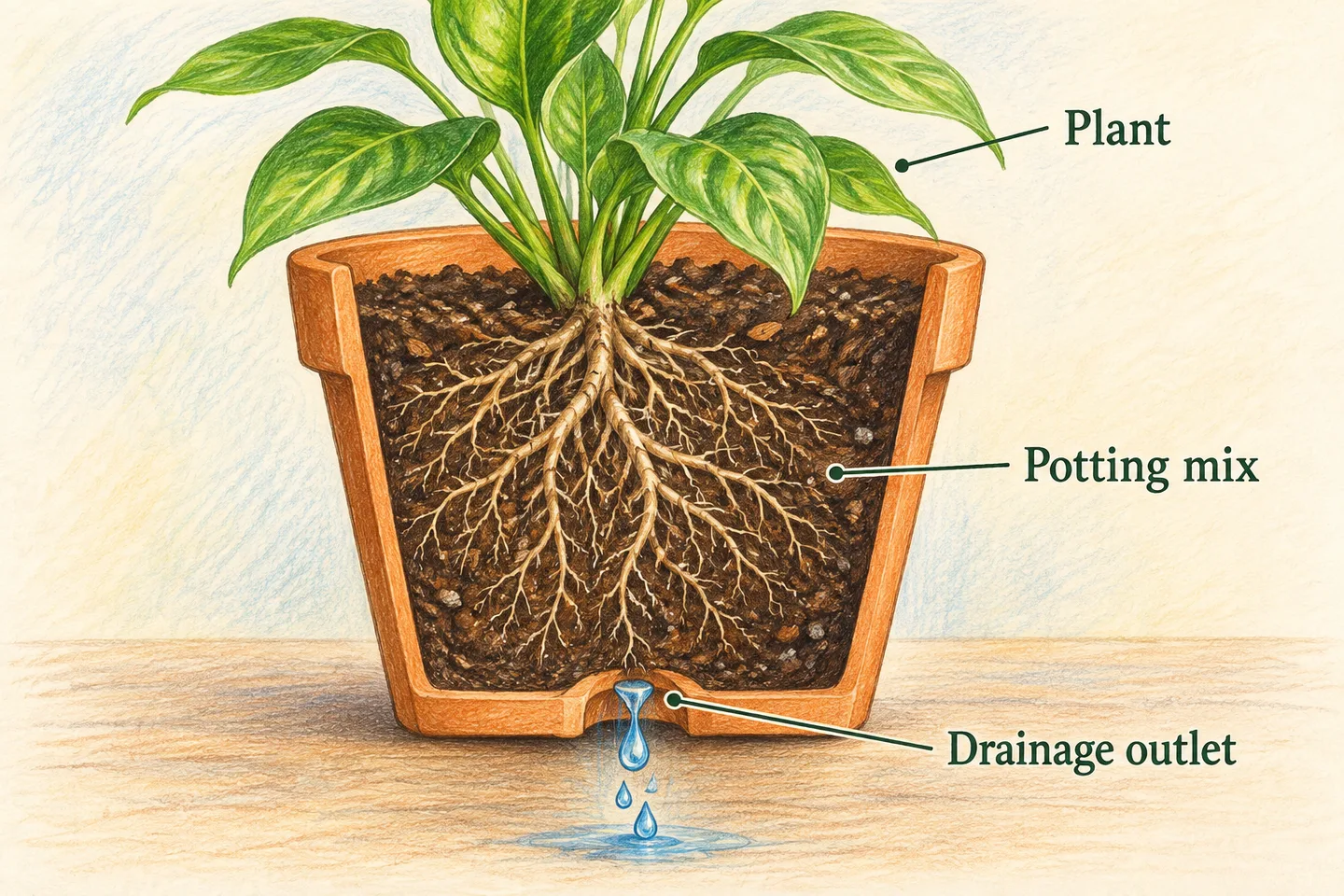
A pot needs suitable root space, drainage, and a stable position. Compare usable internal volume rather than just the decorative outside diameter. A tall, narrow container may not offer the root arrangement you imagined, and a tiny pot can create a more demanding watering routine than a larger appropriate one. Let the plant's needs lead the choice.
Consider weight when filled and watered. A container that is easy to carry empty can become difficult to move once planted. Raised decks, balconies, and other structures require particular care about loads; seek appropriate professional advice where needed. Do not assume that a group of pots is structurally insignificant because each item is sold as a garden accessory.
Check how water leaves the pot. A decorative outer container may not have drainage even when the inner nursery pot does. Avoid leaving roots standing in accumulated water. Arrange the pot so drainage does not create a slippery route, stain a sensitive surface, or interfere with the use of nearby furniture.
A simple starting kit
- Suitable containers with a clear drainage arrangement.
- Growing medium appropriate for container use and the chosen plants.
- A manageable selection of healthy plants with readable labels.
- A watering can or another method you can use comfortably.
- Basic hand tools and a place to keep product instructions.
You do not need a large specialist kit to begin. Add equipment when it solves a repeated task, not simply because it appears in a gardening display. Keeping the setup straightforward makes it easier to notice whether a difficulty comes from the plant, the pot, or an unnecessarily complicated routine.
Step three: use an appropriate growing medium
Choose a medium intended for the plant and container rather than automatically digging soil from the yard. Container roots need a suitable balance of moisture and air in a limited space. Check whether the purchased mix already contains fertilizer and follow its instructions before adding anything else. More ingredients do not automatically produce a better result.
Do not build a drainage strategy around filling the bottom with an arbitrary layer of gravel. University of Wisconsin guidance explains that layering materials can impede drainage rather than improve it. Use the appropriate growing medium and a functioning outlet, with plant-specific advice for any unusual container system.
Prepare the pot on a surface where spilled medium can be collected without blocking the doorway. Follow the plant's handling and planting guidance, including its appropriate depth. Avoid burying the crown or stem merely to make the pot look fuller. Leave practical room for watering at the top instead of filling so high that every application washes material over the rim.
Step four: plant for growth, not instant crowding
Plants often look small at purchase because they are at the beginning of their season or have been grown in nursery containers. Read their expected size before combining them. A container that looks densely finished on day one may quickly become difficult to manage if the plants compete for limited root space and light.
Combine plants with compatible needs. Similar color is not enough if one plant prefers different moisture or light conditions from its neighbors. For a first project, a single plant type can be easier to understand than an elaborate mixed display. You can still create variety across the patio through different leaf shapes or container heights.
Water the planting according to the needs of the plant and medium, then observe how it drains. Check that the container remains stable and that no runoff accumulates where people walk. Keep labels or record the plant names somewhere accessible. A simple record makes future care questions much easier to answer accurately.
Step five: build observation into watering
Do not water every pot merely because it is a particular day. Check the medium and the plant's condition, using guidance appropriate to the selection. Heat, wind, plant size, container material, and rainfall can change the routine. A small pot on an exposed edge may behave differently from a larger pot under cover.
Apply water in a way that reaches the growing medium without repeatedly washing it out. Let drainage work as intended and check any saucer or outer pot. Avoid leaving collected water indefinitely. If a pot seems dry unusually soon after watering, investigate the medium, roots, and drainage rather than simply doubling the schedule without understanding the cause.
Feed only according to the plant and product instructions. A stressed plant does not automatically need fertilizer. Check whether the problem is light, moisture, temperature, or root condition before adding another product. Keep original labels and do not combine treatments on the assumption that more intervention will speed recovery.
Arrange the garden around daily patio use
Keep the route to the house clear and leave access to each pot. Put plants where you can reach them without leaning across furniture. Grouping containers can make watering more convenient, provided their individual needs remain clear. Avoid a display that looks good from one viewpoint but makes maintenance awkward from every other position.
Review the arrangement as plants grow. Leaves may begin to brush a doorway or reduce the usable chair space. Reposition suitable pots before the conflict becomes a daily nuisance. A small patio garden should support the outdoor room, not gradually take over its circulation because the planting plan was based only on nursery size.
Keep a first-season container note
Record the plant name, container, growing medium, and position when you set up each pot. Add observations about light and moisture rather than trying to maintain a complicated diary. A few useful notes can reveal that one location dries faster or that a particular plant becomes too large for the intended corner. Those observations are more valuable than assuming the same arrangement should be repeated unchanged next year.
If a plant fails, keep the information without treating the outcome as proof that you cannot garden. Review the match between the plant and its conditions, then make a more specific next choice. A small first project is useful precisely because it creates manageable questions. You can refine the routine before increasing the number of containers and the range of plants.
Questions beginners often ask
How many containers should I start with?
Choose a number you can inspect and care for comfortably. Two or three well-planned pots are a useful beginning, but the right number depends on plant needs and your routine. Start modestly and add another container after the existing setup is working reliably.
Can I use a decorative pot without drainage?
It may be used as an outer container around a draining inner pot only when water can be managed appropriately. Do not allow the inner pot to remain in accumulated water. The exact arrangement should suit the plant and the way you will water it.
What should I do when a plant starts looking unhappy?
Identify the plant and inspect its light, moisture, drainage, and recent changes before treating it. Use container troubleshooting, low-maintenance selections, and porch planting arrangements to refine the setup. Seek local advice with clear photographs when the cause remains uncertain.