15 Small Front Porch Ideas to Make Your Entrance Feel Bigger
Fifteen considered ways to make a compact entrance easier to use, from one useful chair to a clear and welcoming doorway.
Begin with the space people actually use
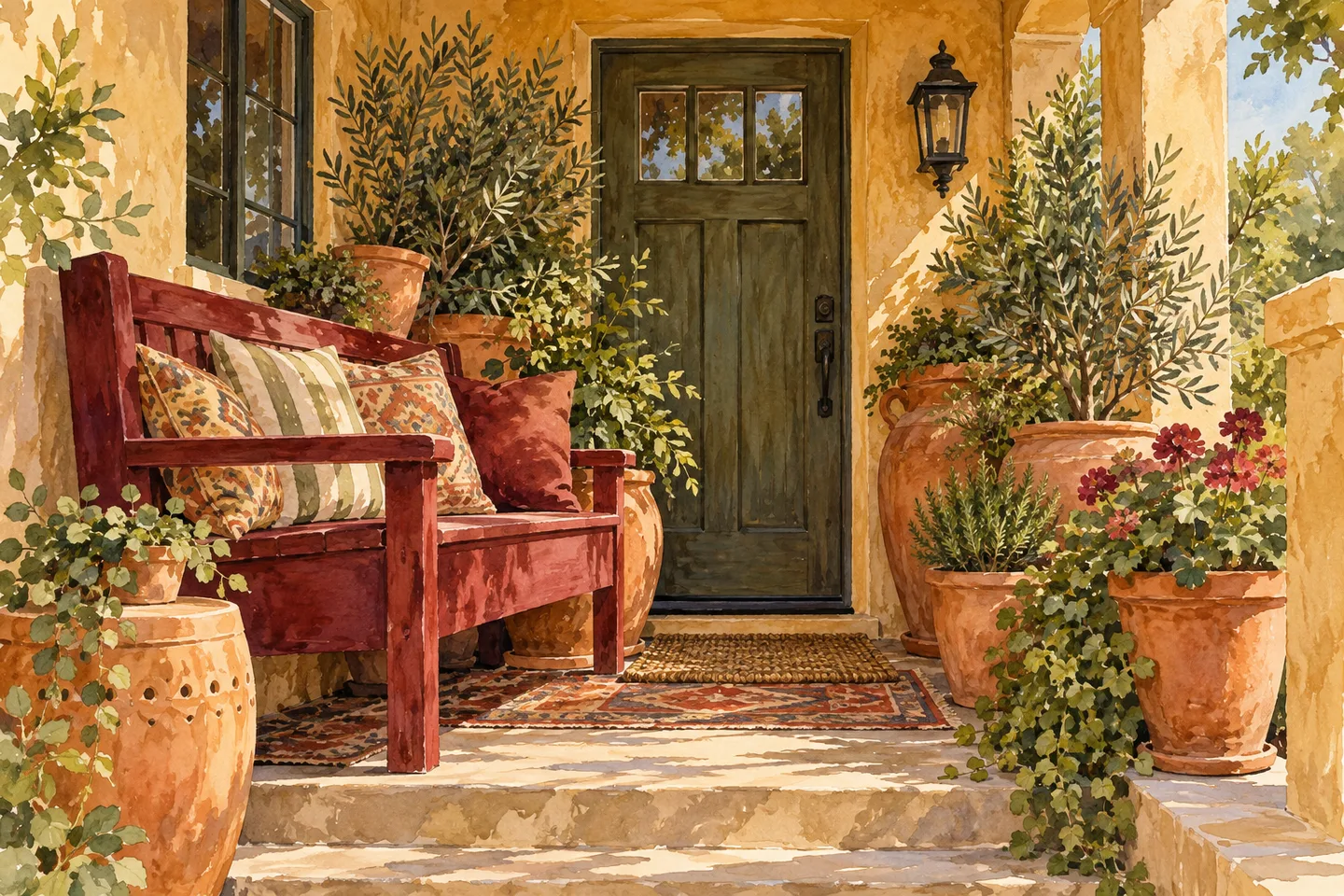
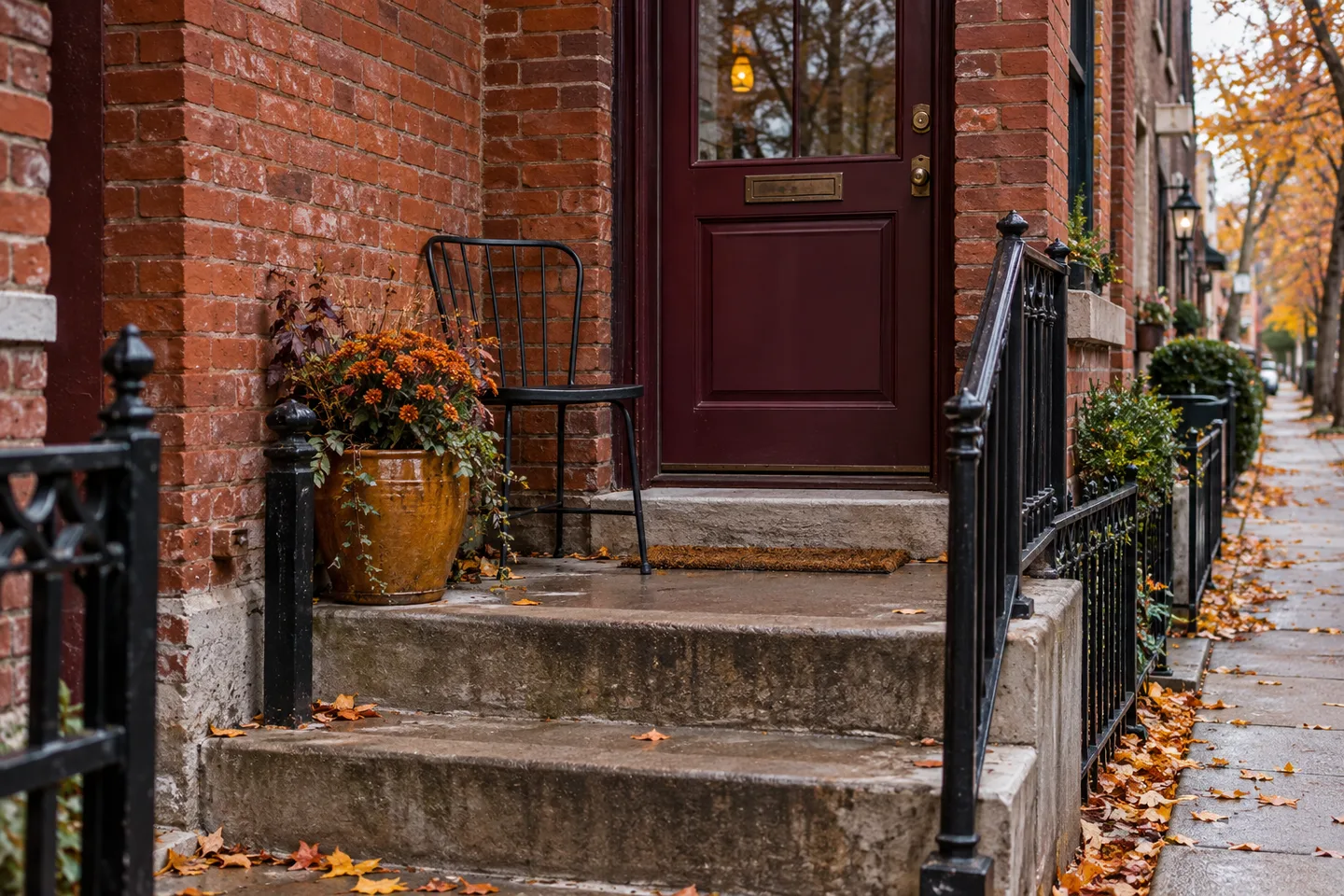
The most useful small front porch ideas make the entrance easier to use before they make it prettier. A clear doorway, a comfortable place to pause, and a few correctly scaled objects can accomplish more than a porch crowded with miniature furniture. You are planning a working threshold, with groceries, deliveries, wet shoes, and visitors passing through it.
Start by measuring the usable floor, rather than the outside edge of the porch. Mark the door swing, steps, columns, and anything permanently attached. Then notice where people stand while unlocking the door. That waiting area often needs more room than a photograph suggests. Keep required access and egress clear, and consult local requirements when a project changes the building or its circulation.
The fifteen ideas below are choices, not a shopping list. Pick the ones that solve a problem on your porch. A narrow stoop may need only a mat and one planter; a deeper covered porch might comfortably hold a chair and table. An entrance without seating can still feel generous, complete, and welcoming.
Fifteen changes worth considering
1. Draw the walking route first
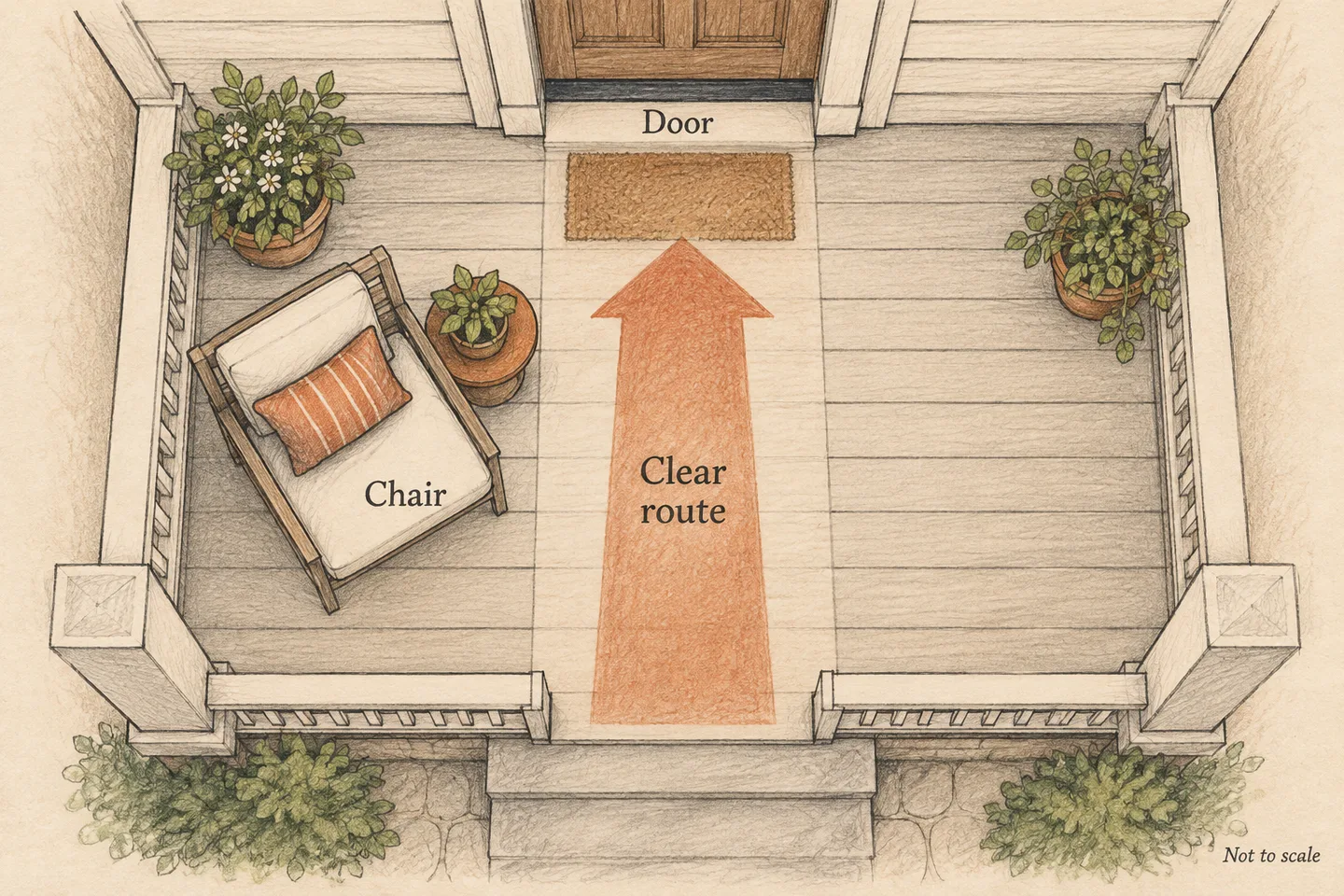
Trace the route from the steps to the door, including the movement needed to carry a bag or hold the door for someone else. Keep that route free of chair legs and pots. A clear approach makes a porch feel larger because its purpose is immediately legible. Before adding anything, walk the route with the objects you normally bring home.
2. Choose one genuinely comfortable chair
A single chair can create a convincing place to sit without forcing a pair into an unsuitable footprint. Measure its full depth, arms, and any reclining movement. Try a cardboard outline on the floor before buying. A visually light chair is helpful, but comfort and stability matter more than thin legs or an attractive product photograph.
3. Put a side table where it earns its space
Use a small table only when someone can actually reach it from the seat. A table stranded across the porch becomes another obstacle. Look for a stable surface large enough for the intended use, and test the arrangement with the chair occupied. If there is no comfortable position for it, omit it instead of squeezing it beside the door.
4. Give the doorway a quiet border
Let the door and its trim remain visible. Large wreaths, tall accessories, and hanging decorations can make a compact entrance feel busy when they compete with the opening. One restrained seasonal detail is often enough. Check that decorations do not interfere with hardware, glazing, door movement, or any lighting fixture.
5. Keep the color story short
Begin with the house materials already present: siding, brick, door paint, and floor finish. Add one or two complementary tones rather than introducing a separate color for every object. Repetition can connect a cushion, planter, and mat without requiring a matching set. This approach also makes future replacements easier because every item need not be identical.
6. Use the wall as visual breathing room
An unoccupied section of wall helps a small porch feel settled. Avoid filling it merely because it is blank. If you add a wall-mounted object, confirm that the surface and fixing method are suitable, and do not obstruct siding details, vents, or utilities. A restrained wall treatment can be more effective than another piece of floor furniture.
7. Group planters on one side
A small group of containers can define the entrance while leaving the opposite side open. Choose plants for the actual light and arrange pots so drainage does not create a slippery walking surface. Check the mature spread of foliage as well as the container diameter. Leaves that look compact at purchase can later intrude into the route.
8. Vary height without multiplying objects
Two or three distinct heights can give a planter group depth. You do not need a separate stand beneath every pot. Use stable, outdoor-suitable supports only where the arrangement needs them, and consider wind exposure. The goal is a readable group, with space around individual shapes, rather than a crowded collection competing for attention.
9. Choose a mat that fits the door movement
A doormat should lie flat, suit the flooring, and allow the door to open normally. Bigger is not automatically better when it leaves edges curling against a column or step. Test the mat after wet weather as well as when dry. Avoid layered rugs if they create a trip edge or hold moisture against a surface that needs to dry.
10. Make deliveries part of the plan
Notice where packages naturally land. If they regularly block the entrance, identify a better sheltered position that does not reduce access. A small, clearly designated landing spot may be more useful than another decorative object. Do not install a box or bench simply to hide deliveries if its footprint creates the same obstruction permanently.
11. Keep sightlines open through the railing
Where a porch has an existing railing, avoid packing furniture or planters against every opening. Visible space beyond the porch can help the footprint feel connected to the yard. Never alter required guards or handrails to improve the view without appropriate review. Work with the existing safety features rather than treating them as expendable decoration.
12. Let light reach the useful surfaces
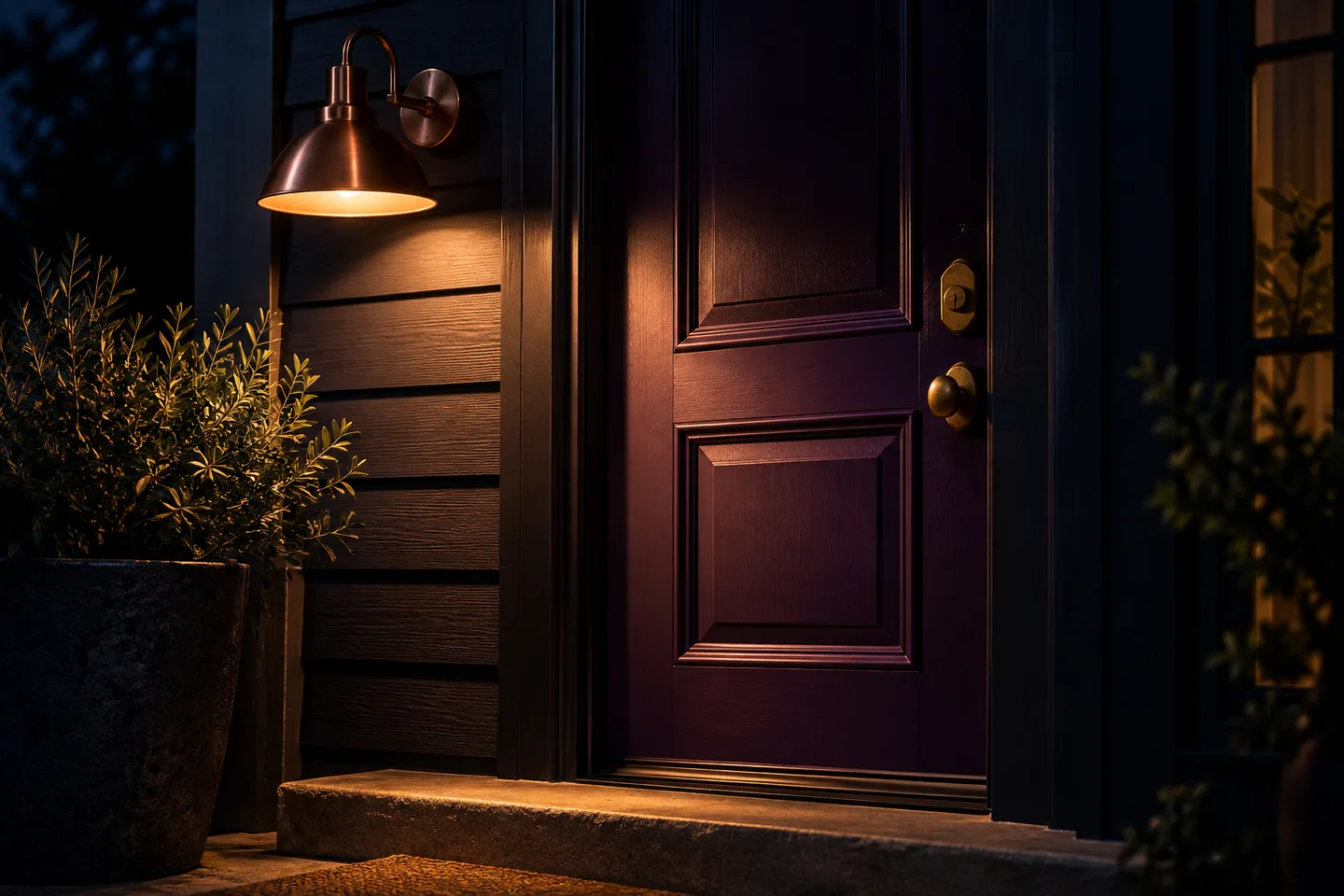
An entrance feels more legible when the lock, threshold, and changes of level can be seen. Evaluate existing lighting after dark before buying brighter bulbs. Glare and deep contrast can undermine a welcoming effect. See the separate lighting guide for fixture selection; changing fixed wiring or mounting positions belongs with a qualified electrician.
13. Store soft accessories somewhere realistic
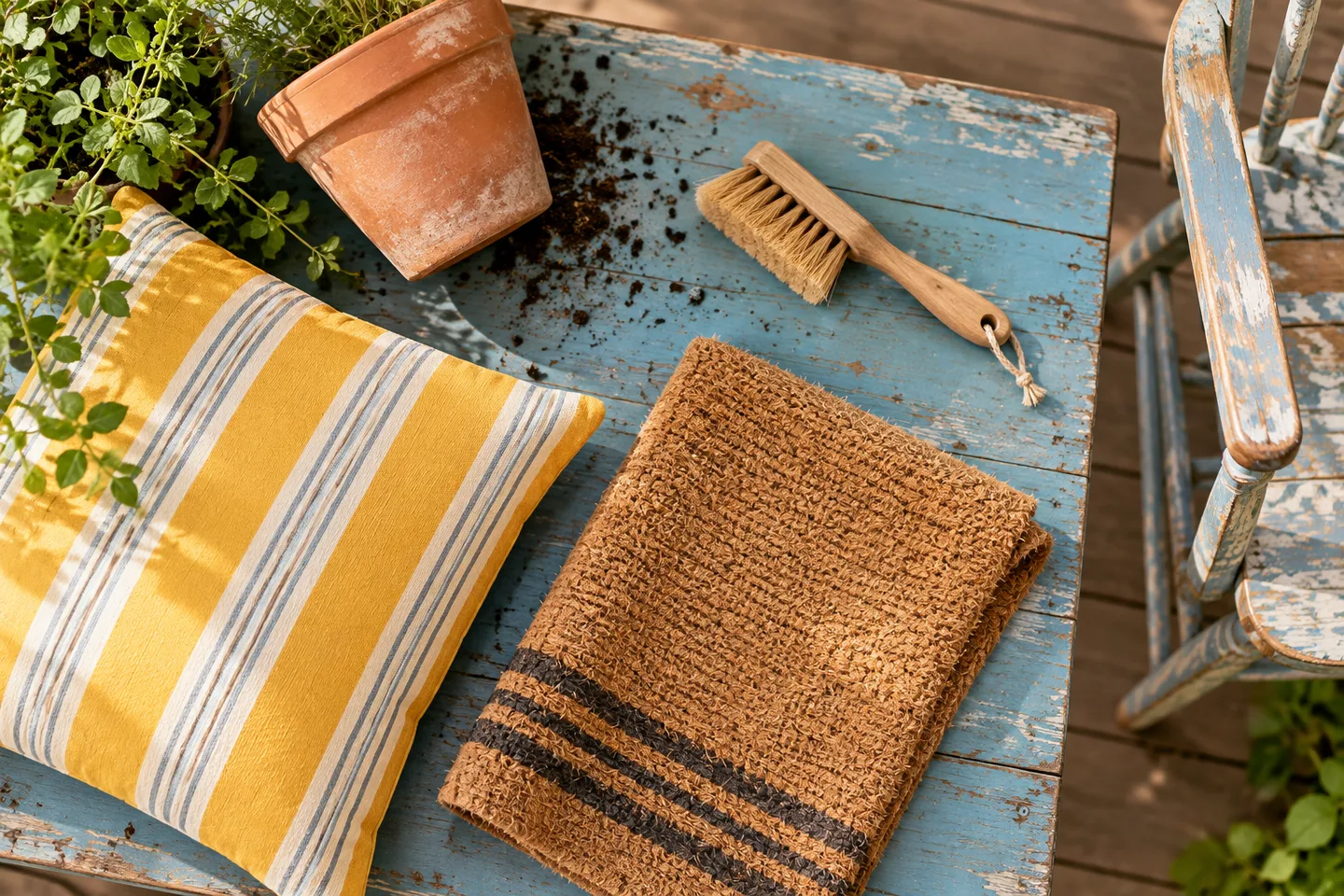
A cushion can make one chair more inviting, but it also needs a plan for wet weather. Decide where it will dry and where it will be stored before buying several. A porch that requires constant rearranging may become inconvenient to use. A smaller number of manageable accessories usually works better than a fully styled scene that must be rescued from every shower.
14. Repeat one material, not every object
A timber chair might connect with the tone of the front door; a dark metal table might echo existing hardware. Such relationships give the arrangement coherence without making it look purchased as a package. Keep the material choice practical for exposure and care. A repeated finish is useful only if the pieces themselves suit the porch.
15. Leave one corner deliberately empty
Empty floor can be functional space for turning, setting down a bag briefly, or accommodating another person at the entrance. Once the essentials are in place, resist filling the last gap immediately. Use the porch for a week and observe what happens. The missing object may turn out to be less valuable than the flexibility its absence provides.
Test two layouts before buying
For a hypothetical porch measuring six by eight feet, sketch the door swing and steps first. Try one version with a chair beside the door and another with the chair along the side wall. These are planning dimensions, not minimum clearance standards. Your actual route, building conditions, and applicable requirements determine whether either arrangement works.
Use cardboard or removable markers that are safe for the surface. Open the door, carry a full shopping bag through, and ask someone to sit while another person passes. Check the layout from inside the house, too. A chair that looks tidy from the sidewalk may block the view or feel awkward when approached from the doorway.
Questions about compact entrances
Should a small porch always have seating?
No. Seating makes sense when someone will use it and the occupied chair does not compromise access. On a shallow stoop, a clean threshold and a well-positioned planter can be a better solution. Let the activity determine the furniture rather than assuming that every porch must function as an outdoor room.
Do light colors always make a porch feel bigger?
Color affects how a space reads, but it cannot correct an obstructed route or oversized furniture. Begin with layout, then choose a limited palette that works with the house. A dark chair against light siding can look clear and intentional when there is enough space around it.
What should I change first on a tight budget?
Clear the floor, clean according to the material instructions, and test a new arrangement using what you own. Those steps reveal whether the porch needs a purchase at all. Then address the most noticeable practical problem, such as an unsuitable mat or a chair that is too deep, before adding decorative accessories.
Make a simple arrival checklist
Review the entrance with the household's usual belongings: a shopping bag, a parcel, or the shoes you remove at the door. Notice which objects need somewhere to land and which decorative pieces are repeatedly moved aside. Keep the useful landing places in the plan, while avoiding permanent storage in the route. The porch can feel more spacious when everyday arrivals have been anticipated rather than treated as interruptions to the styling.
Then view the entrance from the position of someone visiting for the first time. The door, bell, number, and walking route should be easy to understand. A familiar household can overlook an awkward arrangement because everyone knows how to negotiate it. That fresh viewpoint helps distinguish a genuinely welcoming porch from one that only feels convenient to its regular users.
Continue planning the entrance
For the next decision, read how to choose small porch furniture, the budget porch decorating plan, and the guide to arranging porch containers. Each expands one part of the plan without requiring a complete makeover.