How to Choose the Right Furniture for a Small Porch
Choose compact outdoor furniture by its occupied footprint, comfort, exposure, and care requirements rather than its catalog photograph.
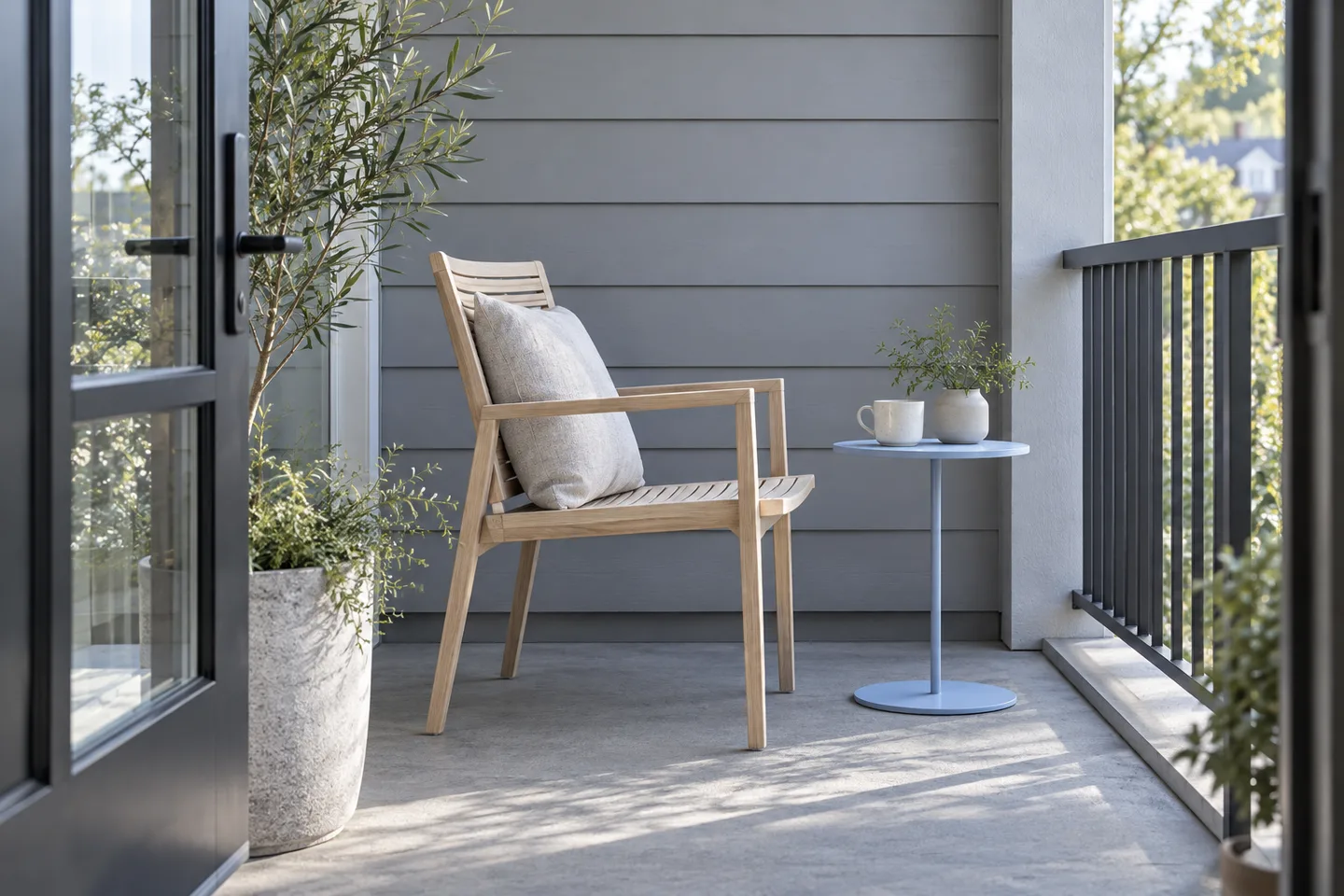
Choose the activity before the furniture
Small porch furniture should support something you want to do: drink coffee, take off muddy shoes, read for a while, or wait beside the door. Start with that activity instead of a matching set. A porch that comfortably holds one good chair may be more useful than the same space filled with a loveseat, table, and two chairs that nobody can move around.
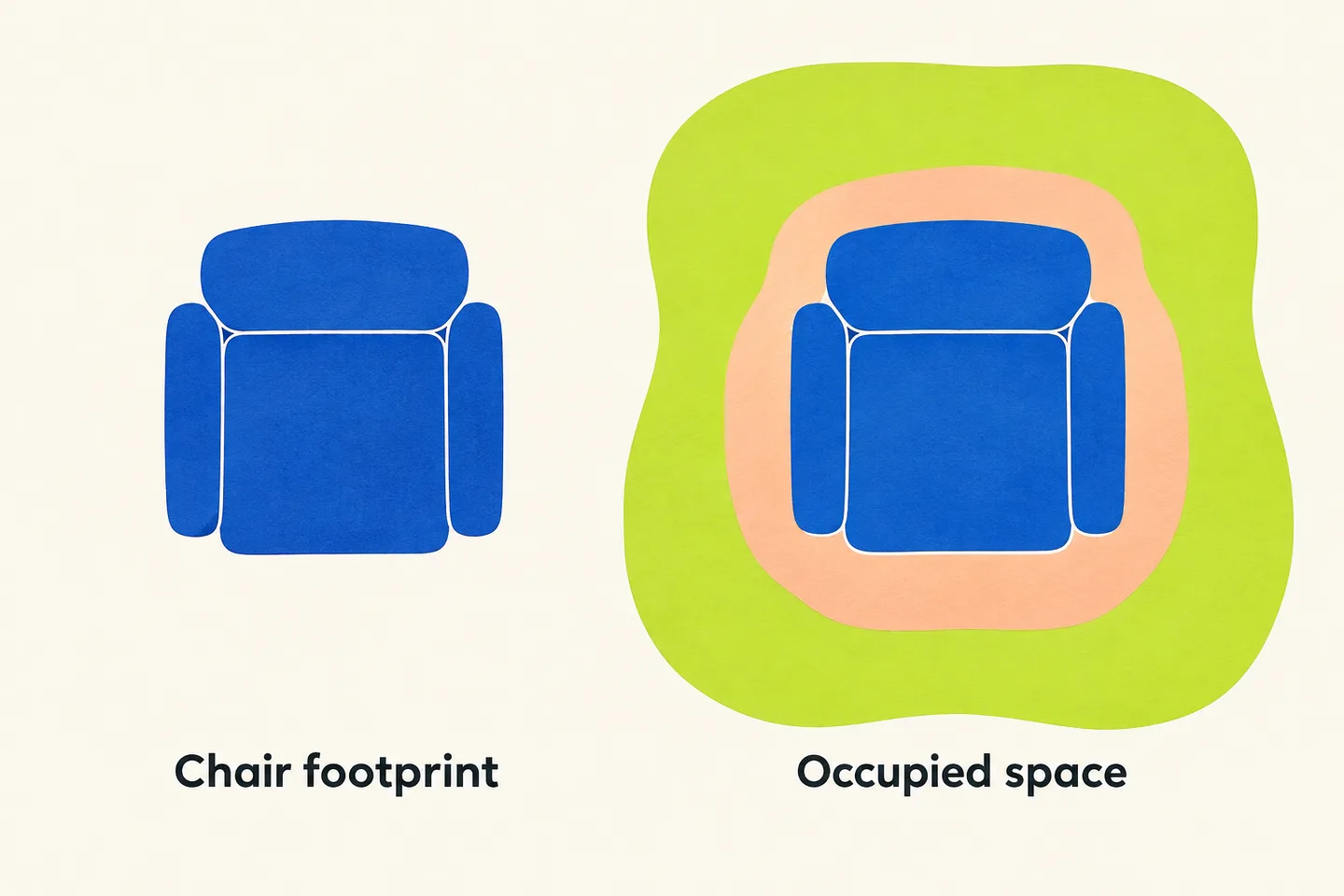
The important measurement is the occupied arrangement. Chairs need room for legs, arms, standing up, and sometimes reclining or rocking. Doors need their normal movement, and other people need a clear route while someone is seated. Furniture dimensions in a catalog describe the object, not the entire activity that happens around it.
Before shopping, make a short brief with three things: the use, the maximum practical footprint, and the weather exposure. Add a storage plan for cushions and loose accessories. That brief makes it easier to reject an attractive piece that does not solve your problem, even when the price or styling is tempting.
Measure the porch as a working entrance
Draw a simple plan with the door, steps, columns, rails, and any permanent features. Mark the door swing and the places people naturally stand. Include routes to a mailbox or another frequently used object. If there are accessibility, egress, or building requirements relevant to the property, preserve them; a decorating sketch does not replace professional review.
Use full outside dimensions for proposed furniture, including arms and projecting feet. A chair described as compact may still be deep. A round table can occupy an awkward position even when its diameter sounds small. For a rocker or reclining chair, find the operating dimensions as well as the resting dimensions before deciding it will fit.
Try temporary floor outlines made from cardboard or surface-safe markers. Place an existing chair nearby to understand the movement. Open the door, sit down, stand up, and walk past carrying a bag. If the arrangement works only when every piece is pushed into a perfect position, it may be too tight for daily use.
Consider the view from inside
Furniture can look balanced from the street and still feel intrusive when seen through the front door. Check the main sightline from the interior. A tall chair back or bulky storage bench might dominate that view. Lower visual weight can help, but do not sacrifice useful support or safe construction simply to make the furniture disappear visually.
Compare shapes by what they let you do
| Furniture type | Where it can help | What to test first |
|---|---|---|
| Upright chair | A short pause or a small reading spot | Seat comfort, overall depth, standing up |
| Bench | Shared seating along a suitable wall | Full length, usable approach, occupied leg space |
| Rocker | A porch with enough operating room | Backward and forward movement, clearance from rails |
| Folding chair | Occasional seating with real storage | Stability, safe folding, weight and storage access |
| Small side table | A reachable surface beside a seat | Stability, reach, interference with the route |
A bench is not automatically the best space-saving choice. It may use a wall efficiently, but the full length can prevent other arrangements, and a deep seat still needs leg space. Consider whether two people will actually sit there. One comfortable chair may better serve a porch used mainly by one person.
Folding furniture can be useful when it is straightforward to carry and store. However, a folding chair left permanently in the walking route offers no space-saving advantage. Test the mechanism, check the manufacturer's use instructions, and think about where fingers, children, or loose accessories could be caught during opening and closing.
A small table should be selected after the seat position is established. Check the reach from a relaxed seated posture. Avoid a narrow, unstable object that tips easily because it technically fits a leftover gap. A table that has to be moved every time the door opens is evidence that the plan needs another look.
Match the material to the actual exposure
A covered porch can still receive sideways rain, reflected sun, humid air, and dirt. Read the maker's guidance for the specific product rather than relying on a broad material label. Two wooden chairs can have different finishes and care requirements; two woven chairs can be made from entirely different materials.
Metal furniture may be slim and practical, but check protective finishes, joints, feet, and the manufacturer's guidance for exposure. Wood can provide warmth and a comfortable visual connection to the house, while requiring care suited to its species and coating. Synthetic lumber and resin products also vary, so avoid assuming every plastic-looking product has identical durability.
For example, Trex Outdoor Furniture's product care guidance applies to its own furniture and materials. It should not be transferred automatically to unrelated wood, metal, or woven products. Use manufacturer information to compare the maintenance commitment you are actually accepting, especially if the porch is exposed for much of the year.
Check contact with the porch floor. Suitable feet or protectors may be needed for the particular surface, but they should not make the furniture unstable or trap damaging moisture. Look at how a chair behaves when someone leans back or shifts position. A visually delicate frame is not a substitute for a sound, comfortable piece.
Treat cushions as part of the purchase
The chair's frame is only one part of the space and maintenance plan. Cushions add thickness, affect sitting height, and may reduce the usable seat depth. Confirm whether they are included, how they are secured, and how covers or inserts are cleaned. Check replacement availability if that matters to the planned lifespan of the piece.
Decide where soft furnishings will dry after rain. A covered porch does not guarantee that cushions stay dry, and a storage box can create problems if damp textiles are closed inside it. Follow the fabric and furniture guidance. If moving several cushions every day would become a chore, choose a simpler arrangement from the beginning.
Color and texture should work with the existing door, siding, and floor. You do not need several coordinating patterns to make one chair feel intentional. A restrained textile can connect the piece to the entrance without turning every future replacement into a search for a discontinued collection.
Inspect quality before committing
Sit in the chair long enough to notice the arm height, back angle, and front edge of the seat. Stand up and sit down again. If you are buying online, compare measurements with a chair you already find comfortable rather than guessing from a model photograph. Read return conditions, delivery arrangements, and any assembly requirements before completing the purchase.
For a secondhand piece, inspect joints, cracks, missing components, exposed edges, and uncertain repairs. Do not use furniture that appears unsafe, and do not assume cosmetic refinishing will restore structural reliability. An inexpensive item requiring specialist work can exceed the cost and effort you intended for the porch.
Keep the first arrangement simple for a week after installation. Notice whether people choose the seat, whether packages create an obstruction, and whether the furniture is easy to maintain. Adjust the position before purchasing accessories. A useful porch arrangement often emerges from observation rather than a single large shopping trip.
Questions about choosing compact seating
Is armless furniture always better for a small porch?
No. Removing arms may reduce width, but arms can contribute to comfort and help someone stand up. Compare the actual dimensions and intended use. A slightly wider chair that is comfortable and fits well can be a better choice than a narrower one that nobody enjoys using.
Should every piece match?
Matching is optional. A shared color, material, or simple shape can connect different pieces while allowing each to serve its own function. Start with the main seat and add only what the layout needs. The entrance should look coherent without requiring a complete set.
How do I know whether a deep lounge chair will work?
Use its full operating dimensions, then test an occupied outline with realistic movement. Consider the door swing, walking route, and access for cleaning. If using the chair blocks the entrance, the depth is unsuitable even if the empty chair can be squeezed into the plan.
Compare two chairs with the same checklist
When two pieces look equally suitable, compare them under the same conditions. Record width, depth, weight, seat measurements, care requirements, assembly, and the return arrangement. Include whether the product needs cushions to feel comfortable and whether those cushions are supplied. This makes the comparison about the whole usable chair rather than a headline price or an appealing frame.
Bring the measurements back to the floor plan before deciding. A difference that seems minor in a product listing can determine whether a table remains reachable or the door route feels crowded. Conversely, a slightly larger piece may be the better choice when it offers the support you need and still fits comfortably. The plan should help you make a considered decision, not automatically reward the smallest number.
Finish the plan with fewer assumptions
Use the small porch layout guide, budget decorating plan, and material-specific cleaning guide to check the rest of the decision. Choose a piece that fits your life outside, then let the styling follow.