Front Porch Lighting Ideas for a Welcoming Entrance
Plan light around the approach, doorway, and seats. Compare fixtures, controls, and glare before choosing a decorative style.
Light the arrival, not the whole front yard
Good front porch lighting ideas begin with what someone needs to see: the approach, the door hardware, faces at the entrance, and any change of level. A brighter bulb alone may not improve those tasks. An exposed source can shine into the eyes while leaving the threshold in shadow. Plan where light lands before choosing a fixture for its appearance.
Look at the porch from three positions after dark: the sidewalk or driveway, the first step, and the doorway facing outward. Note glare, dark transitions, and reflections in glazing. Check the experience of a visitor waiting at the door, not just the view from the street. Your observations provide a useful brief for an electrician if a fixture or wiring needs to change.
This is a design and selection guide, not wiring instructions. Fixed electrical work, uncertain connections, and changes to an existing circuit should be handled by a qualified electrician under applicable requirements. Read fixture labels for suitability in the actual exposure, including whether the location is damp or directly exposed to weather.
Give each lighting layer a clear job
The doorway layer
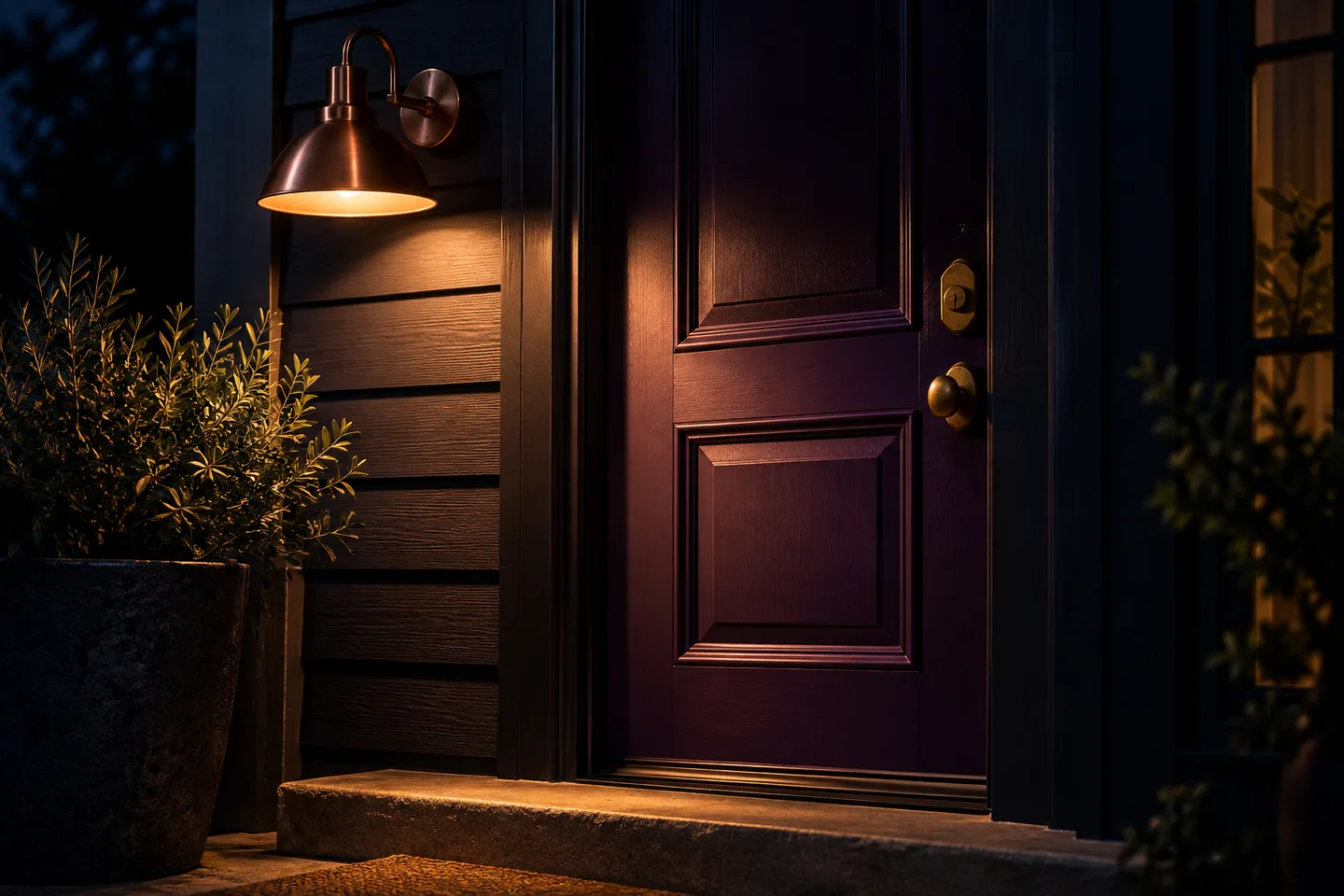
A wall light near the door should help someone find the lock and see the immediate threshold. Evaluate whether the fixture directs useful light downward or simply presents a bright bulb. A shielded source or an appropriate diffuser can make the arrival feel calmer. Check the fixture's intended distribution rather than judging only the decorative housing.
A pair of sconces can suit a broad entrance, but a single fixture may be entirely adequate for a smaller porch. Symmetry is not a requirement. Existing architecture, mounting conditions, and door movement help determine a sensible position. Do not cover a house number, doorbell, or other useful feature in pursuit of a balanced photograph.
The approach layer
Steps and changes in level need to be visible along the actual route. Avoid assuming the porch fixture will reach a distant walkway effectively. Discuss the approach as a separate task if the route remains difficult to read. Keep path fixtures and any cables out of the walking surface, and choose equipment intended for the conditions where it will be used.
The seating layer
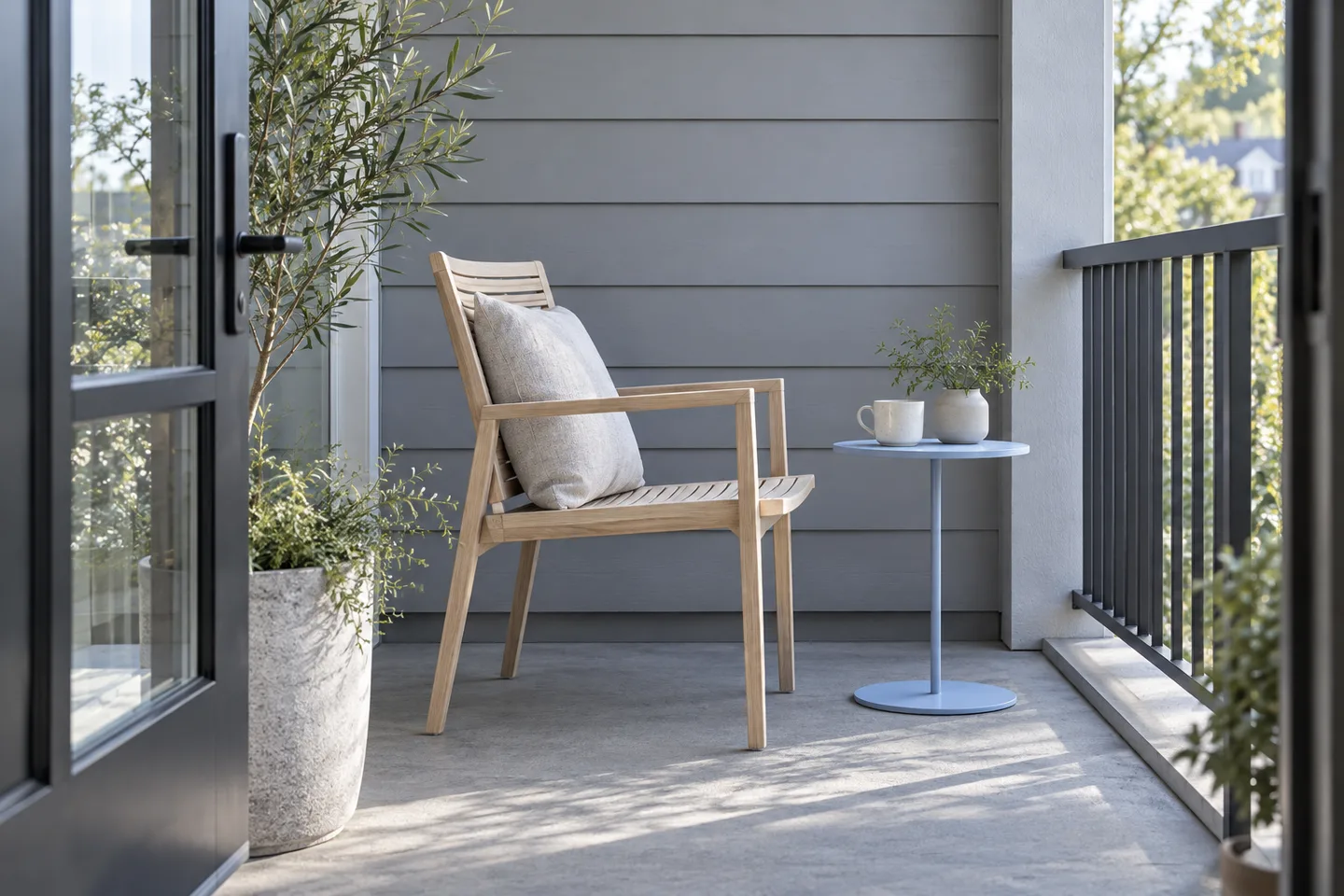
A porch used for sitting may benefit from softer local light, but that layer should not compete with safe arrival. A suitable portable outdoor lamp can make a chair more useful when the product is rated for the setting and used as directed. Avoid trailing a cord across the doorway merely to achieve a cozy effect.
Think about how the porch looks from inside. A lamp that makes an outdoor chair inviting can also reflect strongly in a glazed door. Try the arrangement from the seat and the interior room before deciding it is successful. Comfort depends on the relationship between light, eyes, and surrounding surfaces, not on a fixture count.
Compare the fixture before comparing the style
The Department of Energy's lighting guidance provides a starting point for understanding efficient lamp choices. For the porch itself, compare the fixture and lamp as a system: compatibility, light distribution, weather suitability, maintenance access, and controls all matter. A stylish housing cannot compensate for a product used outside its intended conditions.
| Question | What to check | Why it matters |
|---|---|---|
| Where will it be installed? | Product rating and actual weather exposure | A covered roof does not describe every mounting condition |
| Where does the light go? | Shielding, diffuser, beam direction | Useful illumination can coexist with less glare |
| How is it controlled? | Compatible switch, sensor, timer, or dimmer | Controls need to work with the selected lamp and fixture |
| How is it maintained? | Access for cleaning and replacement | Hard-to-reach fittings can become neglected |
For color appearance, many homeowners prefer a warm-looking entrance that relates comfortably to the light inside. Compare sample lamps or product demonstrations if possible. A familiar numerical color temperature can help you keep replacements consistent, but it does not describe brightness, glare, or color quality by itself. Avoid mixing obviously different whites accidentally across neighboring fixtures.
Check physical size on the actual wall. Tape a paper outline in the proposed dimensions without damaging the surface. View it with the door open and closed. A fixture that looks modest on a large product page may dominate a narrow strip of siding, while a very small fixture can appear unrelated to a tall entrance.
Use controls to match the way the entrance works
A timer, motion sensor, or suitable daylight control can reduce unnecessary operation, provided it works reliably for the setting. Consider who uses the entrance and when. Someone carrying bags should not need to negotiate an unlit step while searching for a switch. Discuss the required behavior with the installer before selecting a control solely for its features.
Motion sensing needs thoughtful adjustment. A sensor aimed too broadly can respond to passing activity that is irrelevant to the porch, while a poorly chosen detection area can miss the approach. Follow the product instructions and have the installation checked where needed. Controls should support predictable arrival rather than surprise visitors with a sudden glaring source.
Keep operation understandable to everyone in the household. If the porch has several light layers, label or document their controls where appropriate. A sophisticated arrangement that nobody knows how to use may be left permanently on or abandoned. Simpler controls can be the better choice when they match the actual routine.
Reduce spill without losing useful visibility
The DarkSky and Illuminating Engineering Society lighting principles emphasize using outdoor light purposefully and directing it where needed. Apply that idea by looking at the porch from neighboring windows and the street. A source visible from every direction is not automatically doing useful work in each direction.
Avoid aiming decorative beams into trees, the sky, or adjacent properties as a substitute for lighting the entrance. Keep the atmosphere of the surrounding yard in mind. A small, understandable pool of useful light can feel more welcoming than a façade flooded uniformly. Any change should preserve the visibility required for the actual approach.
Cleaning can also change the result. Dirt, insects, and weathering may affect a diffuser or lens. Follow the manufacturer's care and safety instructions and do not attempt maintenance on equipment you cannot access safely. If a fixture flickers, shows damage, or allows water where it should not, arrange appropriate electrical attention rather than treating it as a styling problem.
Plan one practical lighting review
Write down the approach problems you noticed, the existing fixture information, and the times the porch is used. Take a daytime photograph of the mounting area and a nighttime photograph for your own reference, recognizing that a camera does not reproduce visual comfort precisely. Include the door swing and nearby features in the installer brief.
Ask for the proposed light distribution, product suitability, and control behavior to be explained before work begins. Confirm how replacement lamps or integrated components will be maintained. After installation, review the same three arrival positions again. It is easier to assess the result when the questions remain consistent from the first observation to the final check.
Questions about porch lighting
Do I need matching lights on both sides of the door?
No. A single appropriate fixture may work well, depending on the entrance and its light distribution. Two fixtures can suit a wider arrangement, but their position and performance matter more than symmetry. Keep the lock, threshold, and approach visible without making glare the dominant feature.
Can I use an indoor lamp on a covered porch?
Do not assume a roof makes an indoor product suitable outside. Weather exposure, humidity, and the product's rating still matter. Use equipment specifically suitable for the intended location and follow its instructions. A qualified electrician can help assess uncertain fixed installations and supply arrangements.
Should I replace the bulb before the fixture?
If the existing equipment is sound and compatible, evaluating an appropriate replacement lamp may be a reasonable first step. But a lamp cannot fully correct an unsuitable fixture distribution, position, or rating. Check the whole arrangement, and do not exceed the manufacturer's specifications in pursuit of more light.
Write a useful replacement specification
If a lamp replacement is appropriate for the existing fixture, keep a record of the required base, permitted type, compatibility, and the light appearance you choose. Compare the actual product information rather than selecting solely by packaging color. A simple record helps prevent an accidental mismatch when one lamp needs replacing later. Integrated fixtures require their own maintenance plan, so ask what replacement or service means for that particular product.
Keep the nighttime observations with the specification. Notes such as glare from the first step or difficulty seeing the keyhole describe the problem more clearly than a request for something brighter. They also provide a sensible way to assess the finished result. The goal is a repeatable lighting choice that supports arrival, rather than a cycle of trying progressively different bulbs without understanding the fixture.
Fit lighting into the broader porch plan
Once the arrival works after dark, return to small porch layout ideas, common design mistakes, and weekend porch upgrades. Keep furniture, planting, and seasonal decorations from undoing the visibility the lighting was designed to provide.