How to Decorate a Front Porch on a Budget
Refresh the porch with a practical spending plan, a careful edit of existing pieces, and purchases that solve a real everyday problem.
Spend on the problem you actually have
Front porch decorating on a budget works best when you separate what the entrance needs from what a styled photograph happens to contain. Your porch might need a comfortable chair, a flat doormat, or somewhere sensible for a planter. It probably does not need every accessory that appears in a coordinated collection. Begin with the daily use of the entrance and let that use guide the spending.
A limited budget is also a reason to avoid rushing. Furniture bought because it is inexpensive can become an expensive mistake if it blocks the doorway, cannot tolerate the exposure, or requires supplies you had not included in the cost. Measure first, look at what you already own, and decide which improvement will make the porch more pleasant every day.
This guide treats the project as a sequence: observe, edit, reuse, and then purchase selectively. It does not assume a fixed dollar amount, because prices, delivery charges, and local availability change. The useful target is a complete, workable plan within your own spending ceiling, with enough room left for care supplies and small practical details.
Make a short inventory before making a list
Take everything movable off the porch temporarily. Note the condition of each item and decide whether it is useful, repairable within your skills, or ready to leave the arrangement. Clean sound pieces using their material-specific instructions. A chair hidden behind several containers may look quite different once the floor is clear and the cushion is washed correctly.
Check indoors and in storage for suitable items, but do not assume that an indoor table becomes outdoor furniture because the porch has a roof. Windblown rain, humidity, and sunlight can still affect it. Read product guidance where available. Use an indoor object outside only when its materials, finish, and intended exposure make that appropriate.
Create three short lists rather than one long shopping list:
- Keep: useful pieces in sound condition that already fit the porch.
- Change: items that need a new position, appropriate cleaning, or a replacement accessory.
- Buy: a specific missing function that existing pieces cannot provide.
This inventory helps prevent a common budget problem: spending on decorative additions while the original practical frustration remains. If the chair is uncomfortable, another lantern will not improve the seating. If the door catches the mat, a new cushion is unlikely to make the entrance easier to use.
Set spending priorities in a workable order
Think of the budget as a small set of decisions rather than a basket of bargains. First address basic usability, then comfort, then visual finishing. Structural defects, unsafe furniture, or electrical problems sit outside a decorating budget and need appropriate attention before styling begins. Do not cover a damaged surface with a rug and treat the problem as solved.
| Priority | A useful purchase might be | Wait when |
|---|---|---|
| Usability | A flat, correctly sized entry mat | The existing mat already works |
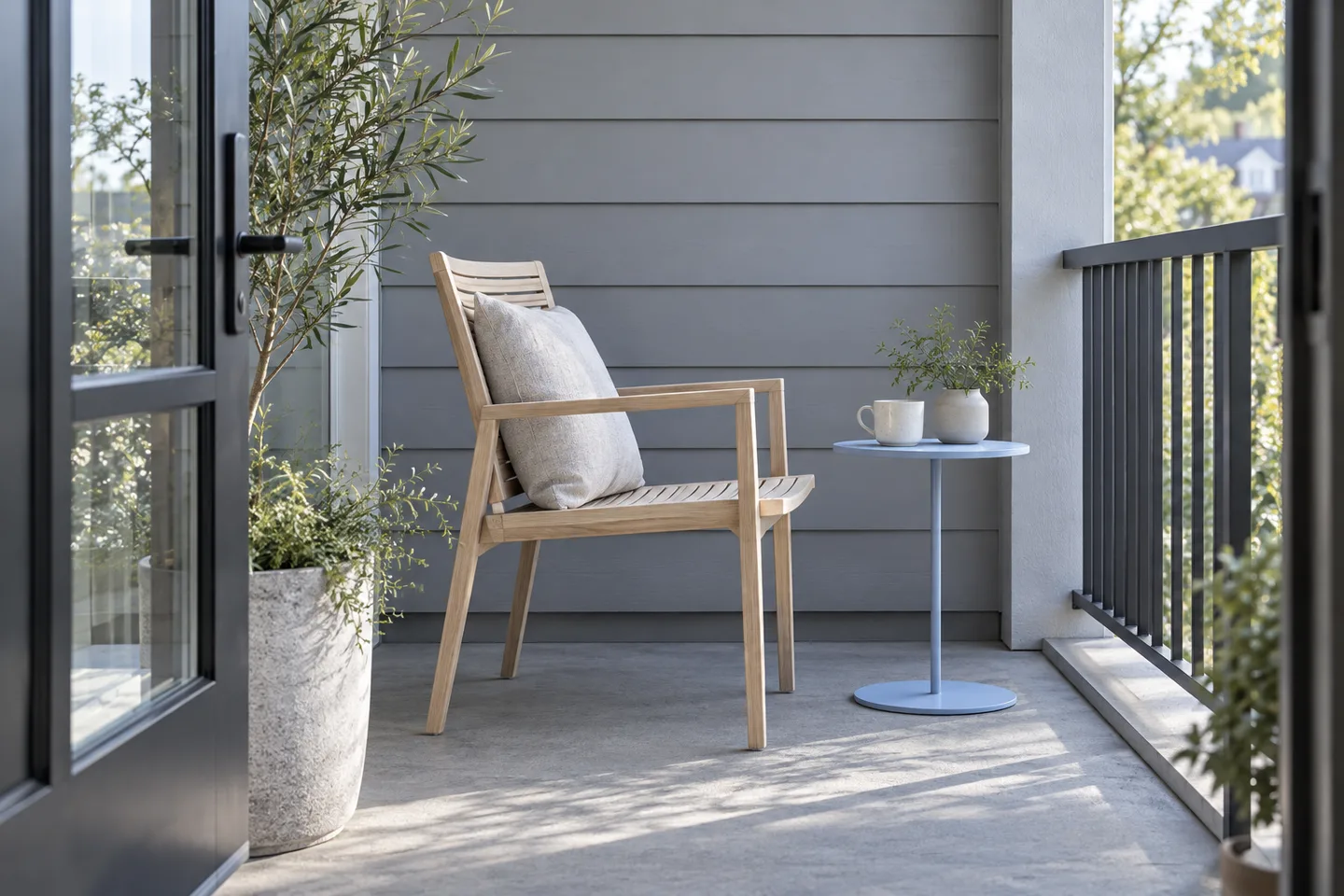
| Comfort | One outdoor chair that fits | Seating would obstruct access |
| Planting | A suitable pot and the right plant | Light and watering arrangements are unclear |
| Finishing | One washable cushion or small accent | Several similar accessories are already present |
Reserve a little of your own budget for the less photogenic details. Delivery, a suitable furniture cover, planter feet where appropriate, or cleaning supplies can affect whether a bargain remains affordable. Compare the complete cost of owning and caring for an item, not merely the number on its tag.
For example, imagine a porch with one sound chair, several mismatched pots, and a curled mat. A sensible first phase might be replacing the mat and regrouping two pots. A cushion could wait until the chair has been tried in its new position. The hypothetical sequence is more valuable than copying a fixed shopping total that may not match your market.
Use repetition to make existing pieces look intentional
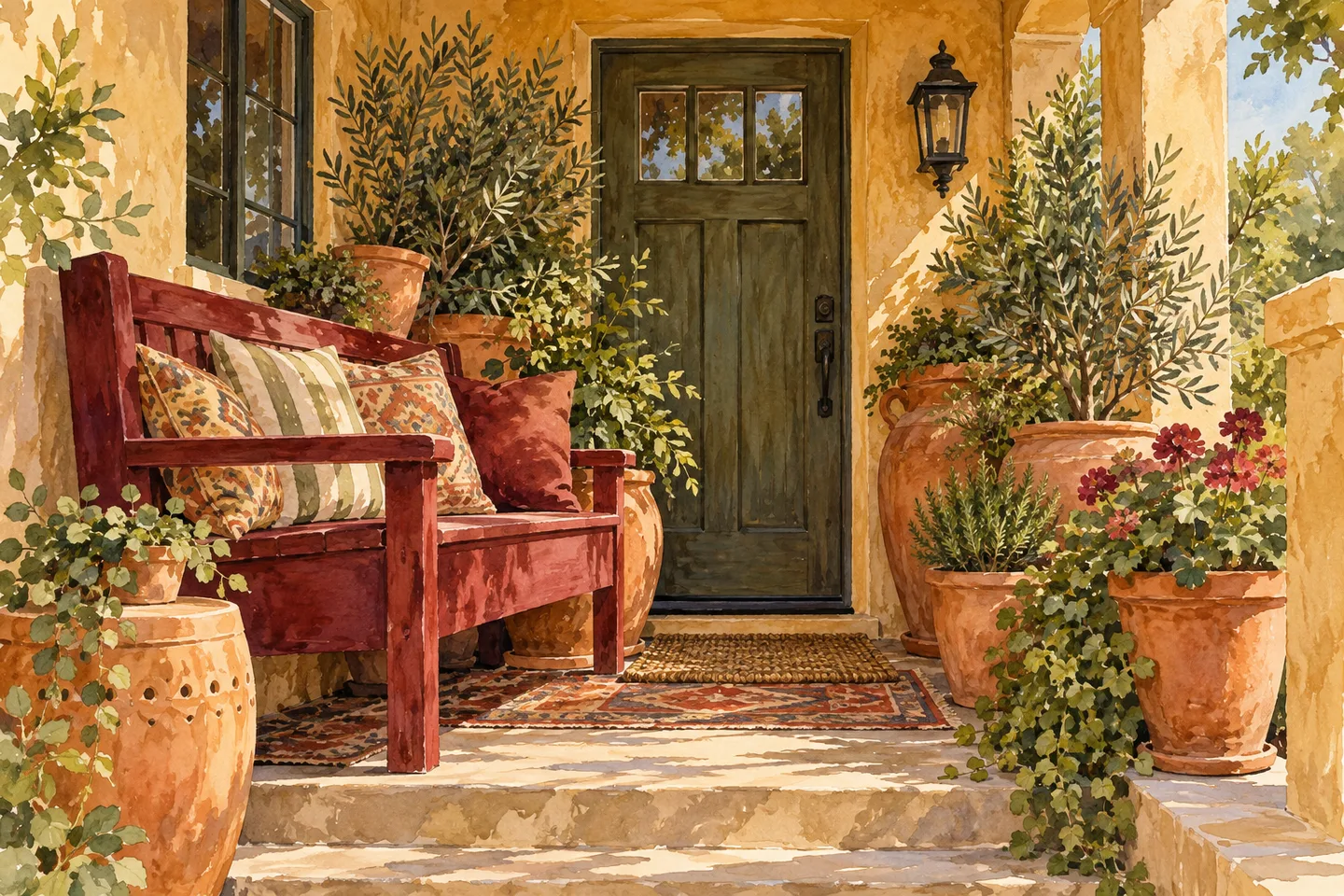
Choose a simple connection between the things you keep. The color of the door might reappear in a cushion, or the tone of the chair might relate to terracotta containers. Two or three repeated cues can create coherence without a matching furniture set. Avoid introducing a new finish simply because a discounted accessory is available in it.
Group containers by a shared quality: material, color, or shape. They need not be identical, but the arrangement should have an understandable center. Three small pots spread across the entire porch can feel scattered; the same pots grouped where they do not obstruct movement may read as one considered feature. Check drainage and plant requirements before treating them as interchangeable decorations.
Leave enough visual rest around the group. An inexpensive makeover often looks more settled when fewer objects are used. This is not a rule against color or personality. It is a way to make the objects you like easier to appreciate, particularly when the porch is visible through a screen door or from a busy street.
Choose inexpensive details with ongoing value
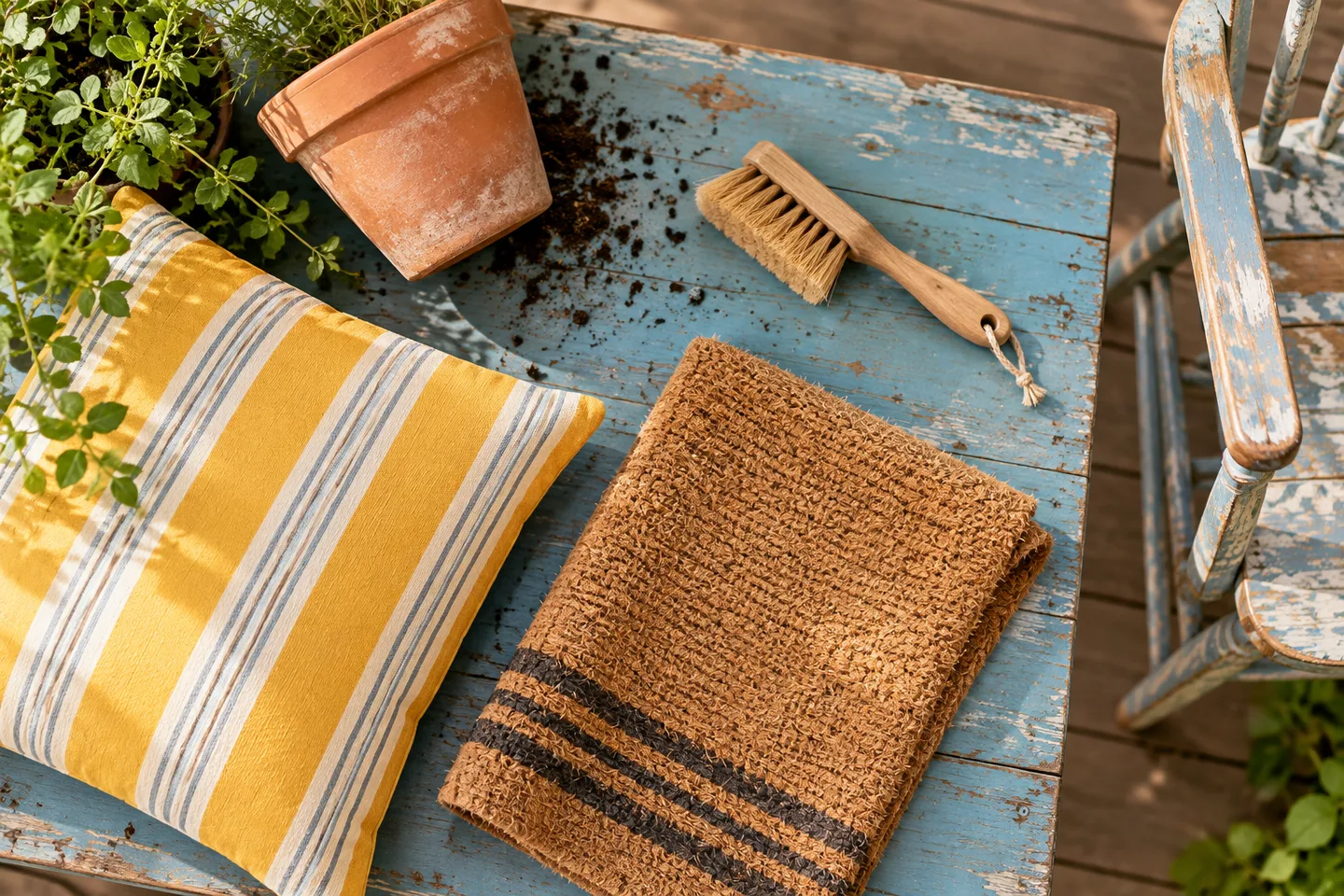
A useful doormat is often a better finishing detail than several fragile ornaments. Choose one that suits the floor, lies flat, and allows normal door movement. If you like layered rugs, assess the actual thickness and drying behavior rather than copying the look automatically. A porch entrance is a walking surface, and the layers should not create a nuisance underfoot.
A cushion can refresh a chair, but compare care instructions before selecting one. Decide where it will dry and where it will go during prolonged bad weather. A decorative cover that cannot handle the setting is not a good value simply because it was inexpensive. One accessory you can manage comfortably is preferable to a set that becomes a storage problem.
Seasonal details can stay small. Change a single container, a removable door decoration, or a textile you already planned to use. Avoid buying a complete new arrangement for each season. Photographing your existing pieces together can help identify combinations you have overlooked and reduce the temptation to keep purchasing variations of the same item.
Secondhand furniture deserves careful inspection. Check stability, joints, sharp edges, and the condition of any finish. Ask what the piece is made of and whether it is intended for outdoor use. Do not take on uncertain structural repairs or disturb an unknown old coating merely to make a low purchase price work. A piece that requires specialist work may not suit this particular budget.
Plan a manageable weekend refresh
Before the weekend
Measure the porch, check the weather, and identify the one purchase that matters most. Read cleaning and product instructions before starting. Make sure the planned work fits your skills and the available conditions. Keep the entrance accessible while items are temporarily moved; avoid turning an ordinary decorating project into a blocked doorway.
During the first session
Clear loose objects, clean the accessible surfaces appropriately, and let everything dry. Test the furniture arrangement before adding accessories. Sit in the chair, open the door, and walk through with a bag. Photograph two alternatives from the same position so you can compare the layout without relying on memory.
During the second session
Bring back only the objects that support the chosen plan. Position the mat, arrange the containers, and add the final textile or detail if it is still useful. Keep receipts and packaging until you know the new item works in daily use. A porch does not need to look finished at the expense of making a poor purchase permanent.
Common questions about an affordable refresh
Is painting always the cheapest way to change the porch?
Not necessarily. Surface preparation, material compatibility, suitable weather, and the condition of an existing coating can turn a simple idea into a larger job. Do not assume that a quick decorative coat is appropriate for a walking surface or old finish. Cleaning and rearranging sound pieces may be a more practical first phase.
Should I buy a matching furniture set on sale?
Only if every piece is useful and the complete set fits with people using it. A discount does not make an unnecessary table or deep loveseat a better choice. Compare the set with the cost of one suitable chair and a small table, including delivery and storage needs.
How can the porch feel finished with fewer accessories?
Repeat a small number of colors or materials, leave the door clearly framed, and keep the walking route open. A flat mat and a healthy, well-placed container can provide a clear beginning and end to the arrangement. Consistent care often contributes more to a finished appearance than another object.
Keep a purchase note instead of a mood-board wishlist
Before visiting a shop, write the item's maximum dimensions, its function, and the exposure it must handle. Include the existing colors it should relate to and the care you are prepared to provide. This short note makes it easier to compare two appealing objects without being distracted by an attractive display. It also helps identify when the best choice is to keep what you already own.
After the refresh, retain receipts and product guidance together. Note which change actually improved the porch. If rearranging the chair solved the problem, do not let an unused shopping allowance become a reason to add more objects. A successful budget project can finish with money unspent and a clearer understanding of the next genuinely useful improvement.
Keep the next purchase specific
Write down the dimensions, function, and exposure requirements of the next item before shopping. Use the small porch layout ideas, furniture selection guide, and weekend upgrade ideas to narrow the choice. The budget is easier to protect when a purchase has a defined job.