Front Porch Design Mistakes and How to Avoid Them
Diagnose crowded routes, unsuitable planting, awkward furniture, and other recurring porch problems before starting another makeover.

Diagnose the frustration before changing the look
Front porch design mistakes often show up as small daily annoyances: the door catches a rug, a chair blocks a package, a plant has to be moved every time someone arrives. These are useful clues. They tell you where the arrangement is working against the entrance, even when the porch looks attractive in a photograph.
Instead of starting another makeover, observe the porch during an ordinary day. Watch the route from the steps to the door and note what has to be shifted. Look at the space after rain and after dark. A design that works only when dry, empty, and carefully staged is not yet a practical plan for the way the entrance is used.
The mistakes below are not judgments about personal style. They are recurring mismatches between the size of a space, the things placed in it, and the activities expected of it. Correct the biggest mismatch first. You may discover that moving or removing one object accomplishes more than replacing several accessories.
Mistake one: furnishing the floor before protecting the route
What it looks like
The chair, table, and planters fit within the porch outline, but someone has to turn sideways to pass while the chair is occupied. Alternatively, a delivery lands in the only open space and blocks the door. The arrangement was measured as a collection of objects rather than a sequence of movements.
How to correct it
Draw the door swing and the route to the steps before positioning furniture. Include standing, carrying, and waiting space. Use the property requirements that apply to access and egress; do not treat a decorating suggestion as a clearance standard. Test the plan with a person seated and another person arriving.
If the route fails, remove a piece before searching for a slightly smaller version. Two tiny tables can create more obstacles than one well-placed surface. A porch does not need to accommodate every outdoor activity. Choose the one use that fits naturally around its role as an entrance.
Mistake two: buying a set instead of choosing a useful seat
A coordinated furniture set can look efficient because the styling decisions are already made. But the included loveseat, stools, or table may not suit the porch. The discount is less meaningful if some pieces must be stored elsewhere or squeezed into a position that interferes with the doorway.
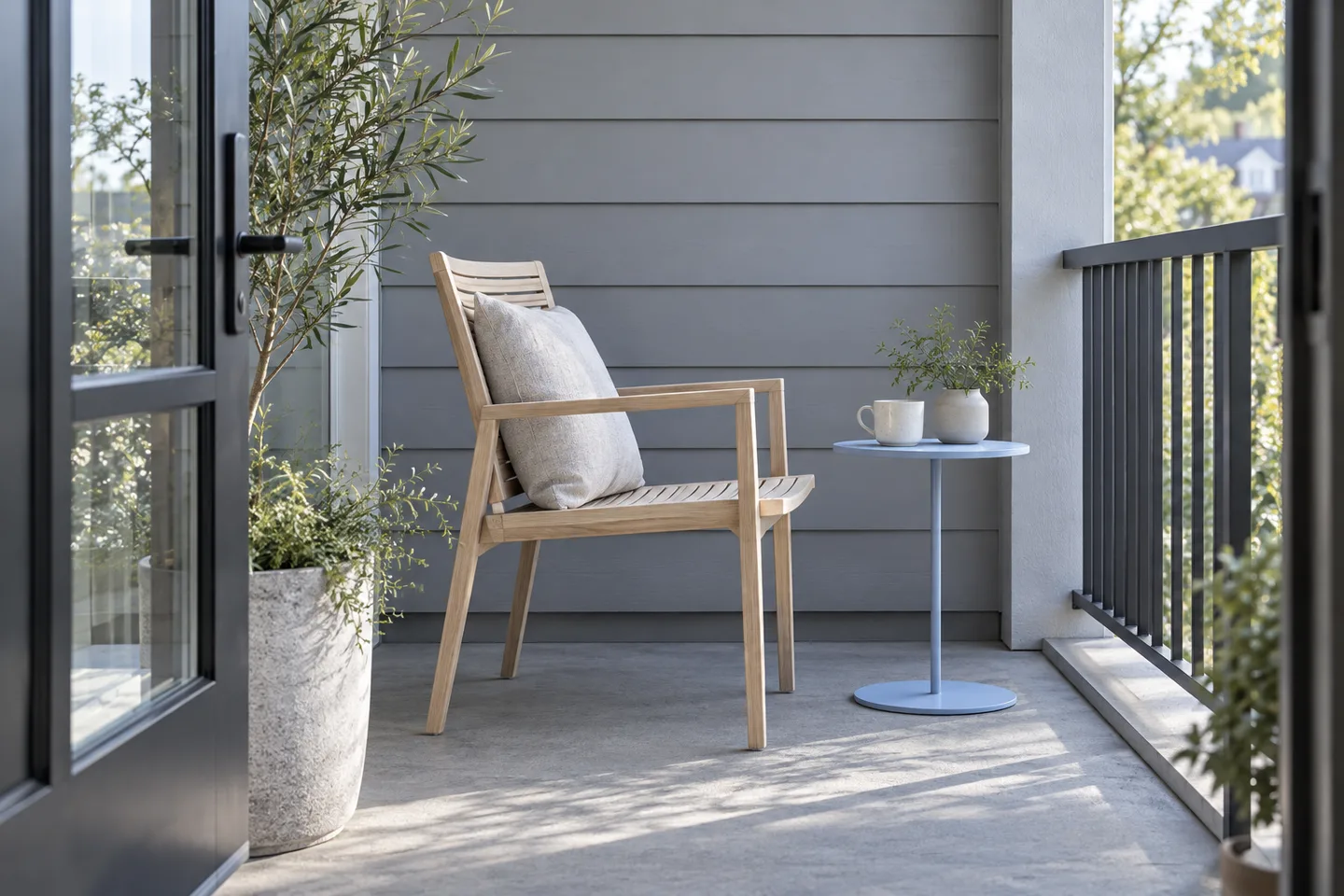
Start with the main activity and select the seat that serves it. Measure the full depth, arms, and any rocking or reclining movement. Test the seat for comfort where possible. Add a table only after the chair position is established, and place it where it can be reached without crossing the walking route.
For a hypothetical shallow porch, one upright chair beside the door might work while a deep conversation set would not. That does not mean the porch is inadequately furnished. It means the furniture reflects the space. See the small porch furniture guide for a more detailed selection process.
Mistake three: treating every empty spot as unfinished
Small objects multiply easily: a lantern, a spare pot, a basket, a decorative sign. Each may be harmless alone, yet together they fragment the floor and make the entrance harder to read. The problem is often the total number of competing objects, not the style of any individual item.
Temporarily remove the accessories and bring back only the pieces with a clear job. Group related objects rather than distributing them evenly around the perimeter. Leave visible wall and floor between groups. Those pauses help the door, chair, and planting read as intentional features instead of parts of a crowded collection.
Avoid replacing clutter with undersized clutter. A group of miniature accessories can look just as busy as larger items while offering even less practical value. Work with the scale of the door, columns, and furniture already present. A single suitable planter can be enough to give the entrance a planted character.
Mistake four: selecting plants as if light were decoration
A shaded porch is not simply a sunny porch with a different mood. Roof cover, neighboring buildings, orientation, and seasonal changes affect the growing conditions. Buying a plant only because its leaves match a cushion can leave you with a struggling container that never supports the intended design.
Observe the light at different times and discuss suitable plants with a reliable local nursery or extension source. Read the mature dimensions and care needs. Leave enough room for foliage without blocking the doorway, and make sure excess water can drain without creating a slippery surface or damaging the porch.
The Royal Horticultural Society's container guidance is a useful reference for the practical responsibilities of growing in pots. Keep the design decision separate from plant selection: first decide where a container can work, then choose a plant suited to the actual conditions and the care you can provide.
Mistake five: using textiles without a drying plan
Layered rugs and several cushions can give an entrance visual warmth, but they also introduce thickness and moisture management. A door that scrapes a mat or a damp cushion shut into storage makes the porch less pleasant to use. A roof overhead does not eliminate windblown rain or humid conditions.
Check that mats stay flat and permit normal door movement. Follow the care guidance for fabrics and the surface underneath. Decide where cushions will dry before buying a large collection. If you cannot manage the routine comfortably, reduce the number of soft accessories rather than accepting a permanently inconvenient arrangement.
Think about the floor material as well. Products that work on one surface may be unsuitable on another. Avoid assuming a rubber backing, protective pad, or cleaner is universally compatible. Read the manufacturer's instructions for both the accessory and the surface where it will sit.
Mistake six: solving darkness with glare
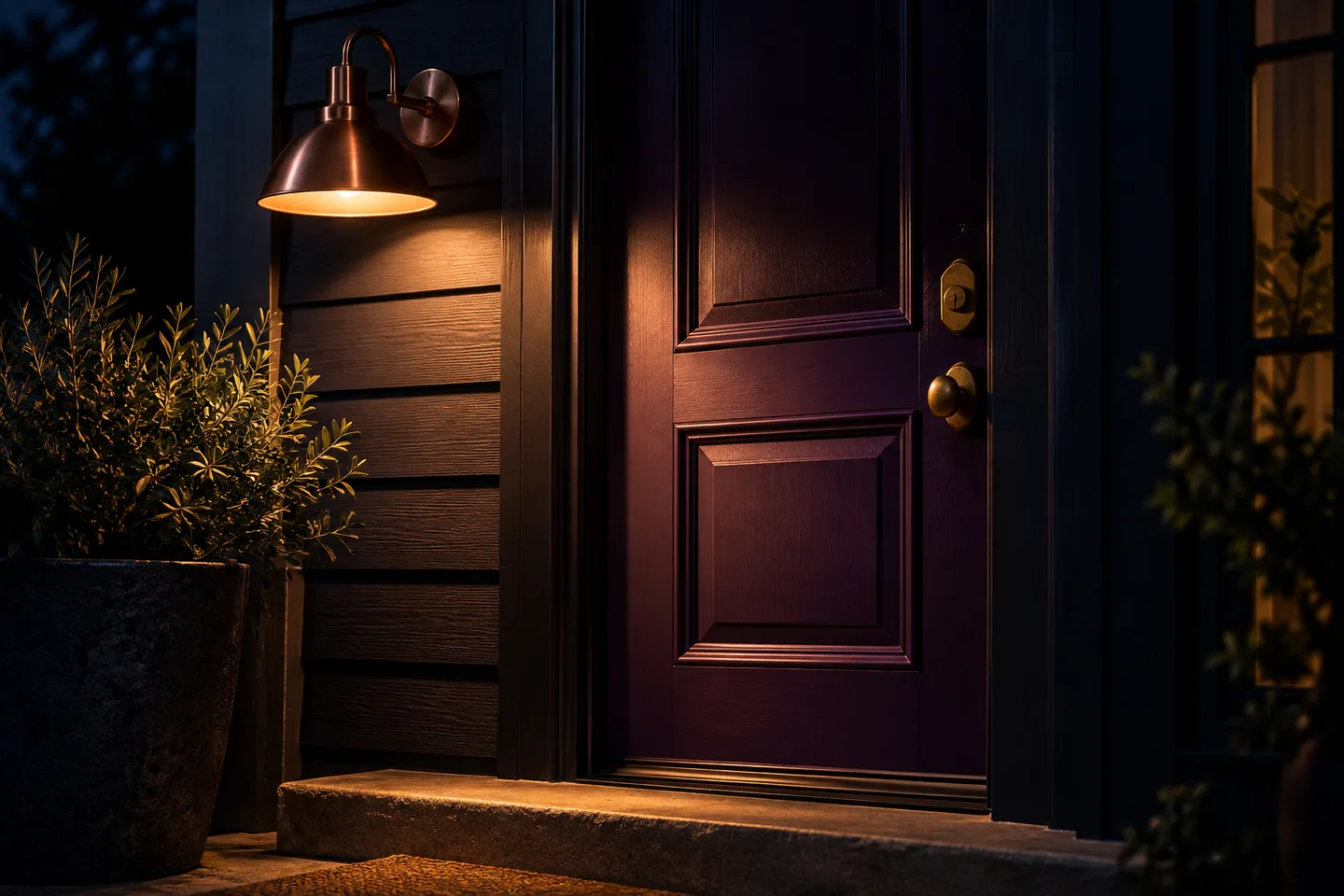
A conspicuously bright bulb can make a porch look illuminated while leaving the lock or step difficult to see. Evaluate lighting from the visitor's position after dark. Look toward the source, then down at the threshold. If the contrast is uncomfortable, the distribution of light may need attention rather than simply increasing output.
Choose fixtures suitable for the location and discuss fixed electrical changes with a qualified electrician. Keep decorations and foliage from blocking useful illumination. The porch lighting guide explains how to consider arrival, approach, and seating as distinct tasks without flooding the entire façade.
Mistake seven: disguising a maintenance problem
A rug over a damaged board, a planter in front of a deteriorating surface, or a new cushion on an unstable chair does not resolve the underlying condition. Check the entrance before decorating. Loose components, suspicious softness in wood, damaged electrical equipment, and unsafe furniture require appropriate attention rather than a visual cover.
Separate routine cleaning from repairs and structural questions. Use care instructions for the actual material, and bring in a qualified professional when the problem exceeds ordinary upkeep. This distinction protects the decorating budget, too: it prevents spending on accessories while a more important problem continues out of sight.
Questions about correcting an existing porch
Do I need to remove everything and start again?
Usually you can begin by testing a simpler arrangement with the sound pieces you own. Clear the route, choose the most useful seat, and return accessories selectively. This reveals whether a purchase is necessary and helps preserve the elements that already work.
How can I tell whether the furniture is too large?
Assess it while occupied, with the door operating normally and another person passing. If the arrangement repeatedly requires someone to move or squeeze through, the fit needs attention. A product fitting inside the floor dimensions is only the first test, not the final one.
What is the best first improvement?
Address the most frequent frustration: a blocked route, unsuitable mat, uncomfortable chair, or container in the wrong conditions. Choose a visible daily problem you can solve within your skills. Then use the entrance for a while before deciding what should change next.
Recheck the porch after a normal week
An arrangement can pass a short test and still reveal a problem through repeated use. Watch where bags are set down, whether a chair migrates toward the door, and which accessories are left indoors because they are inconvenient. These small patterns are evidence about the layout. Adjust the plan to accommodate them rather than continually resetting the porch to an image that daily life immediately changes.
Keep the correction modest enough to evaluate. Move one container or remove one table, then observe the result before adding another change. This approach makes it easier to understand what improved the entrance and prevents a sequence of purchases from obscuring the original frustration. A porch that works consistently needs less restyling to feel welcoming.
Make one correction that will last
Write a brief description of the problem and the test that would show improvement. For example: packages should no longer block the door, or the chair should remain usable while someone enters. The budget decorating plan can help sequence purchases after the layout works.